
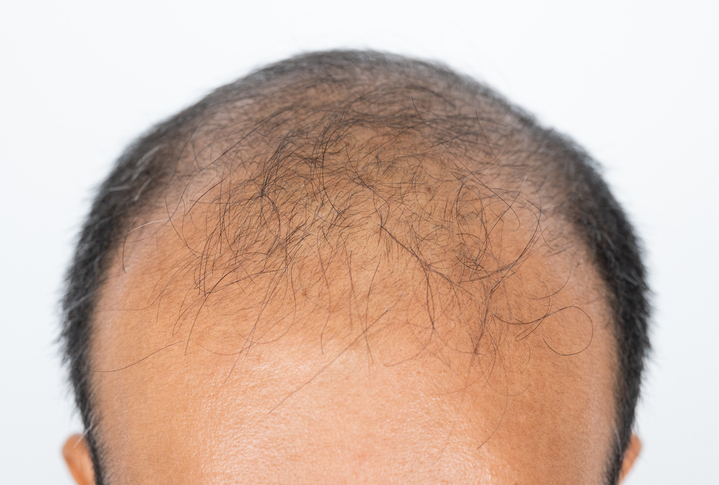
Hair loss remains an area lacking biotechnology innovation. The drugs currently available are older products offering limited efficacy. Some of them cannot be used by women. Veradermics aims to shake up this market with a new twist on an old drug for pattern baldness. The biopharmaceutical company now has $256 million in IPO cash to finance late-stage clinical trials that, if successful, could support an FDA submission.
Veradermics was able to raise more than planned. In preliminary financial terms set last week, the company aimed to offer more than 13.3 million shares in the range of $14 to $16 apiece. Late Tuesday, New Haven, Connecticut-based Veradermics boosted the deal size to more than 15 million shares priced at $17 each. On Wednesday, those shares began trading on the New York Stock Exchange under the stock symbol “MANE.” Investors showed strong interest. Shares opened at $34 and Veradermics’s stock price more than doubled in its first day of trading, reaching up to $40.01.
Veradermics focuses on developing drugs for dermatologic conditions. The company’s lead indication is androgenetic alopecia, also known as pattern hair loss. It’s the most common form of hair loss and affects an estimated 80 million people in the U.S., both men and women. Lead Veradermics drug candidate, VDPHL01, is a pill version of minoxidil, an old topical hair loss drug.
Minoxidil was initially developed in the 1960s and 1970 as a vasodilator, and a pill formulation remains available for treating high blood pressure. In clinical testing, hair growth was observed as a side effect. In 1988, the FDA approved a topical formulation of minoxidil, brand name Rogaine, a solution applied twice daily. This now generic product is widely available over the counter. But Veradermics says in its IPO filing that about 86% of users discontinue topical minoxidil within one year for reasons such as modest efficacy, variable responses, and the burdens associated with topical administration of the product.
Oral minoxidil’s label carries a black box warning flagging the risk of pericardial effusion, which is fluid around the heart. While some people take oral minoxidil off label for hair loss, it’s ill-suited for this use, Veradermics said in the filing. Besides the heart risks, oral minoxidil stays in circulation only about two hours, which is not long enough to sufficiently help hair follicles. Veradermics addressed both problems by developing VDPHL01 with proprietary extended-release technology. In the filing, the company says its drug lasts in circulation 7.5 to 12 hours with once-daily dosing and 15 to 24 hours with twice-daily dosing. Not only is the Veradermics drug’s exposure in the body longer, it also reaches peak concentration below the level where cardiac activity typically happens.
“VDPHL01 may deliver improved outcomes versus existing treatment options across the product attributes most desired by patients,” Veradermics said in the IPO filing. “In particular, we believe VDPHL01 will raise the hair growth ceiling with improved speed, consistency and intensity of effect by enabling greater sustained exposures to minoxidil throughout the day, without driving peak concentrations of systemic minoxidil associated with known cardiac effects.”
Last October, Veradermics reported data from an open-label, proof-of-concept Phase 2 study that enrolled men and women. In preliminary results for 21 men who received VDPHL01 twice daily, the company reported two-month results showing an average increase from baseline of 37.5 hairs per square centimeter. Improvement continued through four months. The study drug was well tolerated and no cardiac adverse events were reported. In the filing, Veradermics said additional data from this study are expected in the first half of this year.
Three placebo-controlled pivotal studies for VDPHL01 are underway that could support an FDA submission. Veradermics has completed enrollment in a 519-patient Phase 2/3 study evaluating VDPHL01 for male pattern baldness. The main goals are measuring the change in hair count and patient self-assessment of hair coverage benefit after 24 weeks. Preliminary data are expected in the first half of this year. A second Phase 3 trial is still enrolling males; preliminary data are expected in the second half of this year. A separate Phase 2/3 study is enrolling females with pattern hair loss. Veradermics said the timeline for a data readout depends on this trial’s progress.
The Veradermics IPO comes amid a resurgence of activity in hair loss drug R&D. Drug candidates in late-stage development include Cosmo Pharmaceuticals’ Breezula and Kintor Pharmaceutical’s KX-286, both topical androgen receptor antagonists. Startup Pelage Pharmaceuticals is developing PP405, an inhibitor of mitochondrial pyruvate carrier. This topically applied small molecule drug is approaching Phase 3 testing. Veradermics can stand apart from the field with an oral option.
Since inception, Veradermics said it had raised $263 million prior to the IPO. As of the end of the third quarter of 2025, the company reported its cash position was $15.1 million. The company shored up its cash reserves alongside the October Phase 2 data readout, closing a $151 million Series C round led by SR One. That firm is Veradermics’s second-largest shareholder with a 5.9% post-IPO stake, according to the filing. Longitude Capital is the largest shareholder with a 10.7% stake after the IPO.
Veradermics said it plans to use its new capital to advance VDPHL01 through regulatory review and if approved, initial commercialization in the U.S. With the IPO proceeds, Veradermics expects it will have sufficient capital to last more than one year. The company may be able to boost its cash haul even more. In an updated prospectus, Veradermics said Eli Lilly has expressed interest in purchasing up to 4.9% of the company’s shares after the offering at the IPO price. The filing also states that Wellington Management is interested in purchasing shares at the IPO price worth up to $30 million. In both cases, the indications of interest are not binding purchase commitments.
Photo: Getty Images