Best Collagen Creamer: What to Look For and Why It’s Worth It
Most people who want to take collagen daily eventually arrive at the same question: what is the most frictionless possible way to make this automatic? For coffee drinkers — which is most of my patients — the answer is replacing what they are already adding to their cup every morning. That is the entire logic behind a collagen creamer: zero new steps, zero new habits, just a significantly better version of something you were already doing.
My Collagen Creamer Vanilla was developed because I wanted that upgrade to actually be worth making — not just marginally better than conventional creamer, but functionally meaningful in terms of what it delivers to your body. Here is what separates a quality collagen creamer from a product that is mostly packaging and marketing.
What Makes a Genuinely Good Collagen Creamer
Hydrolyzed Collagen Peptides — Non-Negotiable
The label must say ‘hydrolyzed collagen’ or ‘collagen peptides’ — not raw collagen, not ‘collagen blend,’ not anything that does not specify the pre-broken-down form. My post on whether you can put collagen in coffee confirms that hydrolyzed peptides are heat-stable at normal coffee temperatures — your cup will not degrade them. This is the form your body can absorb and your cells can use.
Meaningful Protein Content
A quality collagen creamer should provide at least 5g of hydrolyzed collagen protein per serving. Sub-3g products are primarily fat and flavor — the collagen dose is insufficient to produce the outcomes the research supports. Check the nutrition facts panel, not the front of the package.
Clean Fat Source
The best collagen creamers use MCT oil or coconut cream as their fat base — providing genuine creaminess while supporting brain function and ketone production. Avoid creamers built on hydrogenated vegetable oils, palm kernel oil, or corn syrup solids. These are the ingredients in conventional creamer that you are specifically trying to get away from.
No Added Sugar
Naturally sweetened (stevia or monk fruit) or unsweetened is the standard for a clean collagen creamer. Significant added sugar in a product you take daily undermines the entire clean nutrition logic of the upgrade.
The Friction-Free Collagen Habit
The benefits of collagen supplementation — skin elasticity, joint comfort, gut lining support — accumulate through consistent daily dosing over weeks and months. The most reliable way to achieve that daily consistency is to embed the habit into something that already happens automatically. If you drink coffee every morning, you already have the trigger. The collagen creamer swap turns that trigger into a daily collagen delivery system without requiring anything new.
Comparing to Unflavored Collagen Powder
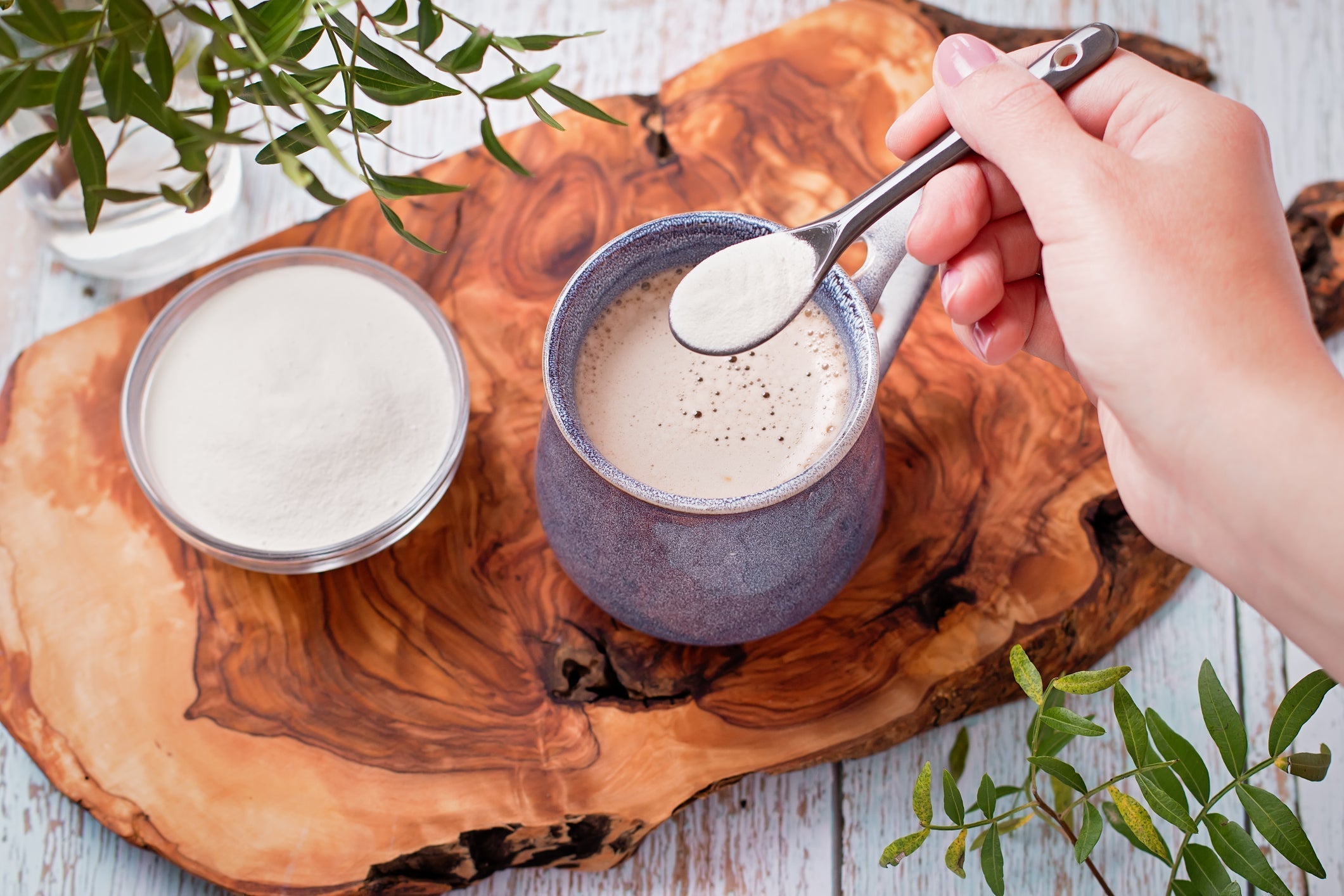
My Collagen Peptides Unflavored powder can also be added directly to any coffee preparation — dissolves completely, is flavor-neutral, and the heat stability is identical. The creamer option adds the MCT fat and vanilla flavor in a single product. For patients who want maximum flexibility, both exist. For patients who want maximum simplicity, the Collagen Creamer Vanilla is the one-step solution.
How to Use It
My post on the 8 ways to use collagen coffee covers the full range of preparations. The essential version: one to two tablespoons in hot coffee, stir for 15 seconds. Dissolves cleanly and does not change the flavor profile of your coffee beyond adding warm vanilla notes. For iced coffee, dissolve in a small amount of warm water first, then add to cold brew.
The MCT Oil Difference — Why Fat Source Matters in Collagen Creamer
Medium-chain triglycerides from coconut oil are metabolically distinct from the long-chain fats in most conventional creamers and dairy cream. MCTs are absorbed directly into the portal circulation and transported to the liver for immediate energy production rather than requiring carnitine-mediated transport into mitochondria like long-chain fats. This makes them a uniquely clean and efficient energy source, particularly in the morning before meals when glycogen stores are lower.
The practical effects that many of my patients report from MCT-containing morning coffee: more sustained mental clarity through the morning compared to coffee alone, less mid-morning energy dip, and greater satiety that reduces unnecessary snacking before lunch. These effects are consistent with the research on MCT metabolism and cognitive function, and they make the switch from conventional creamer to collagen creamer a noticeable functional upgrade in addition to the nutritional upgrade.
Collagen Creamer and Intermittent Fasting
A question I get regularly: does collagen creamer in coffee break a fast? The answer depends on the fasting goal. For metabolic fasting where the primary goal is ketosis and fat oxidation, MCT oil and small amounts of collagen protein are generally considered compatible with the fast in most protocols — they provide minimal insulin stimulus and the MCTs may actually support ketone production. For strict caloric fasting or fasting for gut rest purposes, any caloric intake technically breaks the fast.
For the majority of my patients who are using intermittent fasting as a weight management and metabolic health tool, adding collagen creamer to morning coffee is compatible with their approach and provides meaningful collagen nutrition during the fasting window. For patients doing medically supervised fasting protocols, I recommend consulting with their supervising practitioner about specific guidelines.
The Grass-Fed Sourcing Argument for Collagen Creamer
I want to explain specifically why grass-fed matters for collagen creamer sourcing, because the sourcing argument is more specific and meaningful than a general ‘cleaner is better’ principle. The amino acid profile of collagen from grass-fed bovine sources is consistently richer in glycine and proline than from grain-fed sources. This difference reflects the animal’s collagen production biology, which is influenced by diet, movement, and overall physiological state. Grass-fed, pasture-raised animals that move more and eat a more natural diet produce connective tissue with a more nutritionally complete amino acid profile.
For a supplement you are taking every single morning, indefinitely, this sourcing difference compounds into a meaningful distinction over months and years. The cost differential between grass-fed and conventional collagen sourcing is real — it is one reason quality collagen supplements cost more than budget alternatives. But the daily nutritional difference, multiplied across years of consistent use, justifies the sourcing investment for anyone who is serious about the long-term benefits of daily collagen supplementation.
Frequently Asked Questions
|
Frequently Asked Question |
Answer |
|
What is the best collagen creamer for coffee? |
The best collagen creamer contains hydrolyzed collagen peptides (at least 5g per serving), MCT oil or coconut cream as the fat source, no added sugar, and a short clean ingredient list. Dr. Kellyann’s Collagen Creamer Vanilla meets all these criteria in a formulation designed for daily morning use. |
|
How much collagen is in collagen creamer? |
This varies by product. A meaningful dose is at least 5g of hydrolyzed collagen protein per serving. Always check the protein content on the nutrition label — not the marketing claim on the front of the package. |
|
Does collagen creamer work? |
Yes — the hydrolyzed collagen peptides in collagen creamer are absorbed and used by the body the same way as any quality collagen supplement. Adding it to your morning coffee means you get your daily collagen dose automatically, without any additional preparation steps. |
|
Is collagen creamer keto-friendly? |
Most quality collagen creamers, including Dr. Kellyann’s Vanilla, are keto-compatible: low in carbohydrates, MCT oil provides ketone support, and the collagen protein does not significantly affect ketosis. Always verify the specific nutrition label of any product you choose. |