I have spent the better part of two decades studying bone broth. I have written books about it, formulated entire product lines around it, and I have walked thousands of patients through using it as a daily practice. And yet the question I still hear most often is the simplest one: is bone broth actually good for you, or is it overhyped? I want to answer that honestly. This is the complete guide to bone broth as a food, as a daily ritual, and as a nourishment practice with real science behind it. I will walk you through what bone broth actually is, what is in it, what the research shows, who should drink it, how much, when, and how to use it. By the end you will have a clear, evidence-based picture, not marketing.
What Bone Broth Actually Is
Bone broth is what you get when you slowly simmer animal bones, connective tissue, and sometimes vegetables and herbs for many hours, usually somewhere between 12 and 24. The long, slow simmer is the entire point. What ordinary stock or broth cannot do in an hour, bone broth does over the course of a day. The collagen breaks down into gelatin. The amino acids dissolve into the liquid. The minerals leach out of the bones and into the broth. The result is something fundamentally different from the carton of chicken broth most people grew up with.
Let me clear something up that confuses a lot of people. Bone broth is not the same as regular stock or broth. Stock is made primarily from bones simmered for a few hours and is used as a cooking base. Regular broth is made from meat simmered for a shorter time and is typically thinner. Bone broth is its own thing. The extended simmer time creates a richer concentration of collagen, gelatin, amino acids, and minerals than you can get from either stock or broth. I have written more on this in a piece specifically on how bone broth is not just stock or broth if you want to go deeper, and I have a full piece on bone broth vs. chicken broth that addresses the most common comparison question.
Traditional cultures all over the world have made some version of bone broth for thousands of years. Italian brodo. French bouillon. Vietnamese pho. Jewish chicken soup, the one your grandmother called the cure for everything. Korean seolleongtang. These are not coincidences. Cultures separated by oceans and centuries independently discovered the same thing: that simmering bones for a long time produces something deeply nourishing.
What we have done in modern wellness is rediscover something traditional cultures already knew, and now we have the laboratory tools to actually measure what is in bone broth and what it does in the body. That is what this guide is about.
What Is Actually in Bone Broth
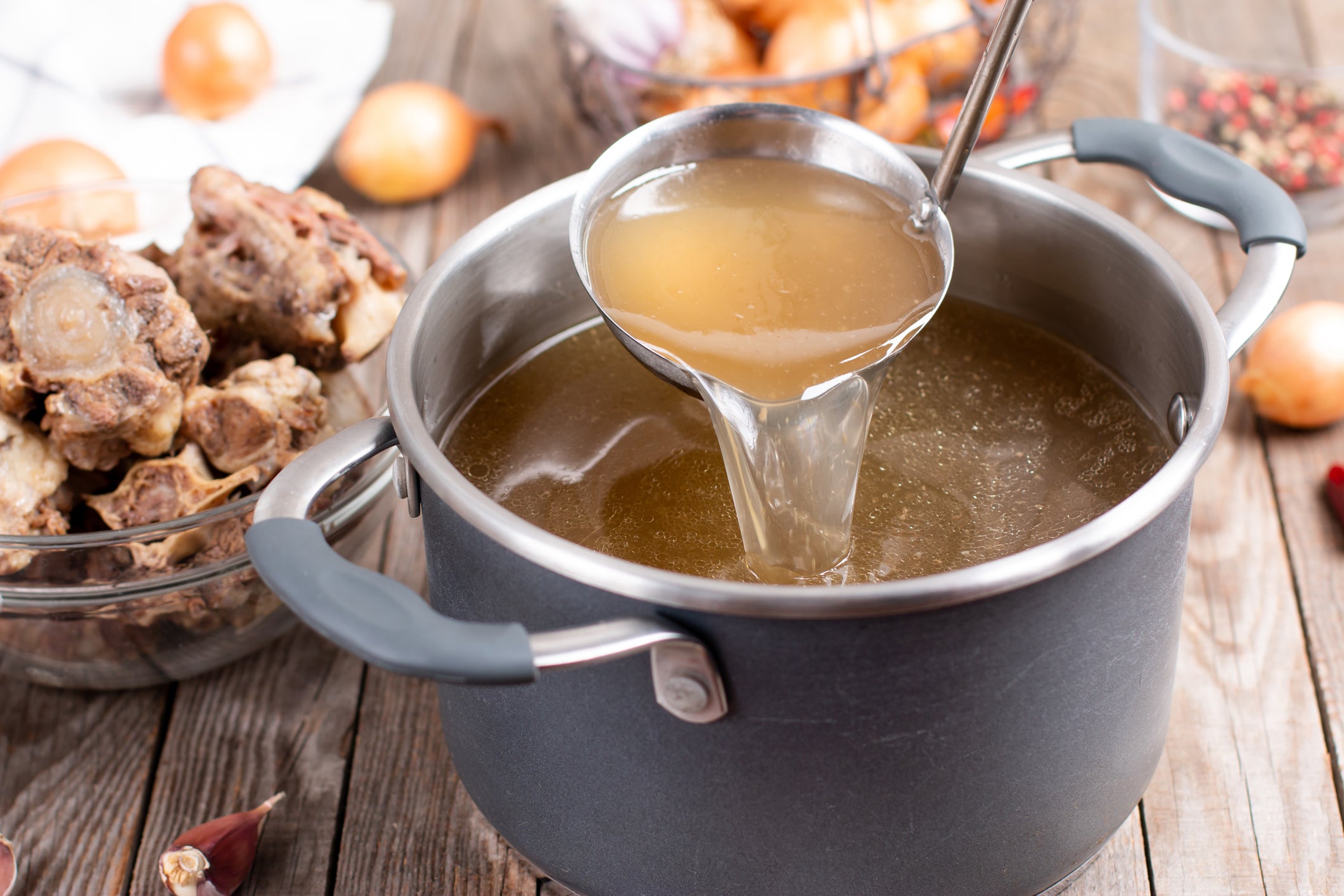
When you simmer bones for hours, what dissolves into the liquid is a specific nutritional profile that you do not get from most other foods. Here is what is actually in a good cup of bone broth.
Collagen and gelatin
Collagen is the most abundant protein in the human body. It is what makes up your skin, your hair, your nails, your joints, your gut lining, and the connective tissue that holds your body together. When you simmer animal bones, the collagen in those bones breaks down into gelatin, which is what gives bone broth its characteristic body, that gel-like texture you see when good broth cools in the fridge. A 2025 review of bone broth nutrients published in Digestive Diseases and Sciences by researchers at the Mayo Clinic documented the specific amino acid composition that comes from this collagen breakdown, and how those amino acids relate to gut barrier integrity1.
Glycine
Glycine is the most abundant amino acid in collagen, which makes bone broth one of the richest dietary sources of glycine you can find. A 2024 systematic review in GeroScience examined the documented effects of glycine across eleven physiological systems in human adults and found benefits ranging from sleep quality to inflammation regulation to cytoprotection2. The body uses glycine for sleep, for collagen synthesis, for detoxification pathways, for neurotransmitter regulation. Most modern diets are surprisingly low in glycine because we have moved away from eating the connective tissue and bone-derived foods our ancestors ate. Bone broth is one of the most efficient ways to add it back in.
Proline and hydroxyproline
These two amino acids are the other major components of collagen, and they are bone broth signatures. Proline and hydroxyproline are the building blocks the body uses to make and repair its own collagen. They support skin, joints, blood vessels, and the gut lining. The body can synthesize proline on its own, but only in limited amounts, which is why dietary sources matter.
Glutamine
Bone broth contains glutamine, the primary fuel source for the cells that line the small intestine. Glutamine is conditionally essential, meaning the body usually makes enough of it, but during stress, illness, intense training, or recovery, glutamine demand increases. This is part of why bone broth has a long traditional reputation as a recovery food.
Minerals
When bones are simmered with an acidic component like vinegar or lemon juice, minerals leach out of the bone matrix and into the liquid. Bone broth provides modest but meaningful amounts of calcium, magnesium, phosphorus, and trace minerals. The amounts vary widely depending on the quality of the bones, the simmer time, and the acidity of the broth, so I would not call bone broth a primary mineral source. But these minerals come with the amino acid matrix in a way that supports absorption.
Other compounds
Bone broth also contains chondroitin and glucosamine, which are connective tissue compounds that have long been studied for joint support. It contains hyaluronic acid in small amounts. And it provides a usable form of protein, though the protein profile is different from a complete protein like a chicken breast. I have written more about this in bone broth protein vs. whey for anyone who wants to compare it to other protein sources.
The Research on Bone Broth Benefits
I want to be careful here. The research on bone broth as a specific food is still relatively young. Most of what we know comes from research on the individual amino acids, on gelatin and hydrolyzed collagen, and on collagen-rich foods in general. The mechanism evidence is strong. The clinical trials on bone broth itself are fewer in number but growing. Let me walk you through what the current evidence actually shows.
Gut barrier integrity
The most robust mechanism evidence for bone broth is around its support of the gut barrier. A 2025 review from Mayo Clinic specifically examined how bone broth nutrients fortify the gut barrier in health and disease1. The intestinal barrier is a single-cell-thick layer that decides what passes from your digestive tract into your bloodstream. When that barrier is compromised, what the research community calls intestinal hyperpermeability, a cascade of inflammation and immune activation can follow. A 2024 review in Clinical and Experimental Medicine by researchers at Jagiellonian University documents the mechanisms by which the gut barrier becomes damaged and the dietary strategies that may support its repair4. Glycine, glutamine, and gelatin, all abundant in bone broth, are central to the supportive strategies described in the literature.
Skin and connective tissue
Hydrolyzed collagen has been studied extensively for its effects on skin. A 2023 systematic review and meta-analysis published in Cureus examined the impact of oral hydrolyzed collagen supplementation on skin rejuvenation and documented benefits for skin hydration, elasticity, and the appearance of fine lines6. The collagen in bone broth is hydrolyzed by the long simmer process, breaking it down into the same kinds of bioavailable amino acids and peptides that supplement studies use. Many of my customers tell me their skin starts looking better after two to three weeks of daily bone broth. The research supports the mechanism.
Sleep and inflammation
The glycine in bone broth has been shown to support sleep quality in human studies, particularly when consumed in the evening2. Glycine appears to work partly by lowering core body temperature, which is part of the body’s natural transition into sleep. The same systematic review documented glycine’s anti-inflammatory effects across multiple physiological systems. None of this means a cup of bone broth is going to fix insomnia, but it is one reason that an evening cup is a daily habit I recommend to a lot of patients.
Weight management and satiety
The 2025 clinical trial of the Bone Broth Diet, published in Clinical Nutrition Open Science, documented an average weight loss of approximately 15 pounds over 8 weeks with fat loss and muscle preservation, plus significant reductions in hunger and cravings during the program3. The trial was funded by Veyl Ventures, the parent company of the Dr. Kellyann brand, and conducted by KGK Science, an independent Canadian clinical research organization. The bone broth itself contributed to satiety and provided amino acid support during the fasting windows. Independent research on protein intake during weight loss confirms the broader principle. A 2024 meta-analysis in Clinical Nutrition ESPEN found that adults who increased protein intake during weight loss preserved significantly more muscle mass than those who did not5.
Joint comfort
Bone broth contains chondroitin and glucosamine, the same compounds used in many joint supplements. The research on these compounds for joint comfort is mixed but generally supportive. Bone broth is not a treatment for joint disease and should not be positioned as one. But many customers report less stiffness and better joint comfort when they make daily bone broth part of their routine.
Across all of these areas, the honest position is the same. Bone broth is a nourishing traditional food with documented amino acid and mineral content, real mechanisms of action, and growing clinical research. It is not a miracle. It is a daily nourishment practice that supports the body in specific, measurable ways.
Bone Broth and Gut Health
This deserves its own section because it is the area where I think bone broth has the most powerful and underappreciated benefit. The gut is the foundation of nearly everything. Immune function, mood regulation, hormone balance, skin health, energy. They all trace back to the integrity of the gut barrier and the health of the microbiome. And bone broth is one of the most useful daily foods you can add to support both.
The mechanism is straightforward. The amino acids in bone broth, particularly glycine and glutamine, are the raw materials the body uses to maintain and repair the intestinal lining1. Glutamine is the primary fuel source for the cells lining the small intestine. Glycine has documented anti-inflammatory properties and supports the mucosal layer that protects the gut wall. When the gut lining is well-nourished, it does its job. When it is depleted, all kinds of downstream problems show up.
Modern life is hard on the gut. Stress, ultra-processed foods, antibiotics, alcohol, NSAIDs, lack of sleep, and chronic low-grade inflammation all compromise gut barrier function over time. Research documents the specific factors that disrupt the intestinal barrier and the dietary strategies that may support repair4. Adding bone broth to your daily routine is one of the simplest things you can do to provide your gut with the building blocks it needs.
I have written specifically on bone broth and gut health if you want to go deeper on the mechanism. The short version is this: if your gut is the foundation of your health, bone broth is one of the most efficient daily inputs you can give it.
Bone Broth in the Morning vs. Throughout the Day
I get asked all the time when to drink bone broth. The short answer is: whenever you will actually drink it. Consistency matters more than timing. But there are real differences in how bone broth supports the body depending on when you have it, and here is how I would think about it.
Morning bone broth
Drinking bone broth first thing in the morning is one of my favorite practices, and one of the most popular for my customers. A cup of warm broth gives you a savory, satisfying start to the day without spiking blood sugar the way a sweet breakfast does. It provides amino acids that support the body coming out of an overnight fast. It is hydrating and warming and grounding, especially in the colder months. I have written more on the benefits of drinking bone broth for breakfast and it remains one of my most-read pieces because so many people are looking for a real breakfast alternative.
Midday bone broth
A mug of bone broth as a midday pick-me-up is a wonderful alternative to a coffee or a snack. It bridges you to your next meal without breaking your appetite. If you struggle with afternoon energy crashes, try a savory cup of bone broth around 3 p.m. and see how you feel. Many people find it more sustaining than caffeine.
Evening bone broth
An evening cup of bone broth, particularly an hour or so before bed, takes advantage of the sleep-supporting properties of glycine2. Many people find a small mug of bone broth in the evening a calming wind-down ritual, the kind of thing that signals to the body it is time to rest. Skip the spicy flavors for evening. Lean into the soothing classics or the herbal varieties.
During intermittent fasting
Bone broth is uniquely suited to support intermittent fasting because it provides amino acids and minerals during the fasting window without significantly breaking the metabolic fasted state. I have a full piece on intermittent fasting with bone broth for anyone using the two together.
How Much Bone Broth Per Day
There is no magic number. There is a range based on what you are trying to achieve and how you are using bone broth in your daily routine.
-
For general wellness and daily nourishment, one cup per day is a sustainable, meaningful daily practice. Most of my customers settle into this rhythm.
-
For more targeted gut support, joint support, or skin support, two cups per day is where many people see noticeable changes within a few weeks.
-
During the 21-day Bone Broth Diet program, the protocol calls for at least one cup daily on feeding days and three to six cups on the mini-fasting days.
-
During illness, recovery, or acute stress, more bone broth is helpful. Two to four cups daily is a reasonable range, supporting the body when it has elevated amino acid demand.
Can you have too much? In practical terms, no. Bone broth is a food, not a supplement, and the amounts most people drink are well within normal dietary parameters. The honest practical limit is what fits into your life and how you feel. I have written more specifically on how much bone broth per day if you want a deeper breakdown by goal.
Chicken vs. Beef vs. Other Bone Broths
The type of bone you simmer matters. Different bones produce different broths with somewhat different profiles. Here is how I would think about the major options.
Chicken bone broth. The most popular, the most versatile, and the one I recommend to almost everyone starting out. Chicken broth tends to be lighter, easier to drink as is, and pairs well with almost any meal. The amino acid profile is excellent and the flavor is gentle. My Classic Chicken Bone Broth is the best-selling product in my entire line for exactly this reason.
Beef bone broth. Richer, deeper, and more robust in flavor. Beef broth tends to be higher in collagen because beef bones, particularly knuckle bones and oxtail, are denser. Many people find beef broth more satisfying as a meal replacement or a winter mug. My Classic Beef Bone Broth is the beef counterpart to the Classic Chicken and is particularly popular among people doing the Bone Broth Diet.
Turkey, duck, and fish bone broths. These exist and are wonderful in their own right. Turkey is closer to chicken in flavor but slightly richer. Duck is highly flavorful and traditional in many Asian cuisines. Fish bone broth simmers in much less time, typically just a few hours, and produces a lighter, mineral-rich broth often used in seafood traditions. None of these are part of my core product line, but they are valid options if you are making your own.
The bottom line is, there is no single “best” bone broth. Chicken is the easy entry point. Beef is the deeper, more substantial option. Variety is what keeps the daily habit alive. My bone broth bundles collection lets you mix and match.
Homemade vs. Store-Bought
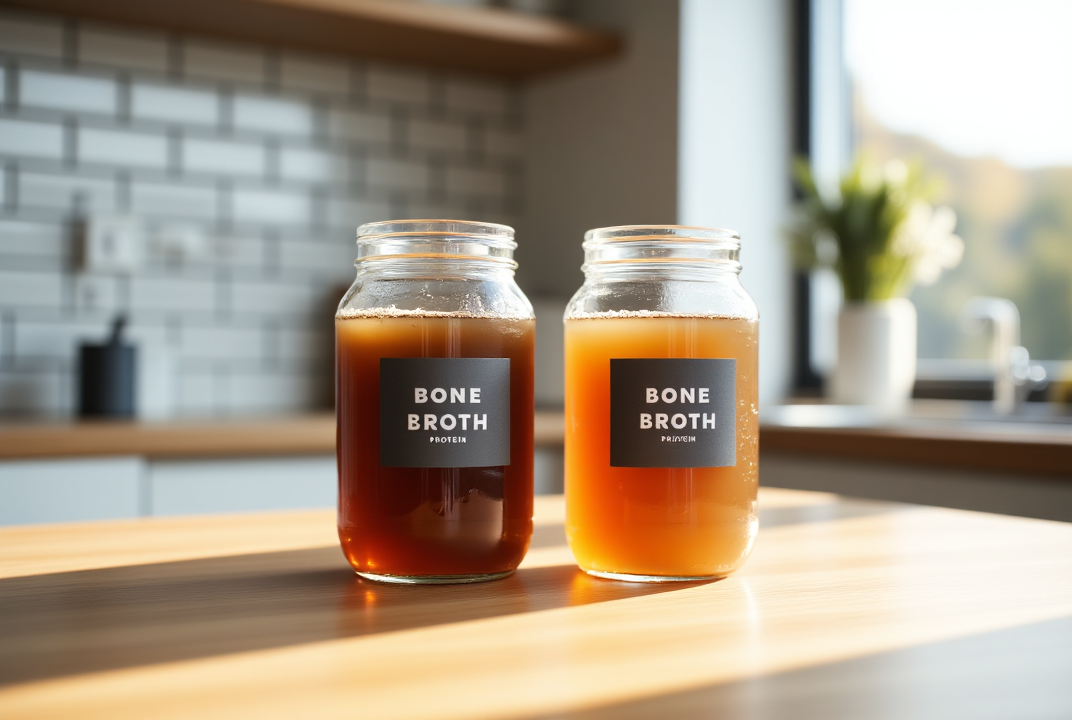
I get this question all the time, and my honest answer is: both. Most of my customers do both. The decision is not about which is better. It is about what fits into your life and where you are willing to spend your time and energy.
Homemade bone broth
Making your own bone broth is wonderful when you have the time. You control the ingredients, the simmer time, and the quality of the bones. You can use leftover bones from a roast chicken, which is economical and reduces waste. The flavor is something you can adjust to your preference. I have written about how to make chicken bone broth for anyone who wants to get started. The two main approaches are stovetop, which takes 12 to 24 hours, and Instant Pot, which delivers a fine broth in 2 to 3 hours.
Store-bought bone broth
Quality store-bought bone broth gives you consistency, convenience, and quality control you might not be able to replicate at home. The questions to ask are: what bones are used, where do they come from, how long was the broth simmered, what is the amino acid and collagen content, and is the product third-party tested. I formulated my own bone broth product line specifically because I wanted these answers. My bone broth collection is what I serve my own family. I have also written about bone broth powder vs. liquid for anyone weighing the format question.
Practical reality
Most of my customers, including the ones who love making their own, also keep good store-bought broth on hand for busy days. The daily habit is what matters. Whichever path keeps you drinking bone broth consistently is the right one. And if you are wondering about practical questions like how long bone broth lasts in the fridge or whether you can freeze it, I have answered those too.
Who Should and Shouldn’t Drink Bone Broth
Bone broth is a food, and for most people it is a perfectly safe addition to a daily routine. But I want to be honest about who should approach it more thoughtfully or skip it entirely.
Who benefits most
-
Anyone wanting to support gut health, including people with digestive sensitivities, recent antibiotic use, or chronic low-grade inflammation.
-
People in midlife and beyond who are losing collagen as part of natural aging.
-
Anyone recovering from illness, surgery, or injury. Bone broth is a traditional convalescence food for good reason.
-
Athletes and active people whose connective tissue, joints, and gut are under regular stress.
-
People who skip breakfast or practice intermittent fasting and want something sustaining during fasting windows.
-
Anyone trying to reduce ultra-processed foods and add more traditional, nutrient-dense whole foods back into the daily routine.
Who should be cautious
-
People with histamine intolerance. Bone broth, especially long-simmered broth, can be high in histamine and may trigger symptoms in sensitive individuals. Start with smaller amounts.
-
People with kidney disease or specific medical conditions that require restricted protein intake. Talk to your healthcare provider first.
-
People on a strictly vegan or vegetarian diet. Bone broth is by definition an animal product. The vegan and vegetarian alternative is a vegetable broth made with mineral-rich vegetables, sea vegetables, and mushrooms. My own
Vegetarians and vegans can use my Vegan Garden Vegetable Broth as an alternative. It does not contain the collagen amino acids of true bone broth but it does provide the soothing, mineral-rich savoriness of a daily broth practice.
Choosing Your Bone Broth: Formats, Flavors, and What I Recommend
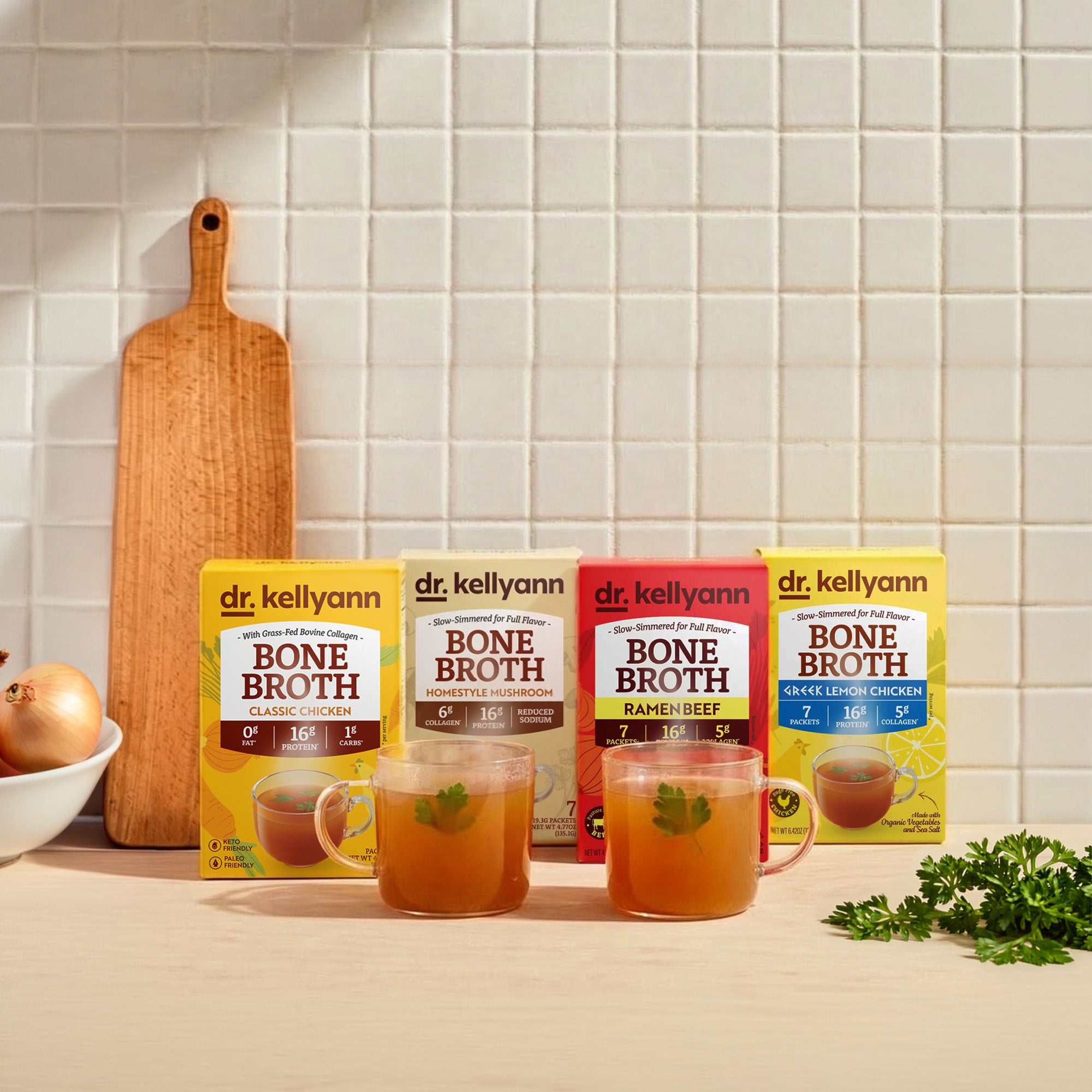
Once you have decided to add bone broth to your daily routine, the question becomes which one. I have built out a fairly extensive product line because I wanted there to be a bone broth that fits every lifestyle, every flavor preference, and every situation. Here is how I would think about it.
Start by choosing your format
Concentrates and frozen broths. Closest to homemade. Warm in a mug or use as a soup base. The foundation of the line: my Classic Chicken Bone Broth and Classic Beef Bone Broth.
Ready-to-drink liquid broths. Shelf-stable, no prep, on-the-go life. Options include Classic Beef Low-Sodium Liquid, French Onion Liquid, and Thai Lemongrass Liquid.
Powders and capsules. For travel, smoothies, and quick daily use. The Bone Broth Protein powders stir into nut milk in seconds. The Bone Broth Capsules keep the habit going when you cannot drink a mug.
Then choose your flavors
The savory foundation. Classic Chicken and Classic Beef. Clean, versatile, the most popular.
The elevated flavors. Roasted Rosemary Chicken (herbal, warming), French Onion (bistro-soup flavor), Greek Lemon Chicken (bright and citrusy), Homestyle Mushroom (earthy and umami-rich).
The bolder flavors. Thai Lemongrass (aromatic with heat), Sriracha Chicken (real kick), Ramen Beef (deep ramen-shop flavor at home).
The protein powders. Vanilla, Chocolate, and Salted Caramel for shakes, smoothies, and dessert-style applications.
What I recommend based on where you are
If you are new to bone broth, start with Classic Chicken for two weeks. If you are doing the full Bone Broth Diet, the 21-Day Bone Broth Diet Bundle has everything mapped out. If you travel often, the Bone Broth Protein powders or the Bone Broth Capsules will keep your habit alive. And if you want variety, the bone broth bundles collection lets you build your own mix.
Frequently Asked Questions
Is bone broth good for you?
Yes. Bone broth is a nourishing traditional food with documented amino acid content, real mechanisms of action for gut barrier support, sleep quality, and skin and joint nourishment, and a growing body of clinical research1 2. It is not a miracle cure, but it is a daily nourishment practice that many people find supportive of overall well-being.
How much bone broth should I drink per day?
One cup per day is a sustainable baseline for general wellness. Two cups per day is where many people see noticeable changes in gut health, skin, and joint comfort within a few weeks. During the 21-day Bone Broth Diet, the protocol calls for at least one cup on feeding days and three to six cups on mini-fasting days3.
Is bone broth a complete protein?
Bone broth contains all nine essential amino acids but in proportions that are different from a complete protein source like a chicken breast or eggs. It is particularly rich in glycine, proline, and hydroxyproline, the building blocks of collagen. It is best thought of as a complementary protein, not a primary protein source. Aim to get most of your daily protein from animal protein, fish, or eggs and use bone broth as a daily collagen and amino acid supplement.
Does bone broth have collagen?
Yes. The long simmer time breaks down the collagen in animal bones and connective tissue into bioavailable gelatin and amino acids. This is what gives bone broth its characteristic body when chilled, that gel-like texture, and it is the source of the glycine, proline, and hydroxyproline that bone broth is known for. Research on hydrolyzed collagen, the same general form found in bone broth, documents benefits for skin6.
Is bone broth good for gut health?
Yes. The amino acids in bone broth, particularly glycine and glutamine, are key building blocks the body uses to maintain and repair the intestinal lining1. A 2024 review of intestinal permeability documents the mechanisms by which gut barrier function is supported by dietary amino acids and the broader nutritional strategies that may help4.
Can I drink bone broth in the morning on an empty stomach?
Yes, and many people find this is the best way to use bone broth. Morning bone broth on an empty stomach delivers amino acids and minerals when your body is coming out of an overnight fast, with no blood sugar spike. It is hydrating, savory, and grounding. This is one of the most popular daily practices in my customer community.
Does bone broth break a fast?
Bone broth is technically a food and does contain a small number of calories and protein. Whether it “breaks” a fast depends on how strictly you define fasting. For metabolic fasting, where the goal is to remain in a fat-burning state, bone broth is generally considered acceptable because it does not significantly raise insulin or blood sugar. For strict water-only fasting, it does count as eating. The Bone Broth Diet structure uses bone broth during mini-fasting days deliberately for this reason.
Bone broth vs. collagen supplements, which is better?
They serve overlapping but slightly different purposes. Collagen supplements deliver a concentrated, measurable dose of hydrolyzed collagen peptides in a powder you can stir into anything. Bone broth delivers collagen-derived amino acids in their natural food matrix, along with minerals, gelatin, glutamine, and a savory food experience. Many people use both. Collagen powder in the morning smoothie, bone broth in the afternoon or evening. They are not in competition.
What does bone broth taste like?
Plain chicken bone broth tastes like a deeply savory, slightly richer version of clear chicken soup, with a rounder mouthfeel. Beef bone broth is deeper, more robust, almost meaty. The flavored varieties (French Onion, Thai Lemongrass, Roasted Rosemary, and the rest) taste like the cuisine they are inspired by. If you are new to bone broth, the flavored varieties are often easier to drink as is.
Can vegetarians drink bone broth?
Bone broth is by definition an animal product, so a strictly vegetarian or vegan diet does not include it. The closest equivalent is a mineral-rich vegetable broth made with sea vegetables, mushrooms, and root vegetables, which provides a similar warming, savory daily ritual without the collagen amino acids. My Vegan Garden Vegetable Broth is the alternative I recommend.
Where to Start Today
If you take one thing from this guide, let it be this. Bone broth is real food with real evidence behind it. The amino acid content is documented. The mechanisms for gut support, skin and joint nourishment, and sleep quality are real. The 2025 clinical trial of the Bone Broth Diet3 adds to a growing body of evidence on what bone broth can do as part of a structured daily practice. Start simple. One cup of Classic Chicken or Classic Beef a day for two weeks. See how you feel. Note your energy, your sleep, your digestion, your skin. The data point that matters most is your own. And if you decide you want to do more, the Bone Broth Diet is the deeper protocol that takes everything in this article and turns it into a 21-day transformation.
References
1. Matar A, Abdelnaem N, Camilleri M. Bone Broth Benefits: How Its Nutrients Fortify Gut Barrier in Health and Disease. Dig Dis Sci. 2025;70(6):1951-1961. Available at: https://pubmed.ncbi.nlm.nih.gov/40180691/
2. Soh J, Raventhiran S, Lee JH, Lim ZX, Goh J, Kennedy BK, Maier AB. The effect of glycine administration on the characteristics of physiological systems in human adults: A systematic review. GeroScience. 2024;46(1):219-239. Available at: https://www.ncbi.nlm.nih.gov/pmc/articles/PMC10828290/
3. Doma KM, Moulin M, Al-Wahsh H, Guthrie N, Crowley DC, Lewis ED. An open-label clinical trial to investigate the safety and efficacy of a bone broth diet on weight loss in adults with obesity. Clin Nutr Open Sci. 2025;61:231-240. (Funded by Veyl Ventures LLC; conducted by KGK Science Inc., an independent clinical research organization; ClinicalTrials.gov NCT05740670.) Available at: https://www.sciencedirect.com/science/article/pii/S2667268525000488
4. Macura B, Kiecka A, Szczepanik M. Intestinal permeability disturbances: causes, diseases and therapy. Clin Exp Med. 2024;24(1):232. Available at: https://www.ncbi.nlm.nih.gov/pmc/articles/PMC11438725/
5. Kokura Y, Ueshima J, Saino Y, Maeda K. Enhanced protein intake on maintaining muscle mass, strength, and physical function in adults with overweight/obesity: A systematic review and meta-analysis. Clin Nutr ESPEN. 2024;63:417-426. Available at: https://www.sciencedirect.com/science/article/abs/pii/S2405457724001761
6. Dewi RK, Perdiyana A, Arkania N, Nadhira F, Wiliantari NM. Exploring the Impact of Hydrolyzed Collagen Oral Supplementation on Skin Rejuvenation: A Systematic Review and Meta-Analysis. Cureus. 2023;15(12):e50231. Available at: https://www.ncbi.nlm.nih.gov/pmc/articles/PMC10773595/
These statements have not been evaluated by the Food and Drug Administration. Dr. Kellyann products are not intended to diagnose, treat, cure, or prevent any disease. Results may vary. Consult your healthcare provider before starting any new dietary program, especially if you are pregnant, nursing, taking medication, or have a medical condition.