
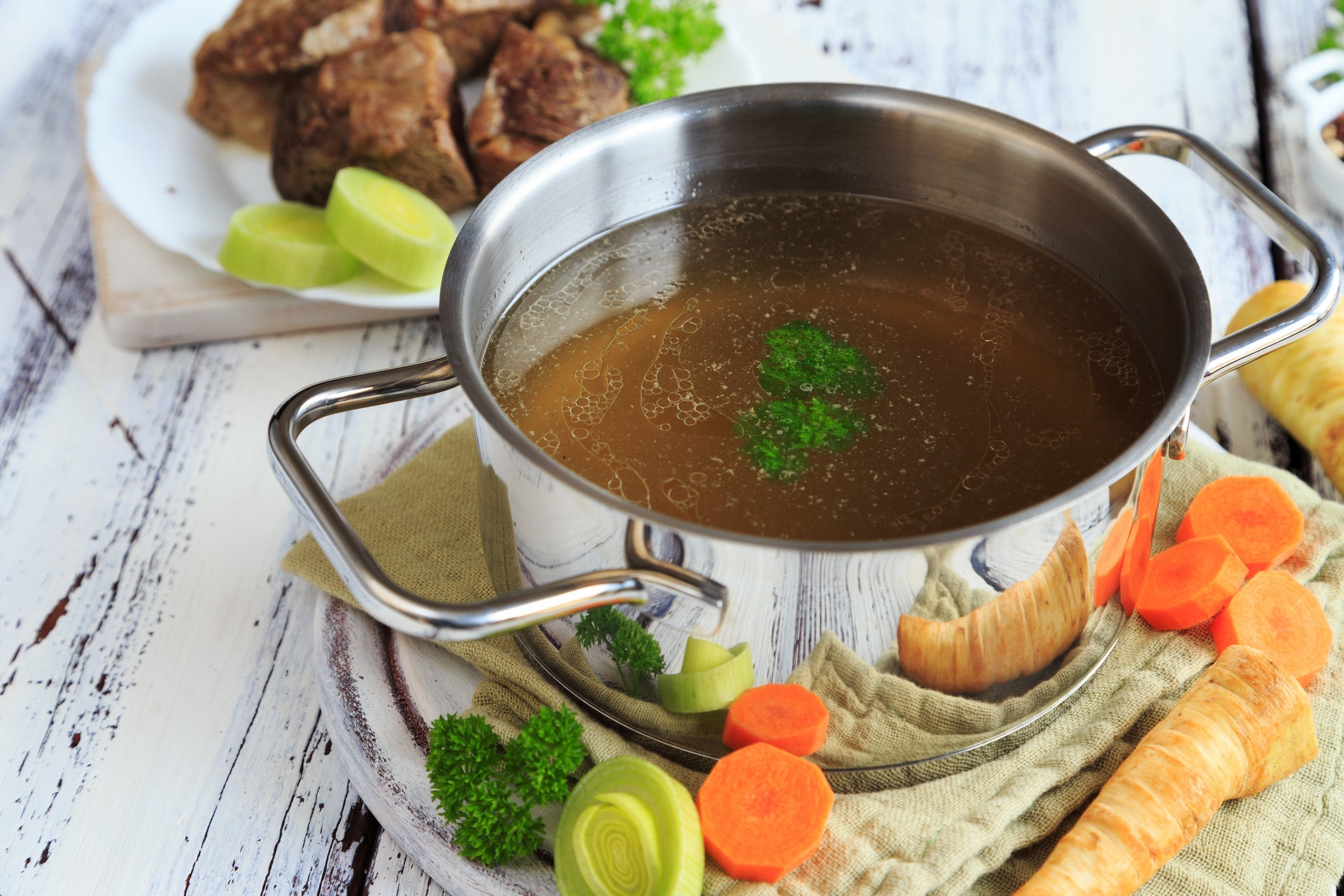
Cholesterol comes up in nearly every conversation about midlife nutrition, and bone broth is no exception. Women who are working with their healthcare providers on cholesterol management often ask whether bone broth fits into their nutrition plan, and the honest answer requires some context. Bone broth itself has very little impact on cholesterol levels for most people, but the broader picture of how bone broth fits into a heart-healthy eating pattern matters.
I want to walk you through what bone broth actually contains in terms of cholesterol-relevant compounds, how it fits into cardiovascular nutrition, and the broader considerations for incorporating it into a routine when cholesterol is part of your health picture. Our Bone Broth Classic Chicken is the lightest, lowest-fat variety in our line, which matters for the considerations below.
What Is Actually in Bone Broth
A typical cup of quality bone broth contains 50 to 90 calories, 8 to 12 grams of protein, around 1 to 3 grams of fat (depending on how thoroughly the fat is skimmed during processing), and very small amounts of carbohydrates. The fat content is the variable most relevant to cholesterol conversations, and properly skimmed commercial bone broth is generally low in fat overall.
The fat that remains in bone broth is similar in composition to the fat in the source meat: a mix of saturated, monounsaturated, and polyunsaturated fatty acids, with proportions that depend on whether the source animals were grass-fed or grain-fed. Grass-fed sourcing produces a more favorable fatty acid profile, with higher omega-3 content and beneficial conjugated linoleic acid.
Does Bone Broth Raise Cholesterol?
For most women, no. The amount of fat in a typical cup of bone broth is too small to meaningfully affect cholesterol levels. A daily cup adds maybe 1 to 3 grams of fat to your day, which is a fraction of typical daily fat intake and unlikely to shift cholesterol numbers in any meaningful direction.
Women specifically tracking saturated fat intake for cardiovascular reasons may want to be aware that some of the fat in bone broth is saturated. But again, the amounts are small enough that fitting bone broth into a heart-healthy eating pattern is straightforward for almost everyone.
The Indirect Cholesterol Benefits
Several compounds in bone broth may actually support healthier cholesterol profiles indirectly. The amino acid glycine has been studied for its effects on liver function and lipid metabolism, with some research suggesting beneficial effects on cholesterol and triglyceride balance. The gelatin in bone broth may support healthier blood vessel function by providing structural support for vascular tissue.
Bone broth also tends to displace less healthy options when incorporated as a regular part of a routine. A morning cup of bone broth instead of a sugary breakfast pastry, or an afternoon cup instead of a processed snack, can shift the broader eating pattern in cardiovascular-friendly directions without anyone specifically focusing on bone broth as a cholesterol intervention.
Fat Content Differences Between Varieties
Different bone broth varieties have different fat profiles. Chicken bone broth tends to be the lowest in fat once properly skimmed, with most quality commercial chicken bone broths containing 1 to 2 grams of fat per cup. Beef bone broth is typically slightly higher, around 2 to 3 grams per cup, due to the richer marrow content. Specialty preparations like beef bone broth made with more fatty cuts can run higher.
For women specifically managing fat or saturated fat intake, Bone Broth Classic Chicken is the most cardiovascular-friendly choice. For women wanting more substantial nutrition with less concern about modest fat intake, the heartier varieties offer richer profiles.
Bone Broth Protein as an Alternative
For women who want bone broth nutrition with very specific control over fat intake, Bone Broth Protein Vanilla offers a powdered format with concentrated amino acid content and minimal fat. It can be added to smoothies, oatmeal, or other foods as a protein boost without adding meaningful fat to your day.
The protein form is also useful for women who do not want the warming, savory quality of liquid bone broth but still want the nutritional benefits. The amino acid profile is similar to liquid bone broth, with the format being the main practical difference.
The Bigger Cardiovascular Picture
Cholesterol management in midlife is rarely about any single food. The broader patterns matter more: regular physical activity, adequate fiber intake (particularly soluble fiber from oats, legumes, and apples), omega-3 rich foods (wild salmon, sardines, walnuts), abundant vegetables and fruits, limited processed foods and refined carbohydrates, moderate alcohol intake at most, and adequate sleep and stress management.
Bone broth fits comfortably within this pattern as one of the nutritional supports rather than as a primary driver of cholesterol. Our companion post on bone broth gut health covers another aspect of how bone broth fits into broader wellness, and gut health and cardiovascular health are increasingly recognized as connected.
When Bone Broth Might Need Modification
Women with very specific medical situations (severe hypercholesterolemia, recent cardiac events, certain medications) should discuss bone broth with their healthcare provider as part of their overall nutrition plan. In most cases, daily bone broth is appropriate. In some specific situations, modifications (lower-fat varieties, smaller serving sizes, specific timing) may be recommended.
Women on certain medications can have specific dietary considerations. For example, statins are sometimes paired with dietary recommendations that affect what makes sense alongside them. A quick conversation with your healthcare provider or pharmacist clarifies how bone broth fits with your specific medication picture.
Combining Bone Broth With Cardiovascular Support
For women working specifically on cardiovascular health, bone broth combines well with other supportive habits and supplements. Pairing daily bone broth with omega-3 rich foods or supplements creates a complementary effect for heart health. Combining bone broth with a fiber-rich daily eating pattern supports both heart health and the gut health that increasingly appears connected.
Our post on bone broth side effects covers other considerations worth being aware of, none of which are specifically cardiovascular but which contribute to the overall picture of how bone broth fits into a thoughtful nutrition routine.
A Heart-Smart Bone Broth Routine
Here is a simple framework. If cholesterol management is part of your health picture, start with one daily cup of Bone Broth Classic Chicken as your bone broth anchor. Pair with the broader cardiovascular-supportive habits (omega-3 foods, fiber, vegetables, regular activity). Discuss your nutrition plan with your healthcare provider as part of routine care. Use the bone broth collection flexibly across the day, varying between chicken and beef based on your preference and your specific fat intake goals. The Bone Broth Diet framework can be adapted to fit cardiovascular nutrition goals. The cumulative effect of daily bone broth as part of a thoughtful heart-aware eating pattern is supportive rather than concerning for the vast majority of women.
Frequently Asked Questions
Will Bone Broth Classic Chicken raise my cholesterol?
Bone Broth Classic Chicken is unlikely to meaningfully raise cholesterol for most women because the amount of fat per cup is small (typically 1 to 2 grams) and not enough to significantly shift cholesterol numbers. Women with specific medical situations should discuss any dietary additions with their healthcare provider.
How much fat is in Bone Broth Classic Chicken?
A typical cup of Bone Broth Classic Chicken contains about 1 to 2 grams of fat after proper processing, which is a small fraction of typical daily fat intake. The fat is similar in composition to chicken fat in general, with a mix of saturated, monounsaturated, and polyunsaturated fatty acids.
Is Bone Broth Classic Chicken or Bone Broth Protein better for cholesterol management?
Bone Broth Protein has minimal fat and may be preferable for women who want very strict control over fat intake. Bone Broth Classic Chicken provides the warming ritual quality and broader nutritional profile with only modest fat content. Both work well for most cardiovascular-aware nutrition plans.
Can Bone Broth Classic Chicken support heart health?
Bone Broth Classic Chicken contains amino acids like glycine that some research suggests may support healthy lipid metabolism and liver function, plus minerals that support cardiovascular function. While not a treatment for any cardiovascular condition, daily bone broth as part of a broader heart-healthy eating pattern may contribute supportively. Results may vary.
|
Compliance Note These statements have not been evaluated by the Food and Drug Administration. This product is not intended to diagnose, treat, cure, or prevent any disease. Results may vary by individual. Consult your healthcare provider before adding any new supplement to your routine. |