
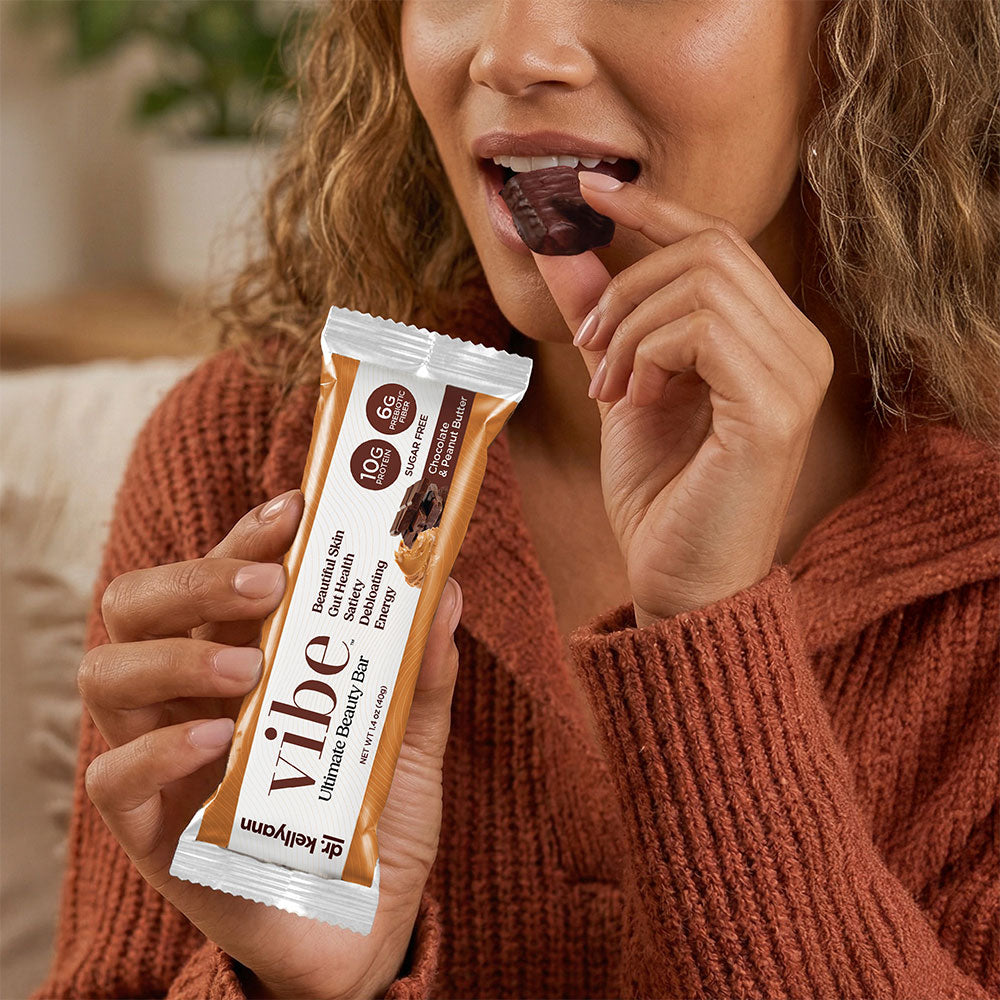
Collagen bars and protein bars look similar on the shelf and are often shopped as interchangeable options, but they serve genuinely different daily use cases. The Chocolate Coconut Collagen Fiber Bar delivers concentrated collagen amino acids plus prebiotic fiber in a portable snack format. Standard protein bars deliver complete protein with a broader macronutrient profile designed for meal-replacement or higher-protein snacking. Understanding the differences lets women choose the bar that fits their specific daily goal rather than defaulting to whichever is more familiar.
After two decades of clinical practice, Dr. Kellyann observed that women often reach for a bar based on marketing rather than on nutritional targeting. The result is that women pursuing collagen benefits sometimes buy protein bars that deliver minimal collagen, and women pursuing protein adequacy sometimes buy collagen bars that deliver less complete protein than they need. Matching the bar to the goal produces better outcomes than treating them as interchangeable.
The Core Difference: Amino Acid Profile
Collagen bars deliver concentrated collagen amino acids (glycine, proline, hydroxyproline, and others) that support connective tissue, skin, hair, and joint health specifically. The amino acid profile is not a complete protein by nutritional definition; it is targeted amino acid support for collagen-related tissues.
Protein bars deliver complete protein from sources like whey, casein, soy, or plant protein blends. The amino acid profile is complete, meaning all nine essential amino acids are present in adequate ratios. This makes protein bars more appropriate for meal-replacement or protein-adequacy goals, and less specifically targeted for collagen benefits.
Research indexed in NIH’s PubMed database has explored the different amino acid profiles of collagen versus whole protein sources with detailed findings on the specific ratios in each. The Cleveland Clinic has covered protein source selection in the broader nutrition literature.
The Fiber Component
The Chocolate Coconut Collagen Fiber Bar specifically adds prebiotic fiber alongside the collagen delivery. This fiber component provides both satiety support (relevant when the bar is functioning as a snack replacement) and gut microbiome support that complements the collagen amino acid delivery. Standard protein bars typically do not include the specific prebiotic fiber blend, though many include general dietary fiber for satiety.
The fiber component matters for daily use because it makes the collagen bar function more effectively as a snack replacement (fiber increases satiety and slows digestion) and provides supplementary gut microbiome support alongside the collagen benefits. For women whose daily goals include both collagen and gut support, the collagen fiber bar hits both simultaneously.
When to Choose Which
Choose the Collagen Fiber Bar When
Daily goals are focused on collagen benefits (skin quality, hair strength, joint comfort, connective tissue support). The bar is functioning as an afternoon snack replacement or portable collagen delivery for travel and busy days. Prebiotic fiber content is a positive additional benefit. The chocolate coconut flavor profile fits the daily rhythm.
Choose a Protein Bar When
Daily goals are focused on protein adequacy for muscle preservation, satiety, or meal replacement. Complete protein delivery is the primary goal. The bar is functioning as substantial protein delivery rather than as portable snack. The specific amino acid profile of collagen is not the goal, and complete protein from whey or other sources is more appropriate.
The Practical Framework for Daily Use
For most women in the Dr. Kellyann community, the practical framework is that both bars have appropriate contexts and neither replaces the other for its primary goal. The Collagen Fiber Bar is the appropriate choice for afternoon snack replacement, portable collagen delivery, and situations where the collagen amino acid support is the daily goal.
Protein bars (from any brand producing quality whole-protein bars) are appropriate for meal replacement, higher protein delivery goals, and situations where complete protein adequacy is the goal. Some women use both: Collagen Fiber Bar as the daily collagen delivery, a whole-protein bar or Collagen Shake Chocolate Almond as the meal replacement, and neither replaces the daily Collagen Peptides Unflavored practice that anchors the daily collagen framework.
The Layered Daily Collagen Framework
For women prioritizing collagen benefits, the layered daily framework typically includes: Collagen Peptides Unflavored in morning coffee or smoothie as the versatile daily anchor delivering 10 to 20 grams of collagen, Collagen Fiber Bar as the portable afternoon snack replacement delivering additional collagen in a portable format, and daily bone broth practice adding collagen amino acids in a warm liquid form. This layered approach delivers 20 to 40 grams of collagen amino acids daily across multiple delivery formats.
The Layered Daily Protein Framework
For women prioritizing protein adequacy, the layered framework typically includes: 30 to 40 grams of complete protein at each of three main meals from whole foods (eggs, meat, fish, dairy), daily bone broth practice contributing 18 to 27 grams to the total, a quality whole-protein bar or collagen shake as needed to close daily gaps, and Collagen Peptides Unflavored as targeted collagen amino acid support alongside the complete protein sources. This approach hits the 100 to 120 gram daily protein target while providing the specific collagen amino acid support.
Common Misconceptions
The most common misconception is that collagen bars are protein bars that happen to contain collagen. They are not. Collagen bars deliver targeted amino acid support for collagen-related tissues rather than complete protein for muscle preservation and general daily protein adequacy. Women who buy collagen bars expecting protein-bar-level protein content for daily protein goals are typically underserved by the choice.
The reverse misconception is that protein bars deliver meaningful collagen benefits because they contain protein. Most protein bars contain minimal or no collagen; the protein is from whey, casein, soy, or plant sources that do not deliver the specific collagen amino acid profile. Women buying protein bars expecting collagen benefits are typically underserved by the choice. Dr. Kellyann’s guide on keto snack ideas covers additional quality snack alternatives for women optimizing daily snack quality. The Harvard T.H. Chan School of Public Health Nutrition Source has covered protein source selection in the broader dietary guidance.
The Practical Choice
For most women, the practical framework is that both categories have appropriate contexts. Match the bar to the daily goal. Collagen bar for collagen benefits and afternoon snack replacement. Whole-protein bar or Collagen Shake for meal replacement and protein adequacy. Daily Collagen Peptides Unflavored as the underlying daily collagen practice anchor. Daily bone broth for the layered warm collagen delivery. This produces the most sustainable and effective daily practice for the specific goals each woman is pursuing.
The Dr. Kellyann guide on collagen benefits covers the broader daily collagen framework in more depth.
Frequently Asked Questions
What is the difference between a collagen bar and a protein bar?
Collagen bars deliver concentrated collagen amino acids (glycine, proline, hydroxyproline) that support connective tissue, skin, hair, and joints specifically. Protein bars deliver complete protein from sources like whey or casein designed for meal-replacement or protein-adequacy goals. Collagen bars are not complete protein sources by nutritional definition; they are targeted amino acid support. Match the bar to the daily goal rather than treating them as interchangeable.
Can a Collagen Fiber Bar replace a protein bar?
Not for the same nutritional purpose. Collagen Fiber Bar delivers concentrated collagen amino acids plus prebiotic fiber, which supports collagen-related tissues and gut health. Protein bars deliver complete protein for muscle preservation and general daily protein adequacy. For collagen goals, Collagen Fiber Bar is the appropriate choice. For protein adequacy goals, a quality whole-protein bar or Collagen Shake is more appropriate. Some women use both for different daily contexts.
Is the Chocolate Coconut Collagen Fiber Bar a good snack?
Yes, the Chocolate Coconut Collagen Fiber Bar works well as a portable snack replacement, particularly for afternoon energy dips where the alternative would be chips, cookies, or lower-quality options. The prebiotic fiber content supports satiety while the collagen delivery provides functional daily benefit. Sustained substitution over months meaningfully improves the daily snack quality profile while contributing to daily collagen practice.
Do I still need Collagen Peptides Unflavored if I eat a Collagen Fiber Bar daily?
Yes, most women benefit from daily Collagen Peptides Unflavored practice as the anchor even when Collagen Fiber Bar is part of the daily rhythm. The powder dissolves into morning coffee or smoothie for consistent daily delivery at the primary daily window. The bar provides portable additional delivery for afternoon or travel contexts. Combined, they deliver 20 to 40 grams of collagen amino acids daily across multiple delivery formats.