
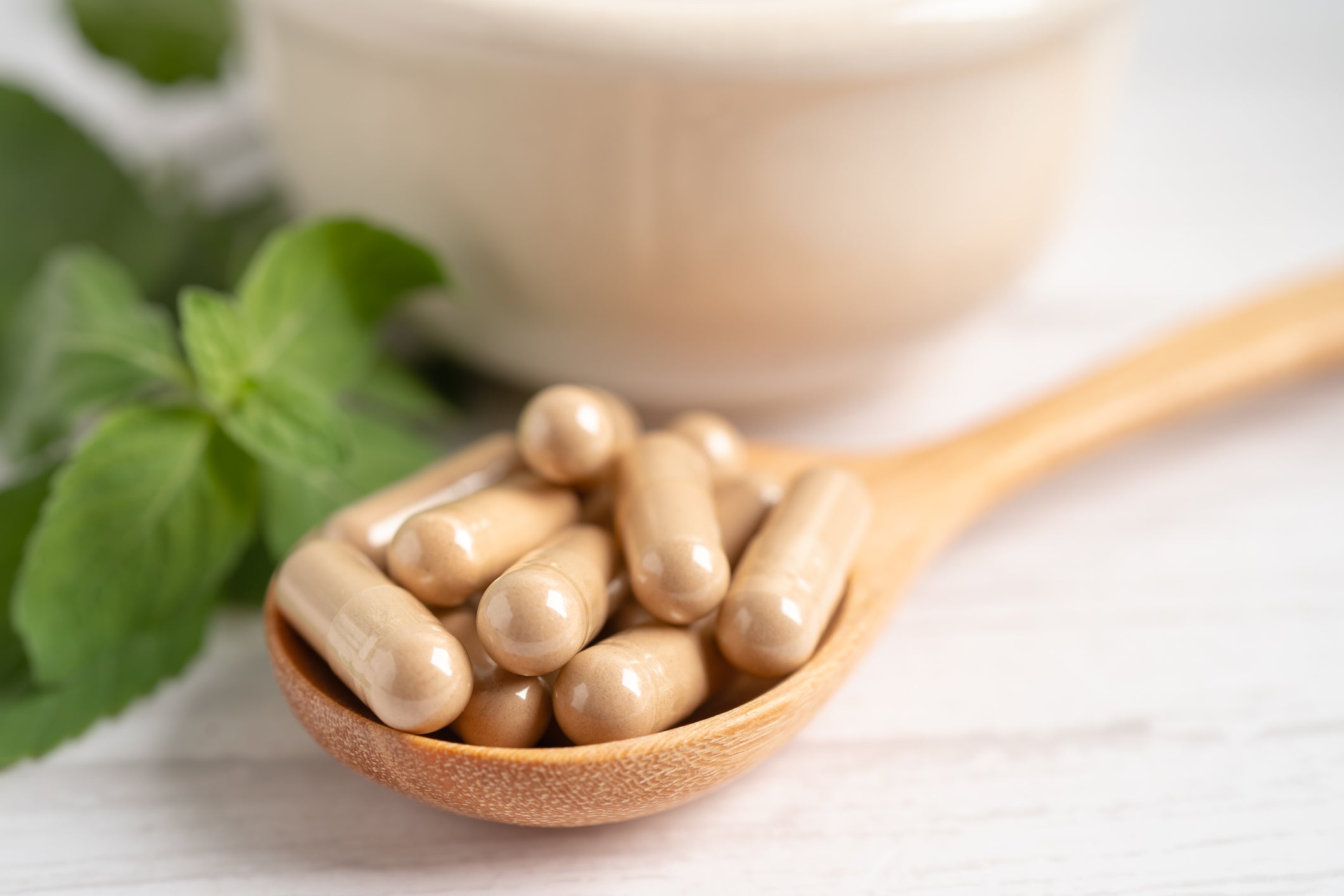
Bone Broth Capsules vs. Liquid: Which Is Better for You?
I have been prescribing bone broth to my patients for over two decades — long before it appeared in grocery stores and wellness articles. The question I am getting now is a new one, and I want to answer it properly: does it matter whether you sip your bone broth or swallow it in a capsule?
The short answer is that both forms work, and for most of my patients the best approach is both. My Bone Broth Capsules were formulated for exactly this: the days when you are traveling, rushing, or simply cannot make time for a warm cup. The same grass-fed collagen, the same amino acids, in a format that fits any schedule.
What You Actually Get From Each Form
Liquid bone broth powder — the kind I use in my Bone Broth Diet protocol — is slow-simmered bone broth concentrate, spray-dried and sealed in a single-serve packet. Each serving of my Classic Beef Bone Broth delivers 15–16g of collagen-rich protein, glycine, proline, hydroxyproline, glutamine, and trace minerals. You mix it with hot water and sip it.
Bone broth capsules use the same source material — concentrated, encapsulated bone broth — but in a smaller dose (typically 2–4g per serving) and zero-prep format. The benefits I describe in my bone broth benefits overview — gut support, skin elasticity, joint comfort — come from both forms. The difference is quantity per serving and delivery method.
The Absorption Question
I hear this one constantly: does heat or digestion destroy the collagen in capsules? The answer is no — not if the collagen is hydrolyzed, meaning already broken down into peptide form. Hydrolyzed collagen peptides are stable through the digestive process and are absorbed efficiently regardless of whether you swallowed them in capsule form or drank them in a warm cup.
What liquid bone broth offers that capsules cannot fully replicate is the warmth itself — which supports digestive enzyme activity and the parasympathetic ‘rest and digest’ state that genuinely helps with gut healing. If gut health is your primary goal, my bone broth and gut health post explains the full mechanism in detail, and my recommendation there is always to start with liquid.
When I Recommend Capsules
-
You travel more than three days a week and cannot rely on hot water access
-
You struggle with the taste of bone broth even in flavored varieties
-
You want a consistent daily dose that integrates into an existing supplement routine
-
You already use liquid bone broth most days and want a reliable backup for the others
When Liquid Is the Better Choice
-
You are following my Bone Broth Diet, which calls for specific sipping windows throughout the day
-
You need 10g or more of collagen protein from bone broth daily — liquid delivers 4–8x more per serving
-
You want the gut-soothing warmth and ritual that supports mindful eating
-
You are using bone broth as a fasting window tool or a meal replacement
The Nutritional Comparison in Plain Language
Here is how to think about it: liquid bone broth is a nutritional meal in a cup. Capsules are a targeted amino acid and collagen supplement. If you were comparing them to food, liquid would be the steak and capsules would be the protein powder. Both have protein. One is a more complete nutritional experience.
The collagen content matters most for skin, joints, and gut goals. A single cup of my liquid bone broth provides 15g of collagen-rich protein — roughly the dose used in clinical research showing skin elasticity improvements. A standard capsule serving provides 2–4g. Both contribute to your daily total; liquid just gets you there faster per serving.
The Answer I Give My Patients
Use both. Capsules in the morning when you are rushing — or in your bag when you are traveling. Liquid bone broth at lunch or dinner when you have a few quiet minutes. The question I always ask patients is how much collagen they are consistently getting each day, and the answer matters more than the delivery vehicle. If capsules are what keeps you consistent on your busy days, they are doing exactly what I need them to do.
The combined approach — liquid as your foundation, capsules as your backup — is what makes daily consistency achievable for most people without requiring a perfect schedule.
How to Make the Most of Both Formats
The patients who see the best results from bone broth are the ones who have figured out a system rather than relying on motivation alone. Here is the approach I recommend: keep a box of Bone Broth Capsules at your desk or in your travel bag — those are your non-negotiable daily minimum on any day. Keep liquid bone broth powder in your kitchen for the mornings when you have ten minutes, the evenings when you want something warm, and the days when you want full collagen protein at the 15g level. This two-tier approach means your daily floor is always covered and your good days are significantly better.
One practical note on the capsule side: not all bone broth capsules are created equal. Look for the same things I recommend in liquid broth — grass-fed sourcing, hydrolyzed collagen specifically called out on the label, and transparency about protein content per serving. The capsule format makes it tempting for lower-quality brands to use minimal bone broth concentrate padded with fillers and call it a bone broth supplement. Check the label for actual protein grams per serving before purchasing.
Common Questions I Get About Format Choice
‘Can I just take capsules and skip liquid entirely?’ Yes — for daily maintenance, capsules are a completely valid standalone approach. The dose per serving is lower, so you are getting consistent smaller amounts rather than one larger serving. Over time this still contributes meaningfully to your collagen intake and amino acid baseline. If you are doing active gut healing, I would push you toward liquid for the first 21 days because the higher dose per serving matters when the goal is structural repair. After that, capsules as your daily maintenance are entirely reasonable.
‘Are capsules better after meals or before?’ Either works, but empty stomach is preferable if you tolerate it well, because amino acids absorb without competing with food proteins. If you experience any digestive discomfort with capsules on an empty stomach, take them with a small amount of food. The absorption difference is modest — consistency of daily use matters far more than precise timing.
Frequently Asked Questions
|
Frequently Asked Question |
Answer |
|
Are bone broth capsules as effective as liquid bone broth? |
Both deliver the same core amino acids and collagen peptides. Liquid powder typically provides significantly more protein per serving (15–16g vs. 2–4g in capsules), making it more effective for fasting support and high-dose collagen goals. Capsules offer consistency on busy days. Using both together covers the full spectrum. |
|
How many bone broth capsules should I take per day? |
Most bone broth capsule products recommend 2–4 capsules daily. Follow the dosing on your specific product label. For higher daily collagen intake, combining capsules with one serving of liquid bone broth gives you the best of both formats. |
|
Can I take bone broth capsules on an empty stomach? |
Yes — taking them on an empty stomach allows the amino acids to absorb without competition from other proteins. Many of my patients prefer this first thing in the morning before breakfast. |
|
Do bone broth capsules help with gut health? |
Yes. The glycine and glutamine in bone broth capsules may support gut lining integrity even in capsule form. For active gut healing, I recommend starting with liquid bone broth for the higher dose, then using capsules as daily maintenance. |