
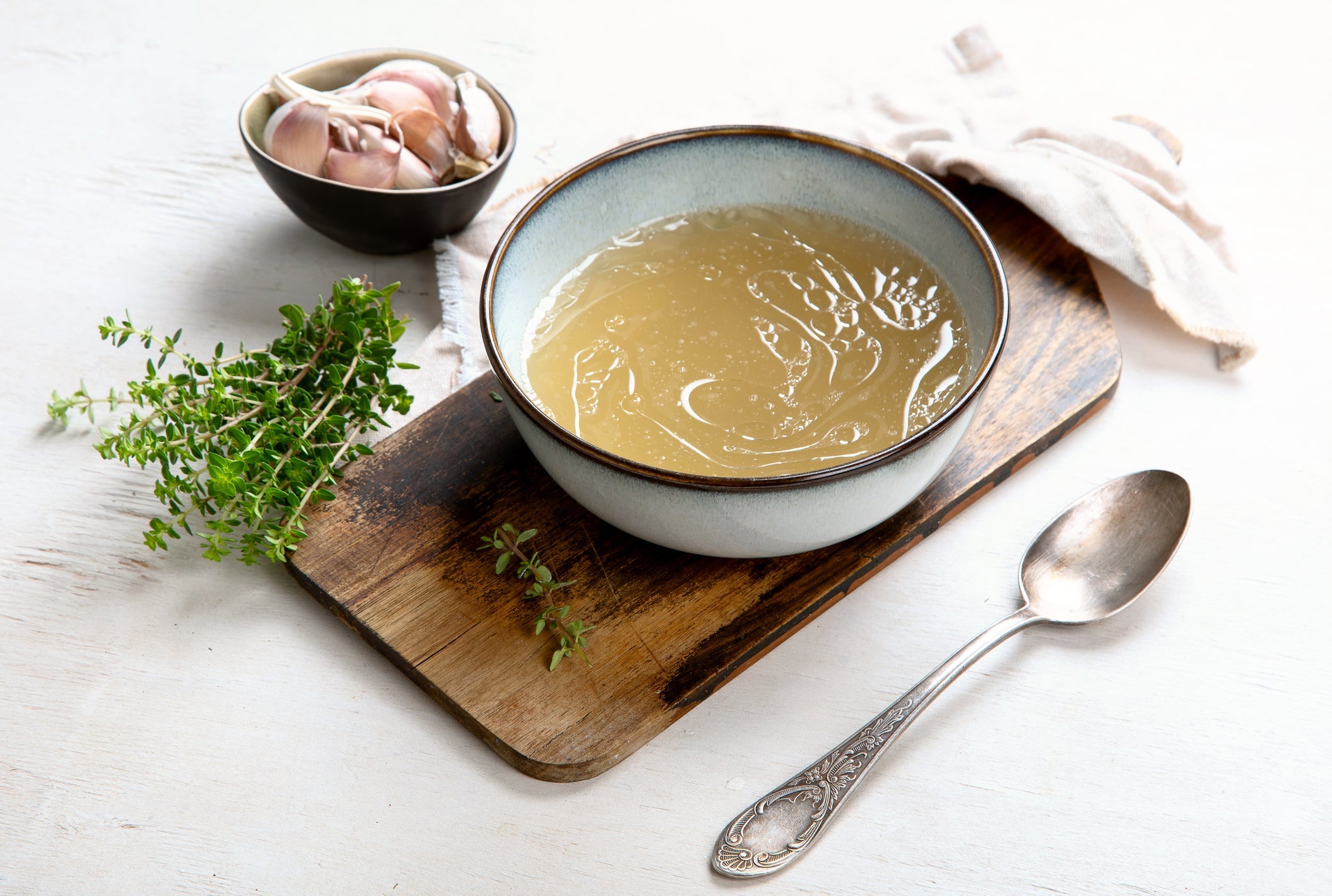
Hair growth is one of the most frustrating wellness goals because progress is so slow and the supplement aisle is so loud. Every product promises faster, fuller, stronger hair, and most of them deliver modest or invisible results. Bone broth has become one of the more interesting players in this category because it works through a fundamentally different mechanism than the hair vitamins that dominate the shelf, and the underlying biology is grounded in something the body genuinely uses for hair production.
I want to walk you through what bone broth can and cannot do for hair, why the amino acid profile matters specifically for hair growth, and how to combine bone broth with targeted hair support for the most complete approach. Our Bone Broth Classic Chicken is the most popular daily choice, and the principles below apply across the bone broth category.
What Hair Is Actually Made Of
Hair is approximately 95 percent keratin, a structural protein built from a specific combination of amino acids including cysteine, glycine, proline, arginine, and lysine. The body assembles keratin from dietary amino acids, which means your hair quality is directly tied to the amino acid raw material available in your diet. Without adequate amino acid intake, the body cannot produce strong, healthy hair regardless of how many vitamins you take.
This is where bone broth fits naturally. Bone broth provides several of the amino acids the body uses most directly for keratin production, in a delivery format that is highly bioavailable. A daily cup contributes meaningfully to the amino acid pool your body draws from for hair production.
The Specific Amino Acids in Bone Broth
Bone broth is particularly rich in glycine, proline, and hydroxyproline, with meaningful amounts of arginine, alanine, and other amino acids relevant to hair production. The collagen content of bone broth essentially functions as a hair-building amino acid concentrate, delivered in a warm, savory format that is easy to incorporate into daily life.
While the marketing of hair vitamins often focuses on biotin, vitamin D, and B-complex vitamins, the amino acid raw material is at least as important. Vitamins help the body use amino acids efficiently, but without the amino acids themselves, vitamins have nothing to work with. Bone broth addresses the amino acid side directly.
What the Research Suggests
Research specifically on bone broth and hair growth is limited, partly because most research focuses on isolated compounds rather than whole foods. What we have is research on the individual amino acids, on collagen peptides (which share an amino acid profile with bone broth), and on the related conditions (nutritional deficiencies affecting hair) that bone broth addresses.
Collagen peptide research has shown improvements in hair growth rate and density with consistent daily intake. Adequate protein research consistently links nutritional sufficiency to healthier hair patterns. The combined picture supports bone broth as a useful contributor to hair health, even if the specific bone broth research base remains small.
Why Bone Broth Works Better Alongside Other Hair Support
Bone broth alone, while supportive, is unlikely to produce dramatic hair changes. The amino acid contribution is real but modest at one cup per day. Combining bone broth with targeted hair support (a quality hair vitamin like our Harmony Hair Growth) addresses both the amino acid raw material and the cofactor vitamins that the body needs to use those amino acids effectively.
Our companion post on hair growth supplements for women covers the full picture of what hair follicles need, and bone broth fits naturally as the amino acid foundation while a hair vitamin covers the micronutrient side.
The Midlife Hair Connection
Hair changes that accelerate in perimenopause and menopause are driven partly by declining estrogen and partly by the broader nutritional shifts that affect midlife bodies. Many women in this stage notice thinning, slower growth, and reduced hair quality even with no obvious change in diet or hair care.
Bone broth supports several of the factors that decline in midlife: amino acid availability for keratin, mineral intake for follicle function, and gut health (which affects nutrient absorption from all sources). Our post on hair loss in women over 40 covers the broader midlife hair picture, and bone broth fits as one piece of the supportive strategy.
Bone Broth vs Collagen for Hair
Both bone broth and collagen peptides provide the amino acid profile that supports hair growth, just in different formats. Collagen peptides offer a concentrated, convenient daily scoop. Bone broth offers a whole-food format with additional minerals and the warming, satisfying experience of drinking it. Many women use both, which doubles the amino acid support without significant redundancy.
Our companion post on bone broth vs collagen covers when to choose one versus the other. For hair specifically, either can support the goal, and the choice often comes down to which format you will actually use consistently.
Realistic Timeline
Hair growth is slow. Hair grows about half an inch per month on average, which means even the most supportive nutrition cannot produce overnight changes. Most women need three to six months of consistent daily support to see visible changes in hair density, growth rate, or quality. Bone broth contributing to this consistent support produces results that compound over months rather than weeks.
Quitting at four weeks because the hair has not transformed misses the point. The strands you can see now have been growing for months under whatever conditions existed before you started bone broth. The strands that will reflect your new daily routine are still in the early growth phase. Patience and consistency matter more than any single component of the strategy.
Combining Bone Broth With Topical Care
Internal support is one side. Hair care practices are the other. Gentle handling (avoiding tight hairstyles, harsh brushing, excessive heat styling), regular scalp care, and protecting hair from environmental damage all support what bone broth and other nutrition are doing internally.
The combination of internal amino acid support, supplemental hair vitamins, and gentle topical care produces better results than any single intervention. Our post on collagen for hair growth covers another related angle that pairs well with bone broth in a complete hair strategy.
A Practical Hair Support Routine
Here is a simple framework. Drink one cup of Bone Broth Classic Chicken daily for steady amino acid support. Pair with Harmony Hair Growth for the targeted vitamins and minerals hair follicles need. Eat adequate protein at meals throughout the day. Treat your hair gently. Give the routine at least three to six months before judging results. Most women find that the combination produces visible improvements in hair density and quality by month four to six, with continued improvements building over the following months of consistency. The bone broth collection offers variety to keep the routine sustainable, and the Bone Broth Diet framework provides structure if you want to layer bone broth into a broader nutritional approach.
Frequently Asked Questions
Does Bone Broth Classic Chicken really help hair grow?
Bone Broth Classic Chicken provides amino acids (especially glycine, proline, and hydroxyproline) that the body uses to build the keratin in hair. While research specifically on Bone Broth Classic Chicken for hair growth is limited, the underlying biology and related research on collagen peptides support it as a useful contributor to hair health when taken consistently. Results may vary.
How long until Bone Broth Classic Chicken shows results on hair?
Hair growth is slow, and visible changes from Bone Broth Classic Chicken typically need three to six months of consistent daily intake to appear. Some women notice subtle improvements in hair feel or scalp comfort earlier, but density and length changes follow the natural hair growth cycle which takes months to reflect new nutritional support.
Should I take Harmony Hair Growth instead of Bone Broth Classic Chicken?
Bone Broth Classic Chicken and Harmony Hair Growth work through different mechanisms and complement each other rather than substituting. Bone Broth Classic Chicken provides amino acid raw material, while Harmony Hair Growth provides the vitamins and minerals that the body uses to convert those amino acids into healthy hair. Combining the two addresses both sides of hair nutrition.
How many cups of Bone Broth Classic Chicken per day for hair growth?
One cup of Bone Broth Classic Chicken per day provides meaningful amino acid support for hair health. Some women drink two cups daily for additional support, particularly during periods of increased hair shedding or after major stressors. There is no specific amount required, and consistency over months matters more than the exact daily dose.
|
These statements have not been evaluated by the Food and Drug Administration. This product is not intended to diagnose, treat, cure, or prevent any disease. Results may vary by individual. Consult your healthcare provider before adding any new supplement to your routine. |