Menopause is a nutritional transition, not just a symptom cluster to be managed. As estrogen declines, the body changes what it needs from daily eating in ways that most conventional nutrition guidance still fails to address. Muscle mass declines faster than at any prior life stage. Bone density accelerates its decline. Sleep quality often becomes fragmented. Skin, joints, and gut function all shift as collagen production and hormonal support decline together. Daily bone broth practice addresses several of these transitions simultaneously through a single accessible daily food.
After two decades of clinical practice, my honest observation is that most women in perimenopause and menopause are undereating protein, undereating minerals, and under-consuming the specific amino acids that support the systems most affected by hormonal transition. The women in my community who navigate menopause with the most preserved energy, muscle mass, and skin quality are the ones who treat this life stage as a nutritional intervention, not just a hormonal one. Let me walk you through where bone broth specifically fits.
What Changes Nutritionally in Menopause
Muscle Mass Decline
Muscle mass declines roughly 3 to 8 percent per decade after age 30, and the decline accelerates during and after menopause. Estrogen supports muscle protein synthesis, and as estrogen declines, women lose muscle faster unless they meet elevated protein needs and continue resistance training. Research indexed in NIH’s PubMed database has explored protein requirements in postmenopausal women with generally supportive findings for higher intake than standard adult recommendations.
Bone Density Decline
Estrogen protects bone density, and its decline during menopause is associated with accelerated bone loss in the first 5 to 7 years post-menopause. Adequate mineral intake (calcium, magnesium, phosphorus), adequate protein for the collagen matrix that provides bone flexibility, and weight-bearing exercise are the practical daily interventions that support bone density during this window.
Sleep Disruption
Hot flashes, night sweats, and hormonal shifts disrupt sleep quality during perimenopause and menopause. Fragmented sleep has downstream consequences for cortisol, appetite regulation, mood, and cognitive function. Nutritional strategies that support sleep quality (particularly glycine intake) become more important during this life stage.
Skin and Joint Changes
Collagen production declines meaningfully during menopause. Skin elasticity reduces, joint discomfort often increases, and hair and nail quality shift. These changes are not inevitable at the pace most women experience them and respond to intentional collagen amino acid intake through diet and supplementation.
Where Bone Broth Fits
Protein for Muscle Preservation
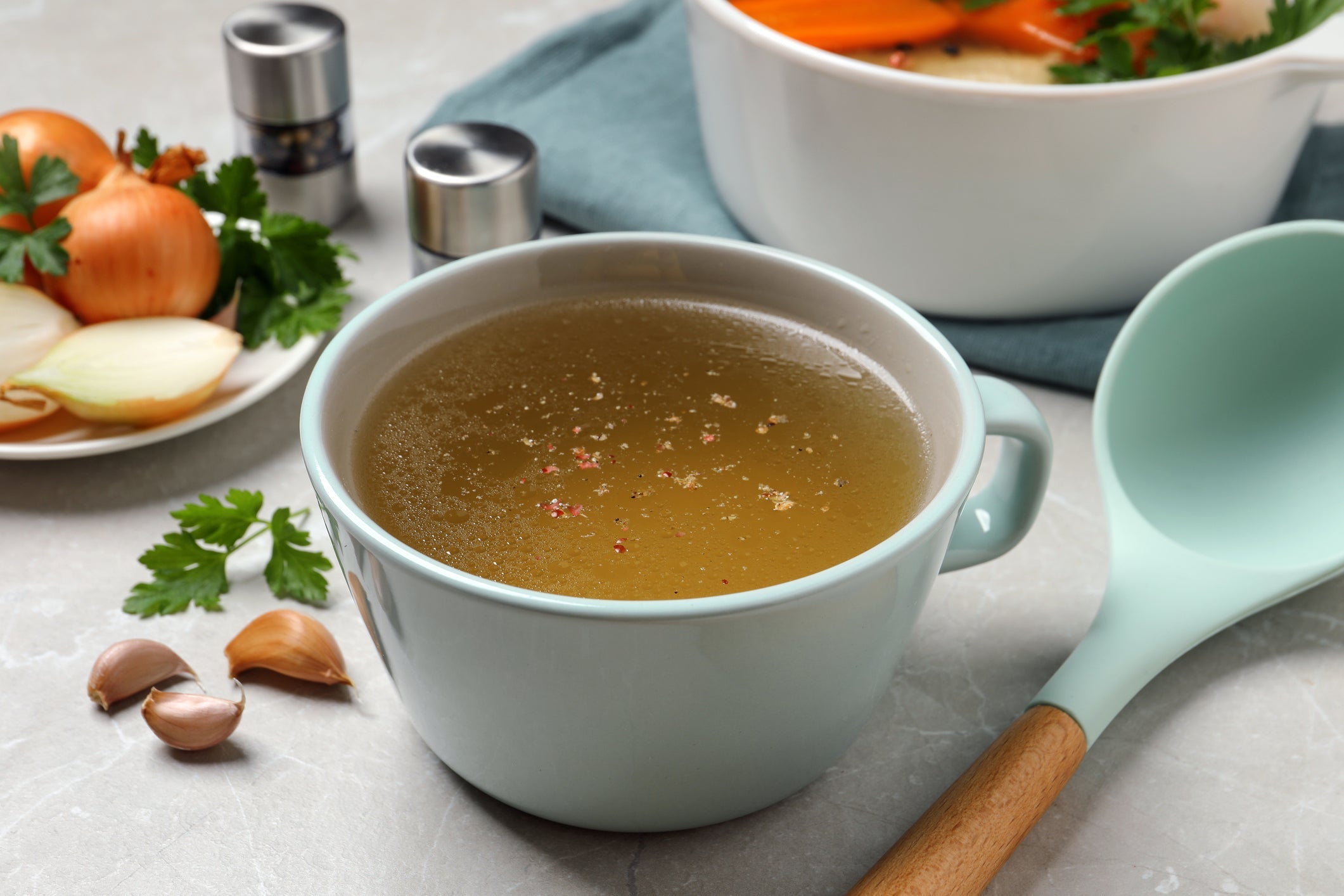
One cup of Bone Broth Classic Chicken delivers roughly 9 grams of complete protein. Two to three cups daily contributes 18 to 27 grams toward the elevated protein targets menopausal women need. Combined with adequate protein at every meal (30 to 40 grams distributed across breakfast, lunch, and dinner), the daily bone broth practice helps most women reach the 100+ grams of daily protein that supports muscle preservation during this life stage.
Glycine for Sleep During Hot Flashes
Bone broth is naturally rich in glycine (roughly 3 to 4 grams per cup). Glycine crosses the blood-brain barrier and has been researched for calming effects and sleep quality support. For menopausal women dealing with fragmented sleep from hot flashes and night sweats, a cup of warm bone broth in the evening delivers glycine at a moment when its sleep-supporting properties are most useful. The Cleveland Clinic has covered sleep quality interventions during menopause in the broader wellness literature.
Collagen Amino Acids for Skin and Joints
The collagen amino acids in bone broth (glycine, proline, hydroxyproline) support the body’s collagen synthesis during the window when natural collagen production is declining. Daily bone broth alongside targeted Collagen Peptides Unflavored provides two complementary sources of the amino acids the aging skin, joint, and gut lining depend on for renewal.
Mineral Density for Bone Support
Bone broth’s mineral profile (calcium, magnesium, phosphorus, trace minerals) contributes to the mineral intake that supports bone density during menopause. This does not replace targeted calcium and vitamin D supplementation if your healthcare provider recommends it based on bone density testing, but it contributes meaningfully to the food-first mineral support that a comprehensive bone health framework depends on. Classic Beef Bone Broth provides additional iron support, which becomes relevant for women whose iron status shifts during and after menopause.
The Menopause Bone Broth Rhythm
The rhythm that works for most women in my community during menopause is straightforward. One cup of Bone Broth Classic Chicken in the morning as a warm ritual delivers protein and electrolytes to start the day. One cup in the evening supports the glycine-driven sleep quality benefit at a time when perimenopausal and menopausal women often need it most. Optionally, a third cup mid-day supports the protein target for women prioritizing muscle preservation. Alternating chicken bone broth with beef bone broth 2 to 3 days per week adds iron support and mineral variety. The Harvard T.H. Chan School of Public Health Nutrition Source has covered general nutritional adequacy in midlife women in the broader dietary guidance.
Pairing With Collagen Peptides
Daily bone broth alone is not sufficient for optimal collagen support during menopause given the accelerated collagen decline of this life stage. Pair daily bone broth with one scoop (10 to 20 grams) of Collagen Peptides Unflavored added to morning coffee, water, or a smoothie. The bone broth provides the amino acids in a warm ritual format alongside protein and minerals. The collagen peptides provide a concentrated targeted dose. The combination is what produces the most consistent skin, joint, and hair benefits in the menopausal women I work with.
What This Framework Will Not Do
Daily bone broth and collagen practice is nutritional support, not hormonal treatment. It does not replace hormone therapy for women whose menopausal symptoms warrant it, does not resolve severe hot flashes or night sweats through nutrition alone, and does not prevent bone density decline in isolation from other interventions (weight-bearing exercise, adequate vitamin D, and in some cases prescription medications). Talk to your healthcare provider about the comprehensive framework that fits your specific menopausal situation.
The Practical Menopause Framework
For most women in my community navigating menopause, the practical daily nutritional framework combines two to three cups of bone broth, one scoop of collagen peptides, adequate protein at every meal (30 to 40 grams), healthy fats in generous portions, and non-starchy vegetables in abundance. My Bone Broth Diet framework operates on this foundation and provides the practical structure for women who want the accelerated results of a 21-day framework alongside the sustainable long-term maintenance pattern.
Frequently Asked Questions
Does Bone Broth Classic Chicken help with menopause symptoms?
Bone Broth Classic Chicken supports several menopause-related nutritional needs: complete protein for muscle preservation as estrogen declines, glycine for sleep quality during hot flashes, collagen amino acids for skin and joint support during natural collagen decline, and mineral density for bone support. It is nutritional support rather than a treatment for menopause symptoms. Many women in my community find that daily bone broth practice meaningfully improves energy, sleep, and skin quality during menopause.
How much bone broth should I have during menopause?
Two to three cups of bone broth daily is the range that works for most women in my community during perimenopause and menopause. One cup in the morning as a warm ritual, one cup in the evening for glycine and sleep support, and optionally a third cup mid-day for the muscle preservation protein target. Alternating chicken bone broth with beef bone broth 2 to 3 days per week adds iron support and mineral variety.
What is the best collagen for menopause?
For menopause, pair daily bone broth with Collagen Peptides Unflavored as the concentrated targeted daily dose. Bone broth delivers collagen amino acids in a warm ritual format alongside protein and minerals. Collagen Peptides Unflavored provides a concentrated 10 to 20 grams of collagen peptides that adds meaningfully to the daily total. The combination is what produces the most consistent skin, joint, and hair benefits during menopause. Individual response varies.
Can bone broth help with menopause weight gain?
Bone broth may support weight management during menopause through protein and satiety, but menopause weight gain typically has multiple drivers (hormonal shifts, muscle loss, sleep disruption, cortisol changes) that require a comprehensive approach. Daily bone broth as part of a broader framework that includes adequate protein at every meal, resistance training for muscle preservation, and stress and sleep support tends to produce better results than bone broth alone. Results may vary.