
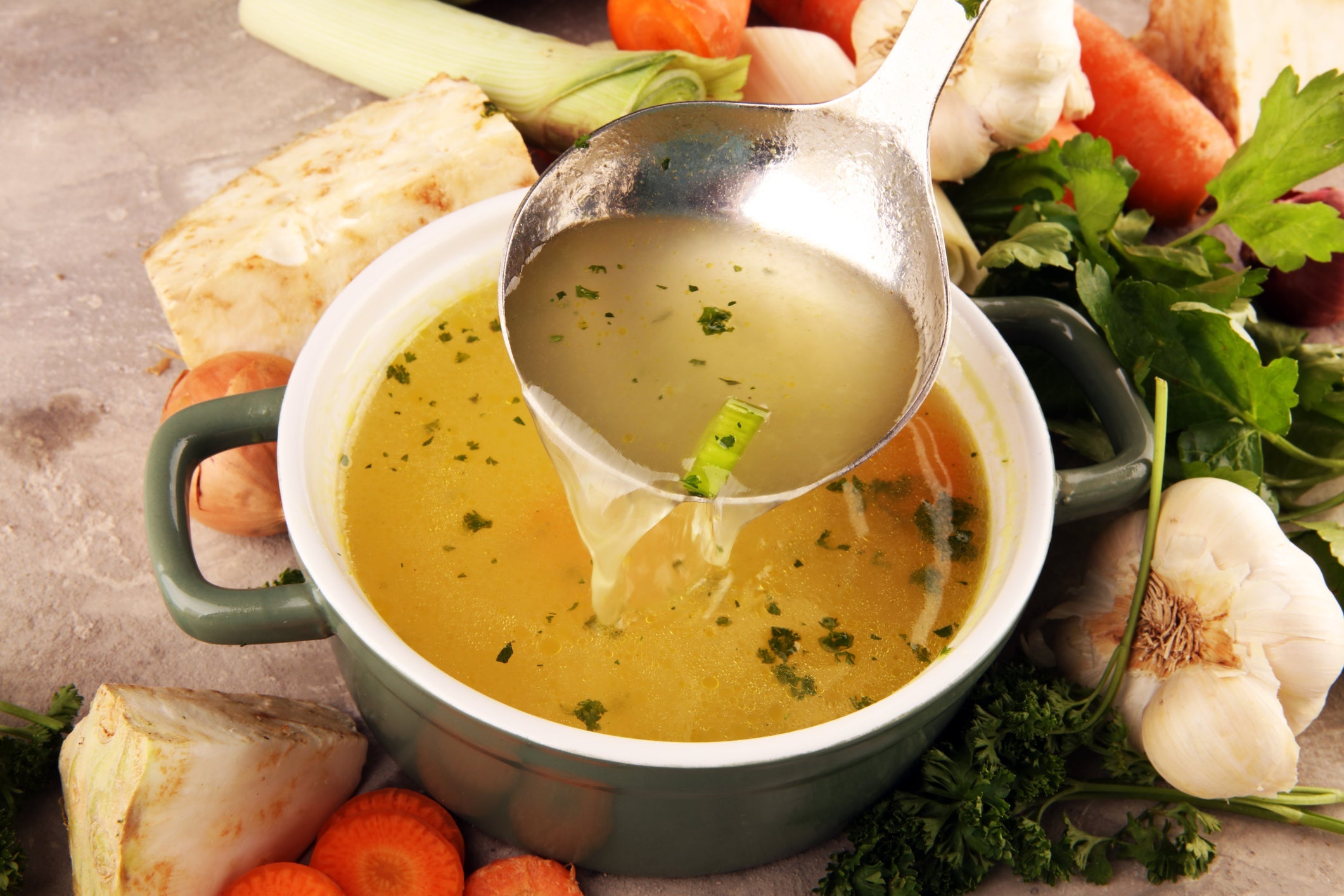
Bone broth and vegetable broth serve different daily nutritional needs and work best as complementary practices rather than either-or choices. Bone Broth Classic Chicken delivers complete protein, collagen amino acids, and animal-sourced minerals in a form the body absorbs efficiently. Vegan Garden Vegetables Broth delivers plant polyphenols, minerals from vegetable sources, and phytochemicals that animal-based broths cannot provide. Understanding what each delivers lets you use both intentionally rather than defaulting to whichever is more familiar.
After two decades of clinical practice, my honest observation is that the wellness space often frames bone broth and vegetable broth as competing categories when they are actually different tools for different purposes. Plant-based women benefit from a daily warm ritual and cooking base built around vegetable broth. Omnivorous women benefit from bone broth as the daily nutritional foundation with vegetable broth as a rotational addition for polyphenol variety. Let me walk you through the specific differences and use cases.
The Core Differences
Protein Content
The most meaningful nutritional difference. One cup of Bone Broth Classic Chicken delivers roughly 9 grams of complete protein with the full amino acid spectrum, extracted from the bones during extended simmering. One cup of Vegan Garden Vegetables Broth contains minimal protein because vegetables are naturally low in protein compared to animal bones. For women targeting daily protein adequacy, bone broth contributes meaningfully while vegetable broth does not.
Collagen and Gelatin
Bone broth contains collagen and gelatin extracted from bones and connective tissue during extended simmering. Vegetable broth contains none, because plants do not contain collagen (collagen is exclusively an animal-derived protein). This is why bone broth gels when refrigerated while vegetable broth remains liquid, and why bone broth supports gut lining renewal, joint health, and skin quality in ways that vegetable broth cannot.
Plant Polyphenols and Phytochemicals
Vegetable broth delivers plant polyphenols, flavonoids, and phytochemicals extracted from the vegetables during simmering. These compounds have been researched for their antioxidant properties, anti-inflammatory effects, and broader wellness contributions. Bone broth contains none of these plant-specific compounds. Research indexed in NIH’s PubMed database has explored plant polyphenol contributions to daily antioxidant intake.
Mineral Profiles
Both broths contain minerals, but from different sources. Bone broth contains calcium, magnesium, phosphorus, and trace minerals extracted from bones, plus iron from red meat bones. Vegetable broth contains potassium (from vegetables like celery and carrots), plus smaller amounts of magnesium, iron, and trace minerals from plant sources. The mineral bioavailability differs between the two: bone-sourced minerals are typically absorbed more efficiently than plant-sourced minerals.
Sodium Content
Both broths contain sodium, though the exact amounts vary by brand. My Bone Broth Classic Chicken contains roughly 400 to 500 mg of sodium per cup as naturally occurring sodium from the simmering process. Vegan Garden Vegetables Broth typically contains a comparable sodium level. For women monitoring sodium intake, this is worth noting but generally not a concern for those without hypertension or medical sodium restrictions. The Cleveland Clinic has covered sodium and daily hydration in the broader wellness literature.
When to Choose Bone Broth
Bone broth is the right daily choice when the goal is complete protein and collagen amino acid delivery. This applies to most omnivorous women seeking the collagen benefits for skin, joint, and gut health. It applies to women in life stages with elevated protein needs (menopause, postpartum, athletic training, aging in general). It applies to any recovery context (post-illness, post-surgery, post-workout) where protein and gut lining support matter. It applies to any daily context where the warm ritual and complete-protein contribution together provide the most value.
For specific product uses: morning ritual, post-workout recovery, evening wind-down, illness recovery, structured fasting, and as the daily foundation of a comprehensive nutritional practice. My Bone Broth Diet framework is built around bone broth as the daily foundation for exactly these reasons.
When to Choose Vegetable Broth
Vegetable broth is the right daily choice when the goal is plant polyphenol delivery, plant-based dietary alignment, or a lighter warm ritual. This applies to women following plant-based or vegan eating patterns as their primary or exclusive dietary framework. It applies to women wanting to add plant polyphenol variety alongside bone broth practice. It applies to specific cooking applications where a lighter, brighter plant-forward broth serves the finished dish better than a deeper animal-based broth (light vegetable soups, spring risottos, delicate grain bowls).
For specific product uses: morning warm ritual for plant-based women, cooking base for plant-forward recipes, rotational addition for omnivorous women wanting polyphenol variety, and as a hydration-forward beverage during any window where lighter warm liquid is preferred over the richer profile of bone broth.
Using Both Together
For omnivorous women who want the benefits of both, the practical rotation is bone broth as the daily anchor (1 to 2 cups daily) with vegetable broth as a rotational addition 1 to 2 days per week. This provides the complete protein, collagen amino acids, and warm ritual from bone broth while adding plant polyphenol variety and cooking flexibility from vegetable broth. Both share space in the full Bone Broth collection precisely because they serve complementary rather than competing needs.
Common Misconceptions
Vegetable broth is not automatically ‘healthier’ than bone broth. Both are healthy choices in the daily wellness practice, and each delivers a different nutritional profile. The framing of one as universally superior is a marketing narrative, not a nutritional reality.
Vegetable broth is not a replacement for bone broth for women who need collagen amino acid support. Plants do not contain collagen, so plant-based women who want collagen benefits need to consider whether their broader dietary framework provides the amino acid building blocks (glycine, proline, hydroxyproline) that support the body’s own collagen synthesis.
Bone broth is not inappropriate for women who eat mostly plant-based. Many women who follow largely plant-based eating patterns include bone broth as one of the animal-sourced components of their diet precisely because it delivers the specific nutrients (collagen amino acids, complete protein, animal-sourced iron) that plant sources cannot easily provide. The Harvard T.H. Chan School of Public Health Nutrition Source has covered flexitarian eating patterns and their nutritional advantages in the broader dietary guidance.
The Practical Choice for Your Practice
The decision framework: identify your primary dietary alignment (omnivore, flexitarian, plant-based) and your primary goal (protein and collagen, plant polyphenols, both). For most omnivorous women, bone broth is the daily anchor with vegetable broth as a rotational addition. For most plant-based women, vegetable broth is the daily anchor with careful attention to the specific nutrients (protein, collagen, iron) that plant sources cannot easily replace. The full Bone Broth collection supports both approaches with quality options across the animal and plant spectrum.
Frequently Asked Questions
Is Bone Broth Classic Chicken healthier than Vegan Garden Vegetables Broth?
Neither is universally healthier; they serve different nutritional purposes. Bone Broth Classic Chicken delivers complete protein (9 grams per cup), collagen amino acids, and animal-sourced minerals. Vegan Garden Vegetables Broth delivers plant polyphenols, phytochemicals, and vegetable-sourced minerals. For collagen and protein support, bone broth is the better choice. For plant polyphenol variety and plant-based dietary alignment, vegetable broth is the appropriate choice. Many women in my community use both.
Can I substitute Vegan Garden Vegetables Broth for Bone Broth Classic Chicken in recipes?
For most cooking applications (soups, rice, grains, vegetable dishes, lighter sauces), yes, Vegan Garden Vegetables Broth substitutes 1:1 for Bone Broth Classic Chicken. The finished dish will have a lighter, brighter, more vegetable-forward flavor with less body. For applications where collagen and protein density matter (concentrated sauces, gravies, braised meats), bone broth produces a meaningfully better result.
Does Vegan Garden Vegetables Broth have protein?
Vegan Garden Vegetables Broth contains minimal protein because vegetables are naturally low in protein compared to animal bones. For women needing protein contribution from their broth practice, Bone Broth Classic Chicken (9 grams per cup) is the appropriate choice. For plant-based women needing protein alongside vegetable broth, ensure the broader dietary framework includes plant protein sources like legumes, nuts, seeds, and quality plant protein powders.
Which broth is better for cooking rice: Bone Broth Classic Chicken or Vegan Garden Vegetables Broth?
Bone Broth Classic Chicken adds meaningful protein (roughly 9 grams per cup) to the finished rice, converting it into a moderate-protein carbohydrate base. Vegan Garden Vegetables Broth adds plant polyphenols and subtle vegetable flavor but minimal protein. For maximum nutritional density, use Bone Broth Classic Chicken. For plant-based cooking or applications where the lighter vegetable flavor better matches the finished dish, use Vegan Garden Vegetables Broth.