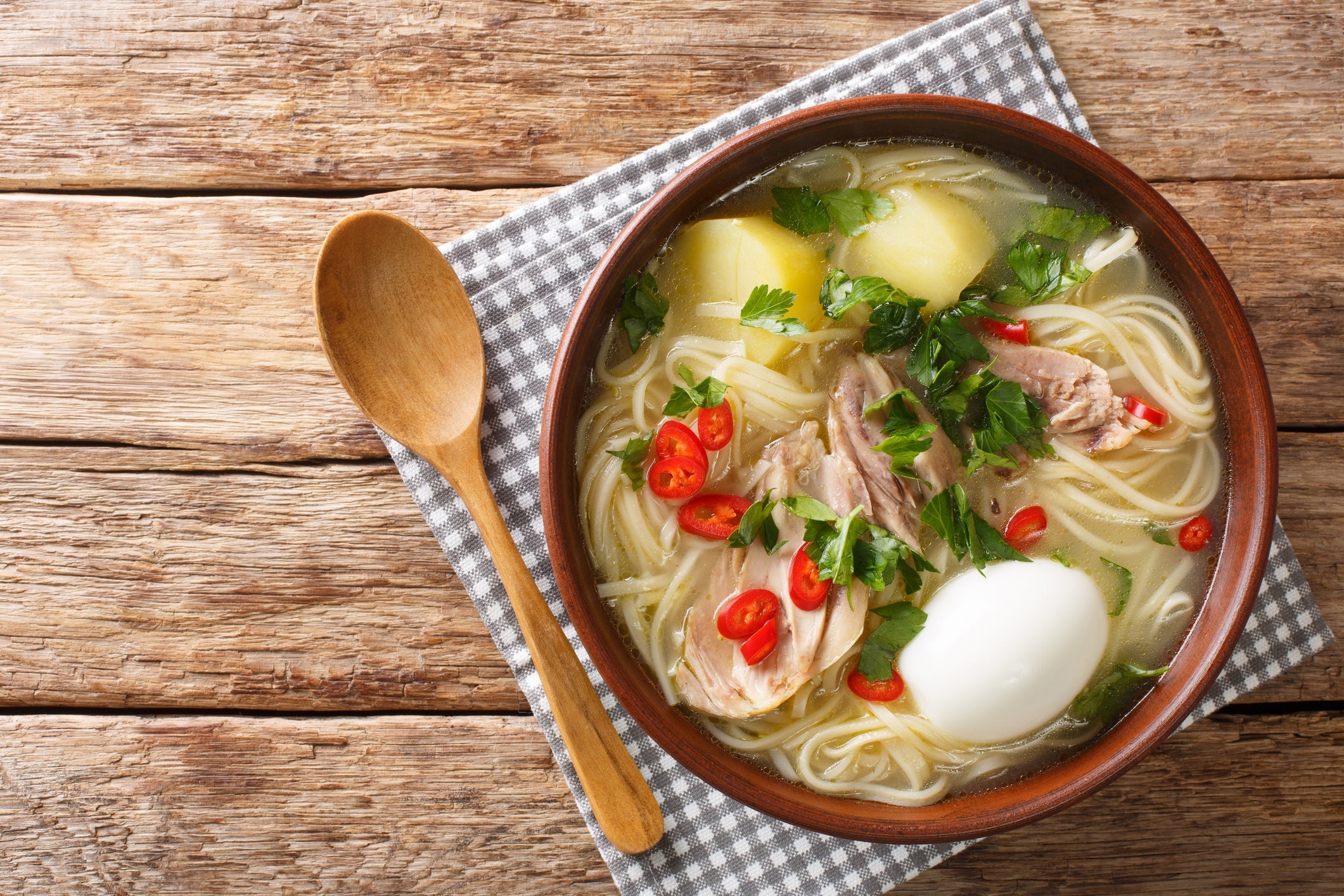
Caldo de pollo is the traditional Mexican chicken soup made with a chicken broth base, bone-in chicken pieces, substantial vegetables (chayote, zucchini, carrots, potatoes, corn), rice, and the bright finishing lime and cilantro that give the soup its signature character. The recipe has been a daily family dinner and sick-day comfort food across Mexican homes for generations, prized for its substantial satisfying character that distinguishes it from thinner chicken soups. The Dr. Kellyann version uses Bone Broth Classic Chicken as the base for a nutritional upgrade over typical caldo.
After two decades of clinical practice, Dr. Kellyann observed that caldo de pollo is one of the most practical substantial soup recipes for women pursuing both daily eating practice and sick-day comfort food, because the vegetable variety and substantial chicken content make it a complete meal rather than a light accompaniment. The recipe below produces the traditional preparation adapted for daily home kitchen use.
What Makes Caldo de Pollo Distinct
The combination of substantial vegetables, bone-in chicken (though boneless works well for faster preparation), and the bright finishing lime and cilantro distinguish caldo de pollo from thinner chicken soup preparations. Where typical American chicken soup is light and brothy, caldo de pollo is substantial and vegetable-forward, with the lime brightness providing a flavor profile that American chicken soup lacks.
The traditional preparation uses chayote (a mild Mexican squash), though regular zucchini or yellow squash substitutes well when chayote is unavailable. Fresh corn on the cob cut into rounds adds the characteristic Mexican soup profile. Research indexed in NIH’s PubMed database has explored traditional cultural soup preparations in daily nutrition.
The Dr. Kellyann Caldo de Pollo Recipe
Ingredients (Serves 4 to 6)
10 cups Bone Broth Classic Chicken. 2 pounds bone-in chicken thighs and drumsticks (or 1.5 pounds boneless chicken thighs for faster preparation). 2 tablespoons olive oil. 1 medium white onion, diced. 4 cloves garlic, minced. 3 medium carrots, cut into chunks. 2 medium zucchini (or chayote if available), cut into chunks. 1 medium potato, cut into chunks. 1 ear of corn, cut into rounds (or 1 cup frozen corn). 1/2 cup long-grain white rice. 2 bay leaves. 1 teaspoon ground cumin. 1 teaspoon dried oregano (Mexican oregano if available). Quality sea salt and freshly ground black pepper to taste. Juice of 2 limes. 1/2 cup chopped fresh cilantro. Sliced avocado and additional lime wedges for serving.
Method
Heat olive oil in a large pot over medium heat. Add onion and cook for 4 to 5 minutes until softened. Add garlic and cook for 30 seconds until fragrant. Pour in Bone Broth Classic Chicken. Add chicken, carrots, bay leaves, cumin, and oregano. Bring to a simmer.
Simmer for 25 to 30 minutes until chicken is cooked through and tender. Remove chicken from the pot and set aside. Add potato and rice to the pot. Simmer for 10 minutes. Add zucchini and corn, and simmer for another 8 to 10 minutes until vegetables are tender and rice is cooked through.
While vegetables cook, remove chicken from the bones (if using bone-in) and shred or chop the meat. Return chicken to the pot in the final 3 to 4 minutes to warm through. Remove bay leaves. Stir in fresh lime juice. Season with salt and pepper to taste. Serve in large bowls topped with chopped cilantro, sliced avocado, and additional lime wedges.
Why Bone Broth Elevates Traditional Caldo
Traditional caldo de pollo is made with chicken broth produced from simmering the chicken bones for the recipe itself, which produces a lighter broth than quality bone broth provides. Using Bone Broth Classic Chicken as the base meaningfully elevates the nutritional profile and depth of the finished soup. The concentrated protein and amino acids from quality bone broth produce a caldo that delivers more meaningful daily protein than traditional preparations.
The Cleveland Clinic has covered the role of substantial soup preparations in daily eating patterns.
Variations
Low-Carb Version
Omit the rice and potato. Add 2 cups riced cauliflower in the final 3 minutes of cooking as a rice substitute. Increase the zucchini to 3 medium for additional vegetable volume. This produces a version that fits ketogenic or low-carbohydrate eating patterns while maintaining the substantial caldo character.
Spicier Version
Add 1 to 2 diced jalapenos or 1 teaspoon dried chile de arbol with the onion for additional heat. For a smokier profile, add 1 chipotle in adobo with the broth. The additional heat fits women who prefer spicier preparations and adds the flavor complexity that American chicken soup typically lacks.
Vegetarian Version
Substitute vegetable broth for the bone broth and omit the chicken. Add 2 cans drained and rinsed white beans or chickpeas for protein. The vegetarian version fits plant-based eating patterns while maintaining the substantial character and bright lime finishing profile.
Storage and Reheating
Caldo de pollo stores well in airtight containers in the refrigerator for 4 to 5 days. For longer storage, freeze in individual portions for up to 3 months. The soup will thicken during storage as the rice absorbs more liquid; reheat gently with additional Bone Broth Classic Chicken to restore original consistency.
For meal prep, prepare a large batch on Sunday and portion into individual containers. This produces 5 to 7 substantial meal portions from a single preparation session. Add fresh lime juice and cilantro when serving each portion for the bright finishing character.
Making Caldo a Weekly Rotation
For women incorporating caldo de pollo into weekly rotation, the recipe fits particularly well as a Sunday batch preparation that provides weeknight dinner portions through the week. The substantial character and vegetable variety make it a complete meal rather than requiring additional side dishes. The full Bone Broth collection provides broth variety for different caldo variations beyond the classic chicken version.
Daily Collagen Peptides Unflavored alongside the broader daily practice supports the concentrated amino acid delivery. Lemon Sips provides sugar-free flavored hydration variety that fits the broader daily hydration framework alongside substantial soup meals. Dr. Kellyann’s guide on how to cook with bone broth covers the broader cooking framework. The Harvard T.H. Chan School of Public Health Nutrition Source has covered traditional cultural dietary patterns in the broader dietary guidance.
Frequently Asked Questions
What is caldo de pollo?
Caldo de pollo is the traditional Mexican chicken soup made with a chicken broth base, bone-in chicken pieces, substantial vegetables (chayote or zucchini, carrots, potatoes, corn), rice, and the bright finishing lime and cilantro that give the soup its signature character. The recipe has been a daily family dinner and sick-day comfort food across Mexican homes for generations, prized for its substantial satisfying character that distinguishes it from thinner chicken soups.
How do you make caldo de pollo with Bone Broth Classic Chicken?
Combine 10 cups Bone Broth Classic Chicken with 2 pounds bone-in chicken, sauteed onion and garlic, carrots, cumin, oregano, and bay leaves. Simmer 25 to 30 minutes until chicken is tender. Remove chicken, add potato and rice, then zucchini and corn. Shred chicken and return to pot. Finish with fresh lime juice and cilantro. Serve topped with avocado and additional lime wedges. The Bone Broth Classic Chicken base elevates the traditional preparation with meaningful daily protein.
Is caldo de pollo good when you are sick?
Yes, caldo de pollo fits sick-day eating particularly well: warm liquid supports hydration, substantial chicken and vegetables provide meaningful daily nutrition when appetite returns, and the bright lime finish provides sensory stimulation that typical bland sick-day food lacks. For early illness when appetite is minimal, simplify to just the broth and chicken. For recovery stages when appetite returns, the full caldo preparation supports the increased nutritional needs of recovery.
What vegetables go in caldo de pollo?
Traditional caldo de pollo includes chayote (a mild Mexican squash), carrots, potatoes, corn, and sometimes zucchini and cabbage. When chayote is unavailable, regular zucchini or yellow squash substitutes well. The vegetable variety is what distinguishes caldo de pollo from thinner chicken soup preparations and provides the substantial character that makes it a complete meal rather than a light accompaniment. Fresh corn on the cob cut into rounds adds the characteristic Mexican profile. Dr. Kellyann’s [bone broth benefits guide](https://drkellyann.com/blogs/news/bone-broth-benefits) covers broader daily practice.