
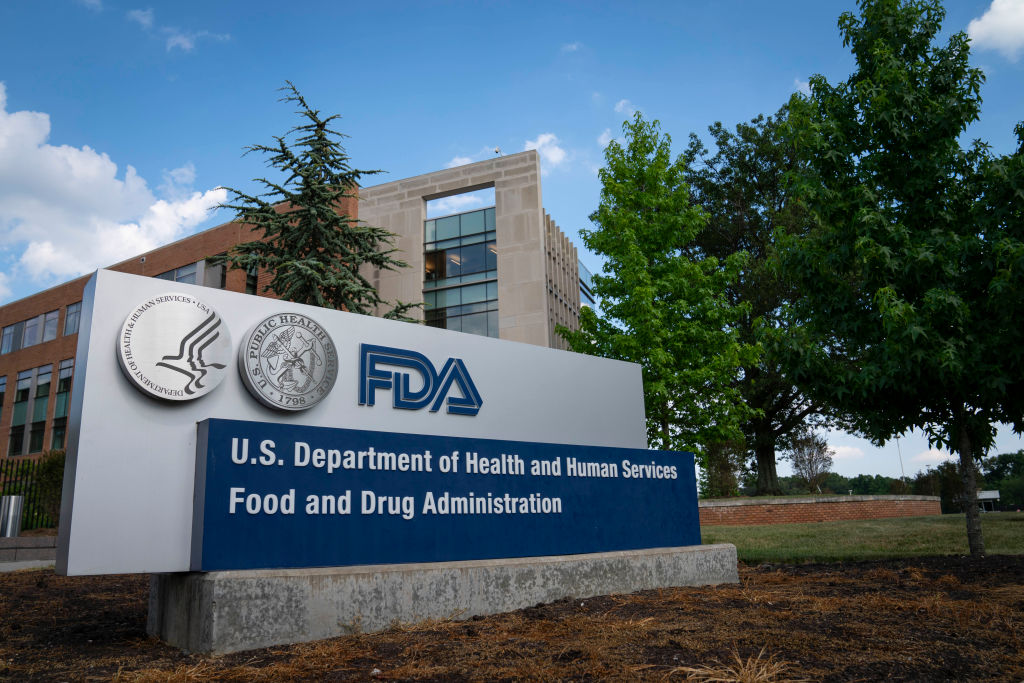
A rare but severe stem cell transplant complication that often becomes fatal now has its first FDA-approved treatment, a therapy developed by biotechnology company Omeros.
The Christmas Eve regulatory decision covers the treatment of adults and children age 2 and older who develop hematopoietic stem cell transplant-associated thrombotic microangiopathy (TA-TMA). This complication stems from the formation of blood clots in small blood vessels in vital organs, damaging them. The main treatment options have been supportive measures.
Omeros develops drugs that address the complement system, a part of the immune system. The Seattle-based company’s new drug, narsoplimab (brand name Yartemlea), is an antibody designed to inhibit MASP-2, a key enzyme in the lectin pathway of the complement system. Blocking MASP-2 is thought to prevent cell injury in small blood vessels driven by the activity of this pathway. This approach is also intended to avoid interference with a different complement system pathway critical to the acquired immune response to infection.
Yartemlea is administered as a weekly infusions at doses determined by the patient’s weight. FDA approval of the Omeros drug is based on the results from a single-arm, open label study that evaluated the MASP-2 inhibitor in 28 adults with TA-TMA. Omeros’s regulatory submission also included data from an expanded access program that produced evaluable patient-level response data from 13 adults and six children. The main goal was to show a complete response, defined as improvement in key laboratory markers of TMA. The study also assessed improvement in organ function or transfusion independence.
Results show a complete response in 17 of 28 adults, or 61%, in the TA-TMA study. In the expanded access study, 13 of the 19 evaluable patients showed a complete response, or 68%. The 100-day survival measure from the time of TMA diagnosis was 73% in the TA-TMA study; 74% in the expanded access study.
Omeros said all patients in the clinical trial had multiple risk factors for poor outcomes — adverse reactions were reported regardless of any connection to the study drug. The most common adverse reactions included viral infections, sepsis, hemorrhage, and diarrhea. No new clinically significant safety signals were reported in Yartemlea’s clinal trial and the drug’s label does not carry a black box warning.
Omeros’s complement system drug R&D has also yielded a MASP-3 inhibitor called zaltenibart. In October, Novo Nordisk paid $240 million up front for global rights to this drug, which is ready for Phase 3 testing in paroxysmal nocturnal hemoglobinuria, a rare blood disorder driven by the complement system. Yartemlea is Omeros’s first FDA-approved product. A U.S. launch is planned for January; a regulatory decision in Europe is expected in mid-2026. The company has scheduled a Monday, Dec. 29 conference call to discuss the Yartemlea approval.
Here’s a recap of other recent regulatory decisions:
New Drugs for the Heart and Lungs
—Obesity got most of the attention in the FDA approval of Novo Nordisk’s Wegovy pill, the first oral GLP-1 drug for weight loss. But this drug’s label also includes use of the once-daily pill for reducing the risk of major cardiovascular events, such as heart attack and stroke.
—FDA approval of Cytokinetics’s Myqorvo as a treatment for obstructive hypertrophic cardiomyopathy (oHCM) comes with safety and monitoring requirements that are more flexible compared to those of Camzyos, a Bristol Myers Squibb drug in the same class of medicines. That makes the Cytokinetics drug competitive with the Bristol product, a projected blockbuster seller.
—GSK’s Exdensur is the newest biologic medicine approved by the FDA for treating severe asthma. This long-acting antibody is administered as an injection twice a year, giving it the advantage of less frequent dosing compared to currently available severe asthma drugs that include GSK’s own Nucala as well as products marketed by Sanofi, AstraZeneca, and Amgen.
—Milestone Pharmaceuticals won FDA approval for Cardamyst, a drug developed to treat paroxysmal supraventricular tachycardia (PSVT), which is characterized by episodes of an abnormally fast heart rate. The nasal spray formulation of Cardamyst is intended to offer a rapid-acting treatment compared to intravenously infused medications.
Rare Disease Approvals
—Agios’s twice-daily pill mitapivat, brand name Aqvesme, became the only FDA-approved treatment for non-transfusion dependent and transfusion-dependent alpha- or beta thalassemia. Oral dosing and a broader label gives it advantages over Bristol Myers Squibb’s Reblozyl, a subcutaneously injected drug approved for patients with transfusion-dependent beta thalassemia. Mitapivat, an activator of enzymes called pyruvate kinases, is already available under the brand name Pyrukynd as an approved treatment for treating anemia caused by pyruvate kinase deficiency. Aqvesme is a higher dose than Pyrukynd.
—FDA approval of Waskyra makes it the first gene therapy for Wiskott-Aldrich syndrome, a rare blood and immune system disorder. The regulatory decision also marks the first FDA approval of a product from a non-profit applicant. Rome-based Fondazione Telethon, which funds research in rare and complex genetic disease, acquired rights to the therapy after GSK and Orchard Therapeutics passed up opportunities to continue its development.
—The FDA approved Arrowhead Pharmaceuticals’ Redemplo for treating familial chylomicronemia syndrome (FCS), a rare disease that leads to abnormally high levels of fat in the blood. Arrowhead will compete against an Ionis Pharmaceuticals FCS therapy by highlighting dosing differences and a price that’s a steep discount to the rival product.
—Zolgensma, a Novartis gene therapy for spinal muscular atrophy initially approved in 2019 for treating children younger than age 2, expanded its FDA approval to patients age 2 and older. The version of the drug for older patients will be marketed under the brand name Itvisma. Unlike Zolgensma, the fixed dose of Itvisma does not need to be adjusted according to a patient’s weight.
—The FDA awarded accelerated approval to Otsuka’s sibeprenlimab, brand name Voyxact, for treating immunoglobulin A nephropathy (IgAN). Voyxact treats the immunological disorder by blocking APRIL, a signaling protein key that plays a role in the progression of IgAN and its impact on the kidneys. While IGaN therapies are already available from Calliditas Therapeutics, Travere Therapeutics, and Novartis, Otsuka’s new drug is the first APRIL-targeting therapy to win FDA approval.
—The FDA approved an oral pellet formulation of the BioCryst Pharmaceuticals drug Orladeyo for preventing the swelling attacks caused by the rare genetic disease hereditary angioedema. The pill formulation of the once-daily drug was initially approved in 2020 for HAE prophylaxis in patients age 12 and older. FDA approval of the oral pellet formulation brings this treatment option to patients age 2 to 12.
—Darzalex Faspro received traditional FDA approval for treating newly diagnosed light chain amyloidosis. The injectable drug received its accelerated approval in this indication in 2021.
—Amgen’s Uplizna expanded its approved uses to include treatment of generalized myasthenia gravis, a neuromuscular disorder. The Amgen drug, an antibody designed to target and deplete CD19-positive B cells, was first approved in 2020 for neuromyelitis optica spectrum disorder. Earlier this year, Uplizna added immunoglobulin G4-related disease to its label.
—Gamida Cell’s Omisirge received FDA approval for treating severe aplastic anemia, a rare and potentially fatal blood disorder in which bone marrow fails to produce enough red and white blood cells and platelets. Treating the disease with a hematopoietic stem cell transplant requires a matched donor. The FDA decision for Omisirge covers adults and children age 12 and older for whom compatible donor is not available. Omisirge, a stem cell therapy made from umbilical cord blood, was first approved in 2023 as a treatment for certain blood cancers.
—UCB’s Kygevi became the first FDA-approved treatment for thymidine kinase 2 deficiency, an ultra-rare inherited mitochondrial disorder. This drug was part of UCB’s $1.9 billion acquisition of Zogenix in 2022.
Cancer Drug Approvals
—Enhertu, from partners AstraZeneca and Daiichi Sankyo, is now approved for first-line treatment of HER2-positive metastatic breast cancer. The antibody drug conjugate was first approved as a third-line breast cancer treatment in 2019, then moved up to the second-line setting in this indication in 2022. First-line use is important because HER2-positive cancer is aggressive and many patients don’t live long enough to receive a second-line of treatment.
—A new FDA approval for Johnson & Johnson drug Rybrevant could make it more accessible to patients. The bispecific antibody is administered as an infusion that takes up to five hours. Newly approved Rybrevant Faspro is a subcutaneously injected version of the drug that can be administered in five minutes.
—The blockbuster Merck cancer immunotherapy Keytruda, initially developed and commercialized as an intravenous infusion, now has marketing authorization in Europe in a subcutaneously injected form. The European Commission approved this version of the drug, which uses an enzyme technology that enables administration as an injection that takes minutes. Merck will market the new in Europe under the brand name Keytruda Qlex, the same name for the product in the U.S., where it was approved in September.
—Amgen’s Imdelltra, a bispecific T cell engager, converted its accelerated approval to full FDA approval as a second-line treatment for extensive-stage small cell lung cancer. Imdelltra received accelerated FDA approval last year.
—Bayer’s sevabertinib, brand name Hyrnuo, won FDA approval for treating advanced cases of non-small cell lung cancer (NSCLC) carrying HER2 mutations. The FDA also approved a Life Technologies companion diagnostic to identify patients eligible for treatment with the twice-daily pill. Hyrnuo will compete against Boehringer-Ingelheim’s targeted therapy Hernexeos, which received accelerated approval in August for advanced cases of NSCLC driven by HER2 mutations.
—AstraZeneca’s Imfinzi expanded its label to include use as a perioperative therapy for early gastric and gastroesophageal cancers when used alongside standard of care chemotherapies. The antibody drug is part of the class of checkpoint inhibitor immunotherapies. Data from the clinical trial supporting use of Imfinzi for perioperative use were presented last June during the ASCO annual meeting. Imfinzi won its first FDA approval in 2017.
—Johnson & Johnson’s Akeega added metastatic castration-resistant prostate cancer to its label. The combination therapy pairs the PARP inhibitor niraparib with the J&J prostate cancer drug Zytiga. The FDA first approved Akeega in 2023 as a treatment for advanced cases of prostate cancer expressing a BRCA mutation, the target of the niraparib component of the combo drug.
—Kura Oncology’s Komzifti, a menin inhibitor, landed FDA approval for treating acute myeloid leukemia characterized by a mutation to the NPM1 gene. It’s the biotech’s first approved product and the second drug approved in the menin inhibitor drug class, following the 2024 approval of Syndax Pharmaceuticals’ Revuforj.
—Speaking of Revuforj, the Syndax drug expanded its label to include the treatment of adults and children with relapsed or refractory acute myeloid leukemia driven by NPM1 mutations. The menin inhibitor was initially approved by the FDA last year for treating acute leukemia.
—Pfizer antibody drug conjugate Padcev expanded its approval to include perioperative use (before and after surgery) for patients with muscle-invasive bladder cancer who are ineligible for cisplatin-containing chemotherapy. In this indication, Padcev is to be used alongside the Merck immunotherapy Keytruda. Padcev received its first FDA approval in bladder cancer in 2019.
—AbbVie’s Epkinly is now FDA approved for treating relapsed or refractory follicular lymphoma in patients who have had at least one earlier line of systemic therapy. The new approval in this indication covers use of this bispecific antibody alongside the cancer drugs Rituxan and Revlimid. Epkinly, first approved in 2023 for diffuse large B cell lymphoma, expanded to third-line treatment of relapsed or refractory follicular lymphoma in 2024.
—Eli Lilly’s pirtobrutinib, brand name Jaypirca, converted its accelerated approval to full FDA approval for the treatment of chronic lymphocytic leukemia and small lymphocytic lymphoma. The BTK inhibitor was awarded accelerated FDA approval in these indications in 2023.
Approvals in Infectious Disease
—The FDA approved two new oral gonorrhea treatments in succession. First was GSK’s Blujepa, approved for treating uncomplicated urogenital gonorrhea in patients age 12 and older who can’t tolerate or are unwilling to take the injectable antibiotics that are first-line treatments for the infectious disease. The label expansion comes nine months after Blujepa won FDA its first FDA approval as a treatment for uncomplicated urinary tract infections.
The day after Blujepa expanded its label to gonorrhea, the FDA approved Inoviva Specialty Therapeutics’ zoliflocdacin, brand name Nuzolvence, as a treatment for uncomplicated urogenital gonorrhea in adolescents and adults. Nuzolvence, formulated as an oral suspension, offers a different mechanism of action compared to Blujepa and other antibiotics for gonorrhea.
Regulatory Setbacks
—The FDA turned down Sanofi’s application seeking regulatory approval for tolebrutinib as a treatment for non-relapsing secondary progressive multiple sclerosis. According to Sanofi, a Dec. 15 FDA update informed the company that the review was expected to extend beyond the Dec. 28 target date for a regulatory decision and more guidance would be forthcoming in early 2026.
The pharma giant characterized the FDA complete response letter as a “significant and meaningful change in direction from the feedback the agency previously provided to Sanofi.” But the company added that it remains committed to working with the agency to find a path forward for tolebrutinib, a brain-penetrating BTK inhibitor. It’s the latest in a series of setbacks for the drug, which came to Sanofi via the $3.7 billion acquisition of Principia Biopharma in 2020.
Photo: Getty Images, Sarah Silbiger