
Eating healthy on a budget is hard for anyone, but it can feel especially hard in college. Tight schedules, limited kitchens, and very real grocery budgets don’t exactly make balanced meals feel achievable.
I learned how to cook in college out of necessity. I had about $40 a week for groceries, a shared kitchen, and zero interest in eating dorm food forever. That challenge is a big reason I started this site, which was originally called College Foodie Finds!
In this post, I’m sharing my favorite easy recipes for college students, plus simple budgeting and college meal-prep strategies that actually work for student life. These recipes are budget-friendly and realistic, whether you’re cooking in an apartment, dorm kitchen, or shared space.
How I Ate Healthy in College on a Lower Weekly Budget
In college, I knew just enough about cooking to get by. I could make grains, roast meat, and cook veggies, and I gave myself about $40 a week for groceries. That number isn’t a rule, just an example of what worked for me at the time. The bigger lesson was learning how to plan ahead and stretch ingredients instead of relying on takeout or packaged food.
I didn’t have quick recipes online to rely on or the option to get groceries delivered to my door. Through trial and error, I learned that even a loose plan helps prevent last-minute spending and that repeating ingredients can lead to serious cost savings.
When my little brother went to college, he called me and asked if I could teach him a few quick, healthier, and inexpensive meals. We cooked together, and I shared the same tips I used in college.
Now he cooks healthy meals on his own, which is what inspired me to share these ideas. If you’re just starting out, I hope this helps make eating healthy in college feel simpler and more realistic.

A Simple Weekly Meal Prep Plan
Meal prep was the single biggest reason I was able to eat budget-friendly, healthy meals in college. Cooking a few components once at the start of the week saved time, reduced food waste, and made it easier to avoid eating out.
For student meals for a week, here’s what I’d prep once:
- Grains like rice, quinoa, or oats
- Roasted or sautéed vegetables
- Proteins like chicken or beans
- Snacks and breakfasts for the week
Here’s what I’d cook fresh or reheat:
- Simple dinners
- Quick add-ins like fresh fruit or sauces
- Anything that tastes best right before eating
Most of my meals followed the same simple formula: protein + carb + veggie + sauce. You can swap ingredients based on what’s on sale, what you already have, or what you’re craving.
If you want a starting point, here’s an example of what I’d recommend:
Need more quick, easy meals? Browse my favorite 30-minute recipes.
Healthy College Meals Ideas
These are my go-to healthy college meal ideas when time, money, and kitchen space are limited. The recipes below are quick to make, budget-aware, and flexible enough for dorms, apartments, or small shared kitchens.
Healthy Breakfasts
From make-ahead breakfast burritos to easy oatmeal, these healthy college breakfast ideas are quick, filling, and easy to prep ahead. Easy breakfasts are ideal for busy schedules and small kitchens and will keep you full through classes.

Healthy Meal-Prep Lunches
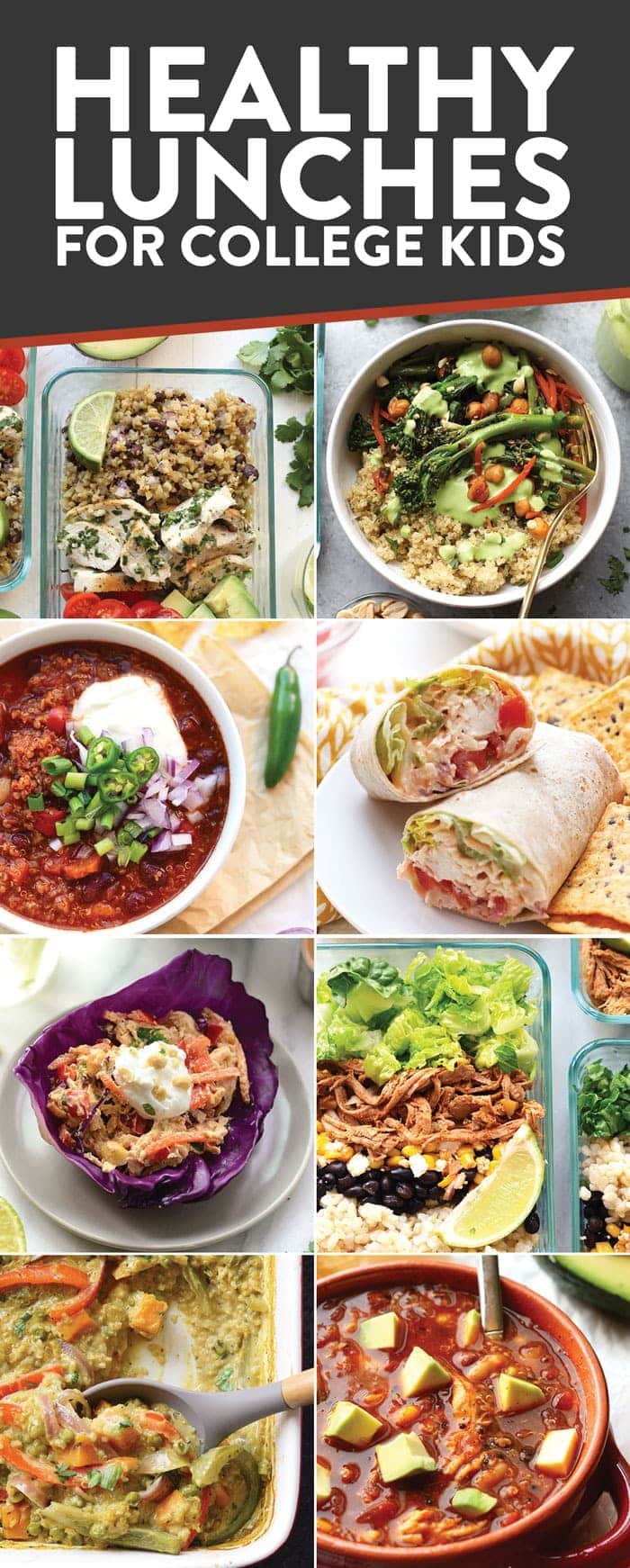
Packing a lunch was one of the biggest money-savers for me in college. I built these healthy meal-prep lunch ideas around leftovers, bowls, wraps, and salads. They reheat well or don’t require a microwave, making them ideal for busy class days.
Healthy Dinners
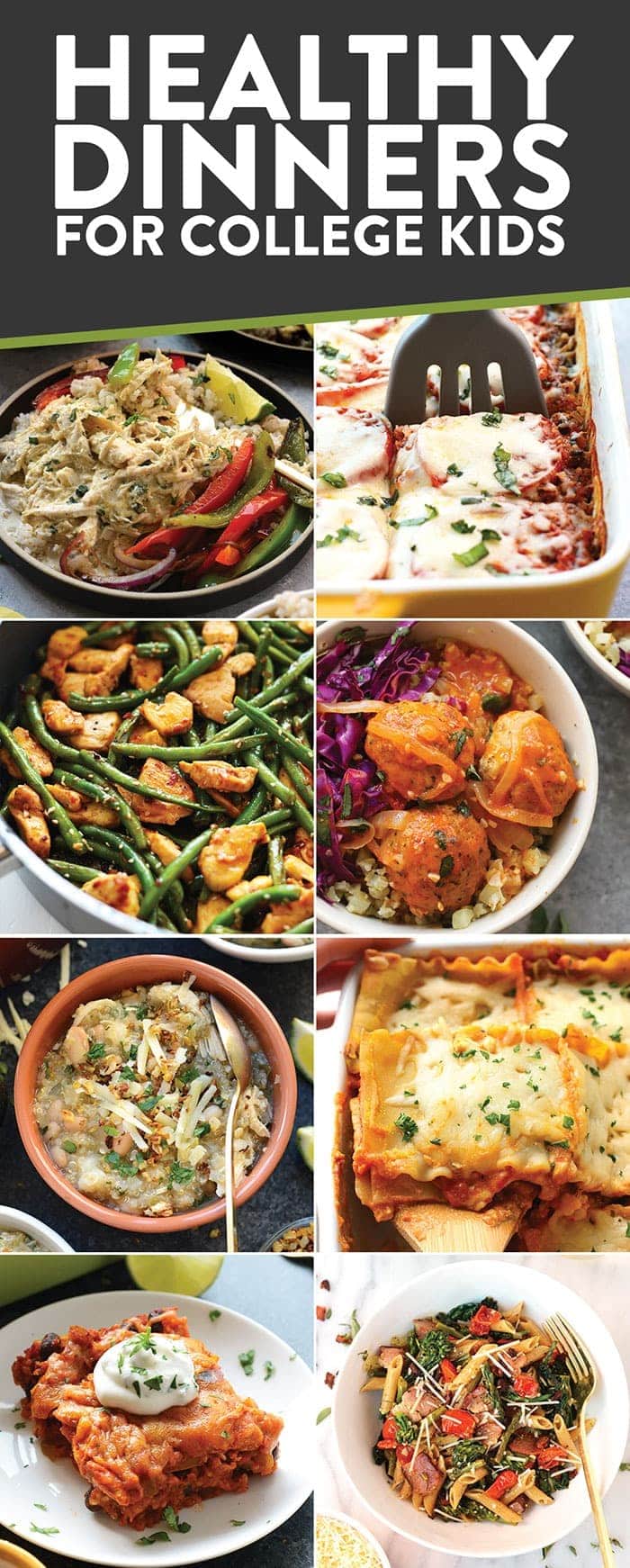
Think beyond ramen! These healthy college dinner ideas focus on minimal cookware, one-pan meals, and budget-friendly proteins. Many can be made in a slow cooker or Instant Pot, making them perfect for big-batch cooking in apartments, dorm rooms, or small kitchens.
Healthy Snacks On-The-Go
You can never have enough healthy snacks as a college student to keep you fueled between classes or during late-night study sessions. These on-the-go snack ideas are easy to prep in bulk and perfect for packing in your bag.

Healthy Desserts
Late-night studying calls for a treat, and these healthy desserts hit the sweet spot without going overboard. Made with simple, whole ingredients, they’re balanced enough to satisfy your sweet tooth.

What Every College Kitchen Needs
You don’t need a fully stocked kitchen to eat well in college. A few versatile staples and basic tools can go a long way, even in dorms or shared apartments.
- Grains like rice, quinoa, oats, whole wheat pasta, or tortillas
- Canned goods such as beans, lentils, tuna, and tomatoes
- Frozen fruits and frozen veggies for smoothies and quick meals
- Nut butters, olive oil, and basic seasonings
- Simple sauces like salsa, soy sauce, or marinara
- Eggs
- Chicken breasts or thighs
- Canned beans or chickpeas
- Greek yogurt
- Tofu
- One nonstick pan
- One medium pot
- Baking sheet
- Cutting board and knife
- Storage containers for leftovers and meal prep
Investing in a rice cooker, slow cooker, or Instant Pot is nice for one-pot, make-ahead dishes and freezer meals, but you can do without. Make sure any appliances you buy are allowed at your accommodations, too, especially in the dorms!
Budget Tips for Healthy College Meals
Eating healthy in college doesn’t have to mean spending a fortune. With a little meal planning and a few smart habits, it’s possible to keep grocery costs low while still eating meals you actually enjoy. The tips below are the strategies that helped me stretch my budget and stay consistent.
I’m so thankful that I learned how to budget at a young age. (Thanks, Dad!) I know it doesn’t always come naturally to some people, but the more you practice, the easier it is!
Figure out how much you can realistically afford to spend on groceries each week and commit to that number. In college, I budgeted about $40 a week, knowing I would meal prep most of my meals. That number is just an example, but having a clear limit helps guide your food choices.
To help you stick to your budget:
- Plan meals before you shop.
- Build meals around affordable staples.
- Track your spending weekly and adjust as needed.
- Leave a little flexibility so the budget feels sustainable.
One of the easiest ways to save money on groceries is to choose meals that use the same core ingredients. When recipes overlap, you can buy items in bulk, reduce food waste, and stretch your groceries across multiple meals.
For example, overnight oats and oatmeal cookies use many of the same pantry staples. Chicken pad Thai and baked chicken can use the same protein and a few shared sauces or vegetables. Planning this way keeps your grocery list shorter and your budget under control.
I shop at a couple of different places for a few different reasons. Some places have better prices, like Trader Joe’s and Fresh Thyme. Other grocery stores have better produce, like Lunds and Byerlys and Whole Foods.
I also try to make one trip a month to Costco to save money on bulk items like oatmeal, flour, chocolate chips, paper towels, olive oil, etc. You have to figure out which stores are closest to you and what makes sense as you plan out healthy meals on a budget.
Grocery sales can make a big difference when you’re cooking on a budget. Go to the grocery store with a semi-open mind. If a recipe calls for red bell peppers, but green peppers are on sale for 99 cents, DO IT. It’s ok to swap out similar ingredients to save a couple of bucks!
Prioritize price over perfection, especially for produce and proteins. You can also plan meals after checking weekly ads or in-store deals. Being flexible with ingredients helps stretch your budget further without sacrificing the quality of what you’re eating.
Bulk items can save you SO much when you’re on a budget. Try to buy all of your staple items in bulk so you can spend your budgeted grocery money on specialty items more often. I made you a list below to give you an idea of my staple bulk items:
Meal prep is one of the most effective ways to make your grocery budget last longer. Cooking larger batches means fewer last-minute food purchases and more meals ready when time is tight.
Prepping snacks ahead of time also helps prevent spending money on convenience foods between classes. When possible, freeze extra portions of meals or snacks so nothing goes to waste and future meals are already taken care of.
If you’re new to meal prepping, visit my meal prep page for the best recipes for meal prep, batch cooking, and busy schedules.
Eating healthy in college is important, but it’s also okay to enjoy meals out with friends or a late-night treat. Focus on building sustainable habits, not perfection, and you’ll be able to eat well while still having fun.
I found it helpful to intentionally leave room in my budget for eating out. While cooking most meals at home saved money, setting aside a little extra for happy hours made the budget feel more realistic.