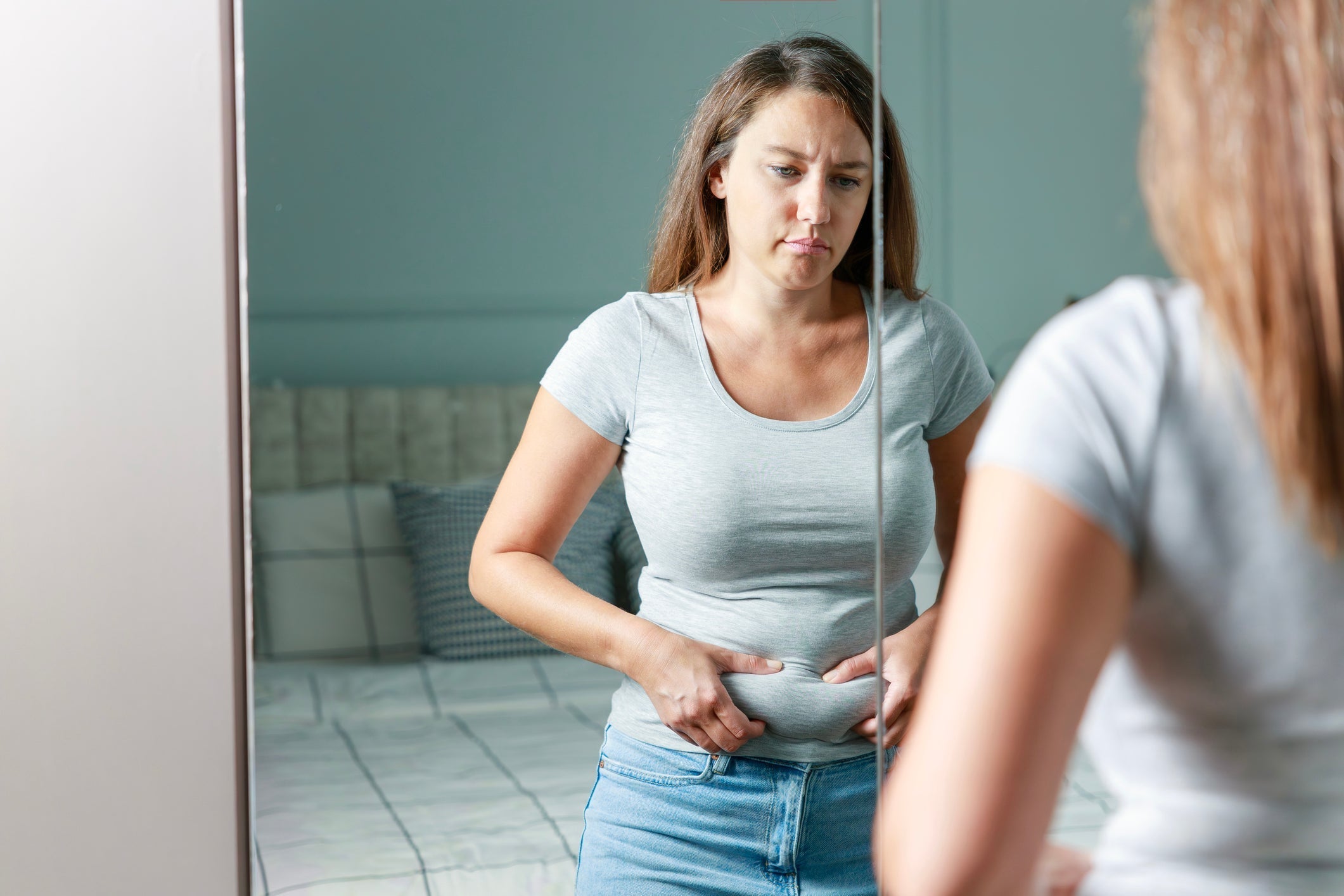
If your belly looks visibly bigger on some days than others, with no real explanation, hormones are very likely part of the picture. Hormonal bloating affects women at every stage of life, from the teenage years through menopause, and the more you understand what is actually happening, the better positioned you are to do something about it. Harmony Debloat Gummies are part of the daily routine I now recommend, and I will explain exactly where they fit in below.
What Hormonal Bloating Looks Like
Hormonal bloating tends to come and go in patterns. For women still cycling, it often peaks in the days leading up to a period and resolves a few days into it. For women in perimenopause, the pattern often becomes less predictable but more persistent. For women on hormonal birth control or hormone replacement therapy, bloating can come with shifts in dosage or timing.
The common thread is that hormonal bloating is not caused by what you ate yesterday. It is caused by shifts in the hormones that govern fluid balance, digestion, and inflammation. Three hormones do most of the heavy lifting:
-
Estrogen, which influences how your body holds on to fluid
-
Progesterone, which slows smooth muscle and digestion
-
Cortisol, your stress hormone, which disrupts both the gut and water balance when chronically elevated
Let me walk you through each one.
The Three Hormones Most Involved in Bloating
Estrogen
Estrogen influences how your body holds on to fluid. When estrogen is high, like in the days before a period or during the early phase of pregnancy, your body tends to retain more water. When estrogen drops sharply, like after ovulation or through perimenopause, it can disrupt the gut microbiome, which has its own bloating consequences.
Progesterone
Progesterone has a relaxing effect on smooth muscle, which means it can slow down digestion. When digestion slows, food spends more time fermenting in the gut, producing more gas and a more bloated belly. Progesterone also affects fluid balance in a different direction from estrogen, which is why the second half of the menstrual cycle can feel especially uncomfortable.
Cortisol
Cortisol, your stress hormone, is one of the most underappreciated drivers of hormonal bloating. Chronic stress raises cortisol, which disrupts your gut, slows digestion, and shifts how your body handles water. I cover this in detail in my post on can-stress-cause-bloating, and it is worth a read if you suspect stress is part of your picture.
Why Hormonal Bloating Often Gets Worse with Age
Many women notice their hormonal bloating intensifies in their late 30s and early 40s. That is not in your head. Perimenopause begins long before periods stop, and the hormonal shifts that drive perimenopausal symptoms, including bloating, can start as early as your mid 30s for some women. To learn more about this stage, see my full guide to menopause, perimenopause, and hormones.
What May Help Hormonal Bloating
Support Gut Bacteria Daily
Since hormonal shifts disrupt the gut microbiome, daily support for your gut bacteria is one of the most impactful changes you can make. A clinically studied probiotic, taken every day, may help maintain a healthier gut environment even as hormones fluctuate.
Support Healthy Fluid Balance
Traditional herbs like dandelion, green tea, and apple cider vinegar have a long history of use for supporting fluid balance and gentle daily detox pathways. When taken consistently, they may help reduce the puffy, water-retention feel that comes with hormonal bloating.
Hydrate, but Smart
Counterintuitively, drinking more water often reduces bloating, because dehydration causes your body to hold on to fluid more aggressively. Pair adequate hydration with foods that support hormonal balance, which I cover in balance your hormones with food.
Eat for Your Gut, Not Just Your Goals
Fiber and fermented foods support a healthier microbiome, which has knock-on benefits for hormone metabolism. Your gut is involved in clearing excess hormones from circulation, and a well-functioning gut is one of the most overlooked tools for hormonal balance. The framework I built around this is on my Bone Broth Diet resource page, which lays out the protein-rich, gut-supportive eating pattern that supports hormonal balance through this transition.
Where Harmony Debloat Gummies Fit In
I designed Harmony Debloat Gummies to address the three pieces of the hormonal bloating picture that respond to daily support: gut bacteria, fluid balance, and regularity. Each citrus punch gummy contains Lactospore probiotic at 2 billion CFU, my Water Balance Proprietary Blend of apple cider vinegar, green tea, guarana, and dandelion, plus 3g of daily fiber, Vitamin B6, calcium, and magnesium. It is a daily, no-fuss way to give your body the support it needs without adding anything complicated to your routine.
The Mindset Shift That Changes Everything
Hormonal bloating is not a character flaw or a willpower problem. It is information from your body. Once you start treating it as information rather than as failure, you can respond to it with daily habits and tools that actually work, and you can stop the cycle of feeling at war with your own belly.
Frequently Asked Questions
How do I know if my bloating is hormonal?
Hormonal bloating tends to follow a pattern, peaking around your period for cycling women, intensifying in perimenopause, or fluctuating with hormone changes. It is often less responsive to dietary changes alone, comes with water retention, and may be accompanied by mood and energy shifts. If you suspect hormones are involved, tracking the timing of your bloating against your cycle or other hormonal events is a helpful first step.
Can hormonal bloating last all month?
Yes, especially during perimenopause when hormonal fluctuations become less predictable. Many women describe a chronic, low-grade bloating that does not resolve fully between cycles. Daily support for gut bacteria, fluid balance, and regularity may help reduce both the intensity and frequency of bloating episodes.
Do Harmony Debloat Gummies help with hormonal bloating?
Harmony Debloat Gummies are formulated to support the three areas most affected by hormonal shifts: gut bacteria, fluid balance, and regularity. The combination of a clinically studied probiotic, my Water Balance Proprietary Blend, and 3g of daily fiber may help your body manage hormonal bloating more comfortably day to day. Results may vary from person to person.
Is it normal for hormonal bloating to get worse in your 40s?
Yes, this is one of the most common patterns I see. Perimenopause often begins in the mid to late 30s, and hormonal shifts during this stage can make bloating more frequent and more persistent. The good news is that this stage responds well to consistent daily support.