New research published this month shows that hospital-at-home models do a good job of lowering costs and improving patient outcomes in rural communities.
The study, conducted by researchers at Mass General Brigham, included 161 adult patients who required inpatient care for acute conditions — mainly heart failure, chronic obstructive pulmonary disease, asthma or infections. These patients hailed from rural communities and were recruited after seeking emergency care at Blessing Hospital in rural Illinois, Hazard Appalachian Regional Healthcare Regional Medical Center in rural Kentucky and Wetaskiwin Hospital and Care Centre in rural Alberta, Canada.
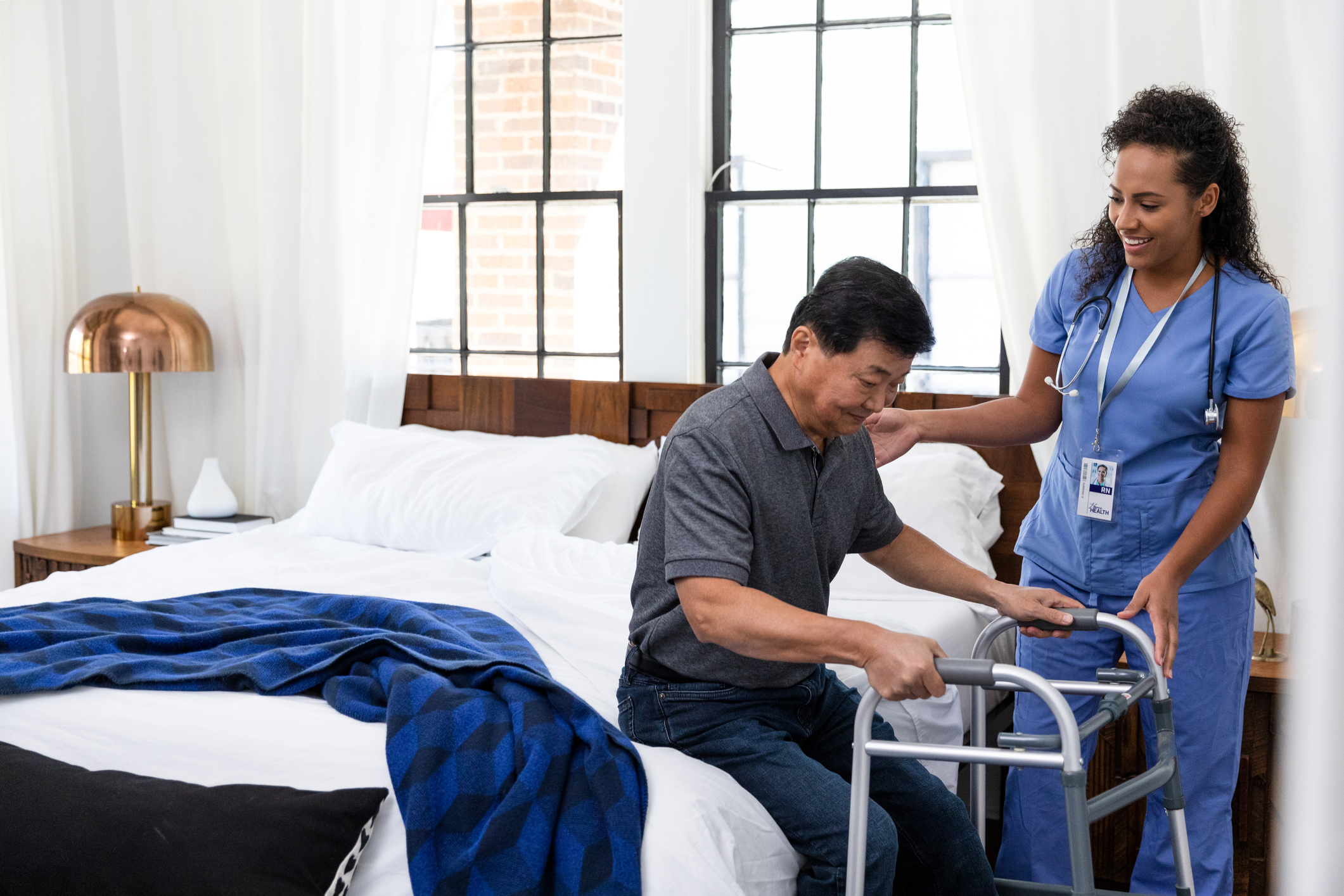
The research team split this group of patients into two: 82 receiving care at brick-and-mortar facilities and 79 receiving at-home care. At-home care included twice daily in-home visits with nurses and paramedics, as well as a daily virtual visit with a physician or advanced practice provider.
Overall, the researchers found no meaningful difference in total costs between patients receiving care at home and those who stayed in the hospital. However, costs dropped sharply when patients were moved home earlier in their hospital stay — among those transferred to the hospital-at-home program within three days, care ended up being 27% less expensive than traditional inpatient treatment.
Many patients transferred later in their overall hospital course, which means they spent multiple days in the brick-and-mortar hospital and only a few days at home, noted Dr. David Levine, the study’s lead researcher.
“This attenuated the effect of home hospital. However, when one examines the subset of patients who were transferred home in less than three days, here we did see cost savings, because these patients had much more time at home, which is a lower cost setting,” he explained.
As for safety outcomes, they were comparable between the two groups, with similar 30-day readmission rates and no significant differences in adverse events.
Patients treated at home were also more physically active, walking an average of 700 more steps per day, and reported far higher satisfaction with their care — nearly double that of hospitalized patients, as measured by net promoter scores.
The technology used in this trial wasn’t particularly novel, either — underscoring the potential feasibility of scaling these at-home care models.
“We used technology similar to what was available in our prior trials five to 10 years ago. The one caveat, which I do not have data for, is how different cell service was in these rural communities, which is certainly a factor to consider,” Dr. Levine said.
He added that his research team at Mass General is preparing multiple further analyses on rural patient populations.
For example, the team is examining the role of the family caregiver, as well as looking more deeply into the physical activity of rural patients, he stated.
He added that providers need more research that examines at-home hospital care that is untethered from the brick-and-mortar facility.
Photo: SDI Productions, Getty Images