
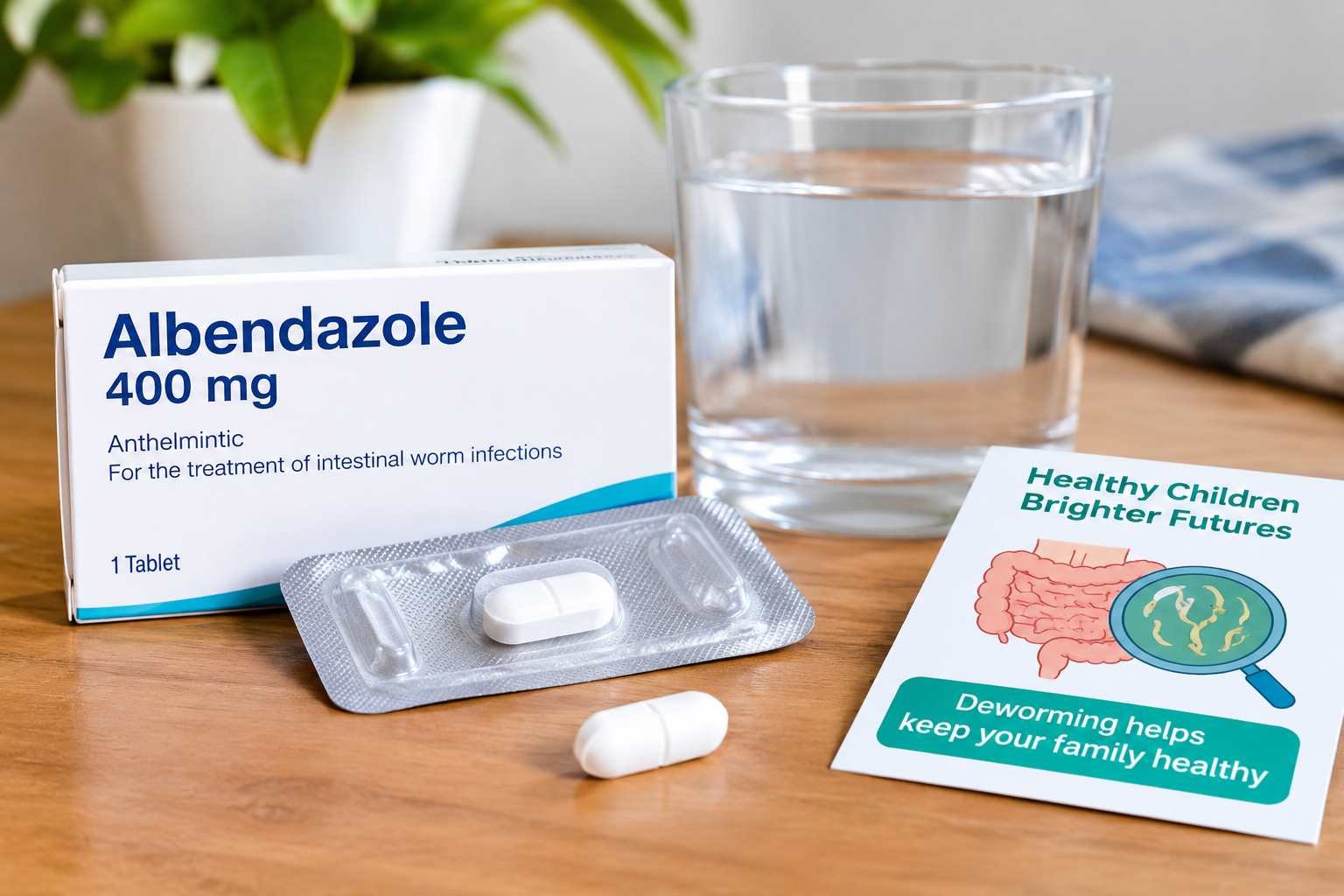
Deworming drugs (known locally as Ogun Aran Inu in Yoruba or Ichir mbi mbaaningoh in Tiv) are anthelmintic medications used to remove parasitic worms from the body. In Nigeria, intestinal worm infestations are common because of undercooked meat (such as suya, asun, and pork), unwashed hands, contaminated water, and walking barefoot on infected soil.
Counterfeit medications are widely sold in open markets, so always buy from a licensed pharmacy, check the packaging and labels, and confirm the correct age-based and weight-based dose with a healthcare professional.
Understanding Intestinal Worms and Their Symptoms
When parasitic worms live in your digestive tract, they take nutrients before your body can absorb them. This can lead to constant tiredness, unexplained weight loss, and vitamin deficiencies even when you eat well.
| Type | Worms Common in Nigeria | Common Symptoms |
|---|---|---|
| Roundworms |
|
|
| Flatworms |
|
|
Common Deworming Drugs and Prices in Nigeria (2026)
This table lists the most common anthelmintics in Nigerian pharmacies, how they work, and their estimated prices. Prices change often with inflation, wholesale supply, and your state, so use them as a guide only.
| Drug and Local Brands | How It Works | Form and Usual Adult Dose | Estimated Price (₦) |
|---|---|---|---|
| Albendazole (e.g., Zentel, Zolat, Alben) |
Blocks glucose absorption, so the worm starves and dies. |
|
|
| Mebendazole (e.g., Vermox, Mebex) |
Stops the worm from taking in glucose, similar to albendazole. |
|
Tablets: 1,200 to 2,500 |
| Pyrantel Pamoate (e.g., Combantrin) |
Paralyzes the worm’s nervous system so it passes out with stool. |
|
Suspension: 2,000 to 4,000 |
| Praziquantel (targeted treatment) |
Paralyzes flatworms. Used for tapeworms and schistosomiasis (Atosi Aje). | Prescription only. Not used for routine deworming and needs a laboratory test first. | Varies with the prescription |
| Ivermectin (targeted treatment) |
Acts on microfilariae. Used for strongyloides and river blindness. | Given mainly through mass health programs. Dose is set strictly by weight. | Distributed mainly through health programs |
Why You Need to Repeat Your Deworming Dose
Most deworming drugs kill adult worms but leave microscopic eggs unharmed. For pinworm, the CDC advises a second dose 2 weeks after the first, so that any worms that hatch in the meantime are destroyed before they can reproduce. Everyone in the household should be treated at the same time. For other worms, a repeat dose is only needed if symptoms or infection persist, so ask a pharmacist or doctor.
Safety and Hygiene Guide
| Category | Precautions | Prevention |
|---|---|---|
| High-Risk Restrictions |
|
|
| Daily Hygiene |
|
|
Editorial Policy: HealthSoothe is dedicated to providing evidence-based, actionable wellness content. Every piece of content or review on our platform is cross-referenced with peer-reviewed medical journals and verified by certified healthcare professionals before publication.