Why You’re Losing Hair After 40 (And What to Do About It)
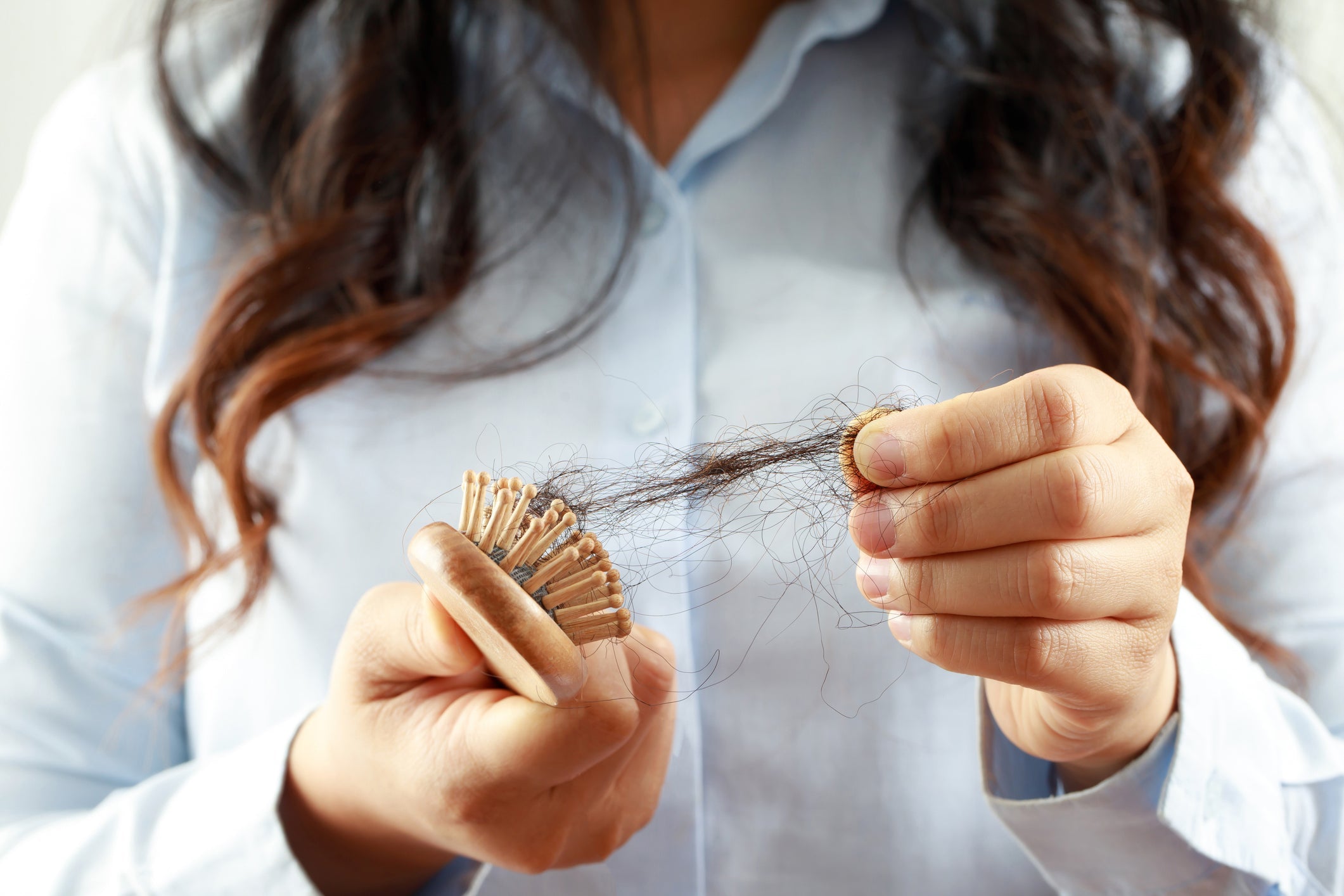
Most women expect wrinkles. Most expect some weight changes around menopause. But hair thinning after 40 — the ponytail that keeps getting thinner, the widening part, the extra hair in the brush every morning — catches almost everyone off guard. Patients come to me embarrassed about it, as if they should have seen it coming. They should not have. It is not talked about enough.
More than 50% of women will experience noticeable hair thinning by age 50. That is not a fringe statistic — it is the majority. My Harmony Hair Growth formula was developed for this exact patient: the woman whose hair began changing in her early-to-mid 40s and who wants to understand the mechanism and address it properly.
Estrogen Decline and the Hair Growth Phase
Estrogen helps keep hair in the growth phase (anagen) longer. As estrogen levels begin to decline in perimenopause — which often starts in the early 40s, well before actual menopause — hair follicles shift to shorter growth cycles. Hair spends less time growing and more time resting or shedding. The result is gradual, cumulative reduction in density and volume. My post on whether menopause causes hair loss covers the full hormonal mechanism for patients who want to understand the timeline.
The DHT Shift — Understanding Androgenetic Thinning
As estrogen declines, androgens become relatively more dominant. DHT — a potent testosterone derivative — can progressively miniaturize hair follicles over time through a mechanism called androgenetic alopecia. In women this typically presents as diffuse thinning at the top and crown rather than the male receding hairline pattern. This is the mechanism that makes saw palmetto — a 5-alpha reductase inhibitor — relevant for some women in this group.
Collagen Loss and the Follicular Environment
From your mid-30s onward, collagen production declines by roughly 1–2% per year. The dermal layer where hair follicles are rooted becomes progressively thinner and less supportive. My post on collagen for hair growth explains how supplementing with hydrolyzed collagen peptides — including from my Liquid Gold collagen formula — supports the follicular environment directly. The connection between collagen supplementation and hair quality is one of the most clinically consistent observations in my practice.
Nutritional Deficiencies That Accelerate Thinning
Years of dieting, stress, and declining nutrient absorption can deplete the resources most critical for hair health: iron, vitamin D, zinc, biotin, and protein. Subclinical hypothyroidism — which dramatically affects hair growth and texture — is also significantly more common in women over 40 than most people realize. Before adding supplements, I always recommend a comprehensive blood panel: TSH, ferritin, 25-OH vitamin D, zinc, and complete metabolic panel. Know your deficiencies before trying to correct them.
The Stress Dimension
Chronic stress is a documented driver of telogen effluvium — a type of hair shedding where elevated cortisol pushes a larger percentage of hair follicles into the shedding phase simultaneously. Many women in their 40s are managing significant professional and personal stress alongside hormonal changes. These two inputs compound each other. Stress management is not a soft recommendation — it is a clinical intervention for hair health.
What Actually Helps — A Practical Protocol
-
Get tested first: TSH, ferritin, 25-OH vitamin D, zinc — know what you are actually deficient in
-
Prioritize protein: at least 0.7–1g per pound of body weight daily — your hair is literally made of it
-
Add hydrolyzed collagen peptides daily: supports the follicular dermal environment
-
Supplement vitamin D and zinc specifically — both have direct follicular receptor-level effects
-
Reduce inflammatory foods: sugar and refined carbohydrates worsen hormonal imbalance
-
Manage cortisol actively: sleep, movement, stress reduction — not as suggestions but as prescriptions
When to See a Doctor
If hair loss is sudden, patchy, accompanied by scalp changes, or you are shedding in very large amounts, see your physician before supplementing. Autoimmune alopecia, thyroid conditions, and PCOS all require medical evaluation and management that supplements cannot replace. My Harmony Hair Growth formula addresses the nutritional and collagen dimensions of midlife hair thinning — not a substitute for medical diagnosis of the conditions above.
The Nutritional Foundation for Hair Recovery
Beyond the supplement, the single most impactful dietary change for hair health I recommend to every patient over 40 is increasing protein intake. Hair is made of keratin — a protein. Keratin synthesis requires an adequate supply of amino acids, particularly cysteine, which is itself dependent on methionine from dietary protein. Women who have been following low-calorie or low-protein diets for extended periods are among the most consistent cases of telogen effluvium I see. They have simply not been giving their bodies enough raw material to maintain hair in the growth phase.
My recommendation is at least 0.7–1.0g of protein per pound of body weight daily for women focused on hair recovery. This is higher than the general dietary guidelines and significantly higher than many of my patients are eating. Combined with targeted supplementation, a high-protein diet provides both the macronutrient foundation and the micronutrient support that hair follicles require to shift from shedding back to growing.
Patience as a Clinical Prescription
I want to spend a moment on the hardest part of treating hair loss: the timeline. Hair grows at approximately half an inch per month. Telogen effluvium — the shedding phase that most women notice — can last 3–6 months even after the triggering cause has been addressed. New hair growth from a follicle that has been in the resting phase takes 2–3 months to even break the surface. All of this means that the gap between starting an intervention and seeing results in the mirror is 3–6 months minimum.
Patients who stop after 6–8 weeks without seeing improvement are making a decision based on a timeline that the biology does not support. I always tell my patients: take a photo of your hairline on day one, put your phone down, and come back in 4 months. The comparison will tell you more than the daily mirror check that most women with hair loss concerns subject themselves to. Consistency and patience are the two most clinically important prescriptions I can write for hair health.
The Conversation I Have With Every Patient About Hair Loss
Hair loss is one of the most emotionally charged health concerns I address in practice, and I want to acknowledge that dimension explicitly. For most women, hair is deeply connected to identity and self-confidence. Thinning hair can feel like losing something central to who you are, and the frustration of trying multiple approaches without seeing results compounds the emotional weight significantly.
What I tell every patient who sits across from me with this concern: hair loss at 40 is not your fault, it is not a sign that you have done something wrong, and it is much more addressable than it probably feels right now. The biological mechanisms are clear, the nutritional tools are evidence-backed, and the timeline — while slower than you would like — is predictable. Most of my patients who commit to a comprehensive approach see meaningful improvement. That is not a guarantee, because individual biology varies and some causes of hair loss require medical management beyond supplementation. But it is an honest description of what I observe in practice.
Frequently Asked Questions
|
Frequently Asked Question |
Answer |
|
Is it normal to lose hair in your 40s? |
Yes — more than 50% of women experience noticeable hair thinning by age 50, and many begin in their early-to-mid 40s. It is driven by declining estrogen, relative androgen increase, collagen loss, and nutritional depletion. It is common, but it is not inevitable with proper support. |
|
Can hair loss from menopause be reversed? |
Hair loss from nutritional deficiencies and telogen effluvium can often be significantly improved with the right interventions. Hormonal and androgen-related thinning can be slowed and managed but is harder to fully reverse without hormonal support. Early intervention consistently produces better outcomes. |
|
What vitamins should I take for hair loss at 40? |
Vitamin D3, zinc (test first for deficiency), biotin, hydrolyzed collagen peptides, and iron (only if blood test confirms deficiency) are the most important nutrients for hair health at 40. A comprehensive supplement targeting all these simultaneously is more effective than individual products. |
|
Does collagen help with hair loss after 40? |
Yes. Collagen supports the dermis where follicles are rooted, provides amino acid building blocks for keratin production, and offers antioxidant protection against follicle damage from oxidative stress. Most women see reduced shedding and improved hair quality after 3–6 months of consistent daily collagen supplementation. |