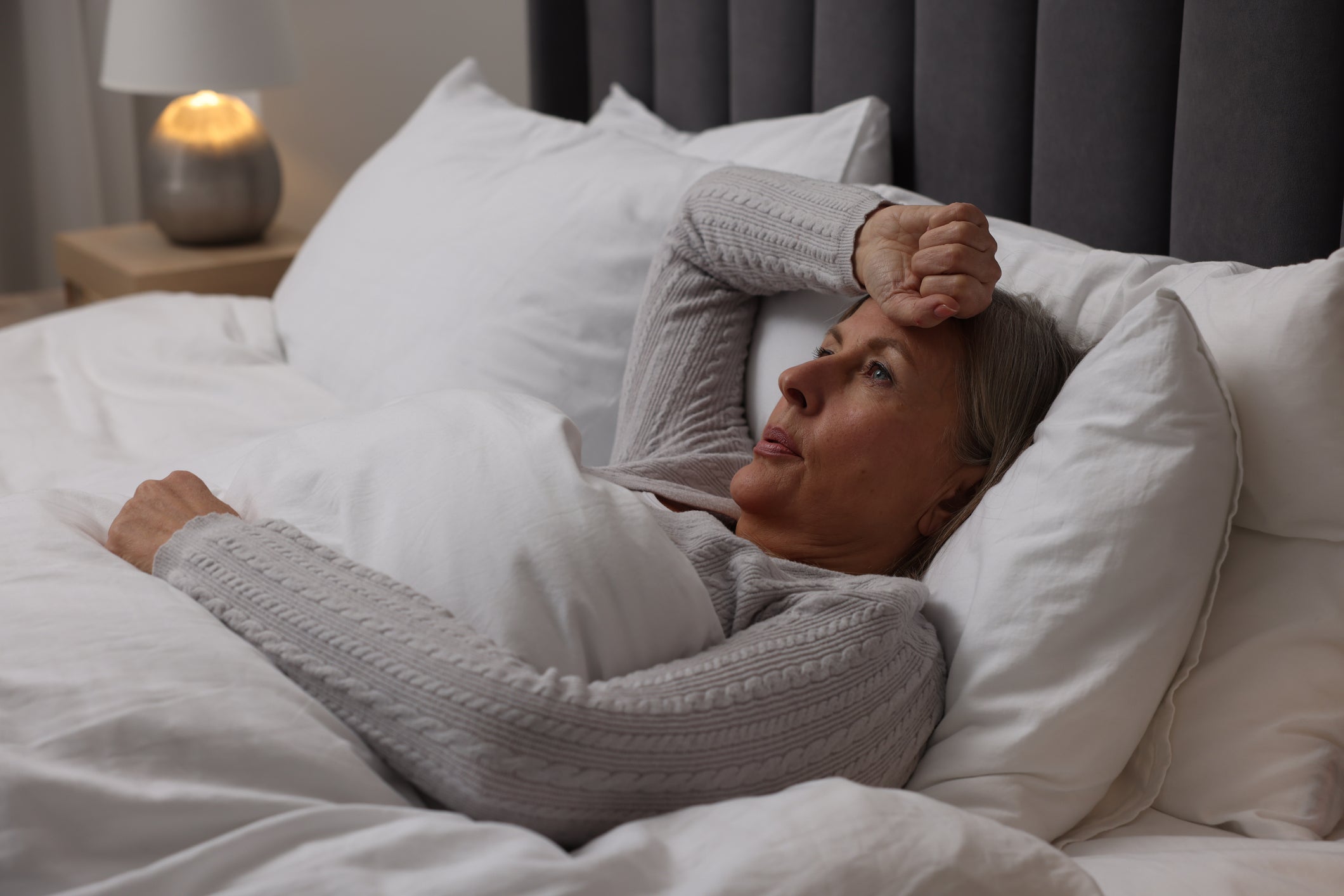
If you have been waking up drenched, throwing covers off, then pulling them back on, only to do it all over again two hours later, you are experiencing one of the most exhausting and underappreciated symptoms of menopause. Night sweats are not just hot flashes that happen to occur at night. They have their own pattern, their own effect on sleep, and their own toll on quality of life. Real support exists, including the daily hormone-free formulation in my &ME Peri + Menopause.
Why Night Sweats Happen
Night sweats are essentially hot flashes that happen during sleep, but the timing matters more than people realize. When you sleep, your body naturally cools down. If your temperature regulation system is hypersensitive due to estrogen decline, even small changes in core body temperature during sleep can trigger a full sweating response.
The result is a wake-up that feels much more disruptive than a daytime hot flash, because it pulls you out of restorative deep sleep or REM sleep. Repeated night sweats fragment sleep, leave you exhausted in the morning, and over time can contribute to mood disruption, energy crashes, and worsening of other menopause symptoms.
Why Night Sweats Are Especially Disruptive
Daytime hot flashes are uncomfortable. Night sweats are uncomfortable AND they steal your sleep. The cascading effects of poor sleep through menopause are significant.
Sleep deprivation raises cortisol, which worsens hot flashes and night sweats, which worsens sleep, which raises cortisol further. This is one of the most exhausting feedback loops in this stage of life.
Poor sleep from chronic night sweats has cascading effects:
-
Disrupted insulin sensitivity, which contributes to metabolic shifts in midlife
-
Worsened mood and increased anxiety
-
Impaired memory and focus
-
Weakened immune function
-
Elevated cortisol, which itself worsens hot flashes and night sweats, creating a feedback loop
Addressing night sweats is not just about comfort. It is about protecting the foundation that everything else depends on, and that foundation starts with why quality sleep matters.
What May Help with Menopause Night Sweats
1. Cool the Room Aggressively
Most expert recommendations suggest a bedroom temperature between 60 and 67 degrees Fahrenheit for menopause-friendly sleep. A small bedside fan, a cooling pillow, and breathable cotton or moisture-wicking bedding all make a real difference. Some women find a cooling mattress pad transformative.
2. Identify and Reduce Evening Triggers
Alcohol, caffeine, spicy food, and large heavy meals close to bedtime all increase the likelihood of night sweats. Cut these in the evening for at least two weeks and see what changes.
3. Layer Your Sleep Clothing
Lightweight, breathable, moisture-wicking sleepwear lets you adjust without fully waking. Avoid synthetic fabrics that trap heat. Some women keep a fresh t-shirt nearby for quick mid-night changes.
4. Manage Stress Before Bed
Elevated cortisol heading into sleep worsens night sweats. A consistent wind-down routine, breathing practice, or gentle stretch can support a calmer nervous system going into the night.
5. Support Hormonal and Temperature Regulation Directly
Targeted supplementation with botanicals that have research suggesting they may support temperature regulation, hormonal balance, and nervous system response can be one of the highest-leverage interventions for night sweats specifically.
MS-10, the proprietary Korean thistle and thyme blend in &ME Peri + Menopause, was developed specifically for this aspect of the menopause symptom picture. Combined with the calming effects of L-theanine and rhodiola in the same formula, it provides daily support for both the hormonal and the nervous system pieces of night sweats.
Why I Built &ME Peri + Menopause to Address Night Sweats Specifically
Night sweats are not just hot flashes plus sleep, even though that is how they are usually treated. They are a distinct symptom with both hormonal and nervous system components, and they have an outsized effect on quality of life because of how they disrupt sleep.
The MS-10 in &ME Peri + Menopause is included specifically for the temperature regulation piece. Saffron, L-theanine, maca, and rhodiola form a nervous system support layer that may help reduce the stress reactivity that contributes to nighttime symptoms. DIM and chasteberry support healthy estrogen metabolism. Chromax helps with the metabolism and cravings piece that often accompanies sleep disruption. One capsule a day, taken with a meal, builds up over weeks to support the whole symptom cluster.
When to Talk to Your Healthcare Provider
Severe night sweats that significantly disrupt sleep on most nights, or night sweats accompanied by other concerning symptoms like unexplained weight loss or persistent illness, warrant a conversation with your provider. Hormone therapy may be appropriate for some women, and natural and prescription approaches are not mutually exclusive. If you have not already, see menopause, perimenopause, and hormones for the bigger picture of what is happening hormonally.
How Long Until Natural Approaches Work for Night Sweats
Cooling interventions and trigger avoidance can produce immediate improvements, sometimes within the first night. Supplement-based hormonal and nervous system support works over weeks to months. With consistent daily use of &ME Peri + Menopause, many customers report meaningful improvements in night sweat frequency and intensity within the first month, with continued benefits over two to three months. Sleep quality often improves alongside, which has compounding benefits for everything else. Results may vary.
The Daily Foundation That Supports Better Nights
Night sweats often respond best when the broader daily foundation is in place. Adequate hydration is one of the most underappreciated pieces, especially for women who lose fluid through repeated night sweats. My Lemon Sips provides electrolytes and hydration support in a citrus drink that fits easily into a morning or afternoon routine. Daily micronutrient support also matters; my Harmony Liquid Daily Multivitamin provides the foundational B-complex, magnesium, and other nutrients that support sleep quality and nervous system regulation.
And the broader eating framework I built my brand around (anchored in bone broth, lean protein, and blood-sugar-stable whole foods) supports the metabolic and hormonal environment that quality sleep depends on. See my Bone Broth Diet resource page for the complete approach.
Reclaiming Your Nights
Sleep is not a luxury. It is the foundation everything else in this stage of life depends on. Night sweats deserve real support, and that support exists. Combine the lifestyle interventions, the temperature management, and the daily hormonal and nervous system support of a research-backed supplement, and most women experience meaningful improvement over weeks to months. You do not have to keep waking up drenched. There is a better night ahead.
Frequently Asked Questions
How long do menopause night sweats last?
Most women experience night sweats for several years through perimenopause and into menopause, with some women experiencing them for a decade or more. Severity varies enormously. With consistent supportive approaches including temperature management, trigger avoidance, and targeted supplementation, frequency and intensity often meaningfully improve over the course of weeks to months.
What is the difference between hot flashes and night sweats?
Night sweats are essentially hot flashes that happen during sleep. The biological mechanism is similar, but the timing means they disrupt sleep, which has cascading effects on mood, energy, metabolism, and overall menopause symptom severity. Night sweats often need to be addressed specifically because of their effect on sleep quality.
Does &ME Peri + Menopause help with night sweats?
&ME Peri + Menopause is formulated to support the hormonal and nervous system aspects of perimenopause and menopause symptoms, including night sweats. The formula includes MS-10, a Korean thistle and thyme blend with clinical research suggesting support for estrogen receptor balance, along with saffron, L-theanine, rhodiola, DIM, and chasteberry. Many customers report meaningful improvements over the first month of consistent use. Results may vary.
Can lifestyle changes alone stop night sweats?
Lifestyle changes including cooling the bedroom, reducing alcohol and caffeine in the evening, layering sleepwear, and managing stress can meaningfully reduce night sweat frequency and intensity for many women. For others, lifestyle alone is not enough, and combining lifestyle approaches with a research-backed supplement or, in some cases, prescription options through a healthcare provider produces better results.