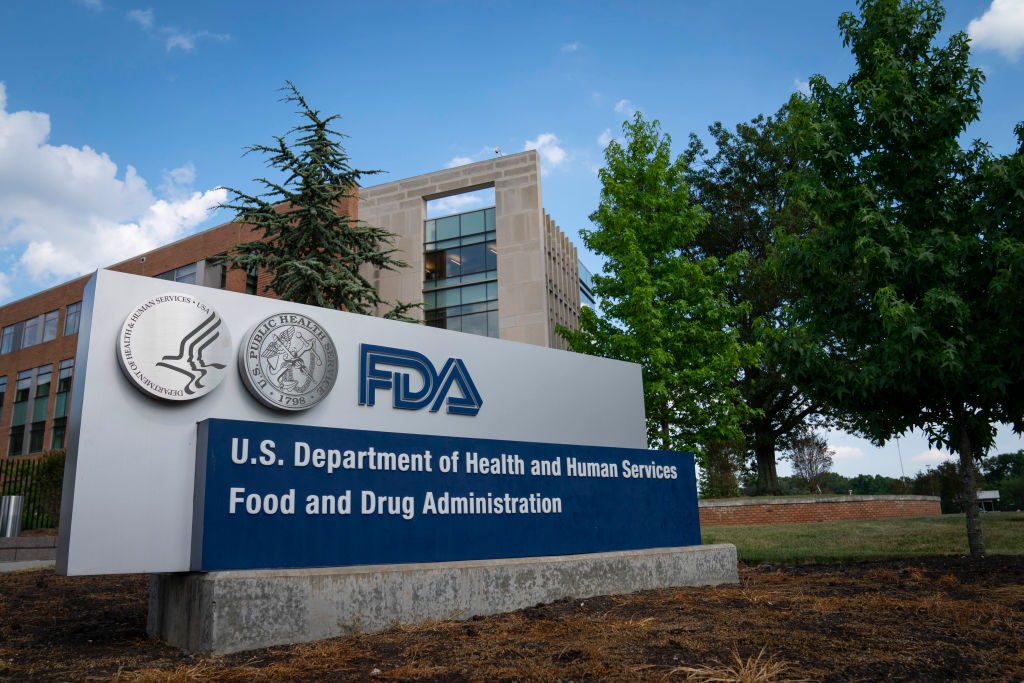
The operational structure of the FDA around centers, each governing a particular regulatory or scientific area, dates back more than 40 years. It remains intact for now, but Rick Pazdur, former director of the agency’s Oncology Center of Excellence, thinks this structure is outdated.
Regulation of small molecule drugs falls under the Center for Drug Evaluation and Research (CDER) while biologics are governed by the Center for Biologics Evaluation and Research (CBER). Both are anachronisms of the past that don’t need to exist anymore, Pazdur said. Instead, he proposes multiple centers for drugs. For example, oncology should have its own center. Others could include neurology, cardiovascular, infectious disease, and even manufacturing.
“This is a golden opportunity for us, not to criticize and bemoan the agency, but to really step up to the plate and swing the bat so to speak,” Pazdur said during a panel discussion at an event hosted by STAT during, but separate from, the recent annual meeting of the American Society of Clinical Oncology in Chicago.
Pazdur does not get to be part of any of the changes at the FDA. His 26-year career at the agency ended last December, his most recent role a short stint as CDER director. Pazdur acknowledged that the Trump administration was making changes with goals of improving efficiency and reducing bureaucracy, but he said it matters how these changes are made. Rather than building consensus from the bottom up, changes were imposed from the top down. Pazdur said one core principle that must be upheld is the firewall between politics and the scientific review of drugs. In the past year, Pazdur said that wall has been breached by political appointees exercising authority over regulatory decisions.
Nicole Gormley departed the FDA more recently, stepping down last month from her role as division director, hematologic malignancies. She said the agency is under extreme pressure, and some might even say it’s under attack. As a division director, she felt she had independence to do what was appropriate based on science. But that changed under the current administration.
“The core principles that undergird the agency were under challenge and that’s why I left,” she said.
Pazdur has more ideas about how the FDA could be improved, even rebuilt. He proposed reaching out to academic centers to see if people from those institutions could come into the FDA temporarily, which would immediately ease some of the workload issues. He added that his time outside of the agency showed him the need to have additional perspectives. Of the three panelists, Harpreet Singh has the most distance from the FDA, having left her post as division director for oncology in 2024. She said that while she does not think she would change any of the regulatory decisions she made, her time away from the agency gave her perspective and deeper understanding of what she as a regulator had asked companies to do.
“For many, many reasons, a lot of what I was asking was close to infeasible or very challenging,” Singh said.
The FDA is currently led by Acting Commissioner Kyle Diamontas, a regulatory attorney. Gormley said the FDA would not be stable until it has a permanent commissioner in place. The agency also currently has acting directors of both CBER and CDER, and Singh said she did not think permanent directors would be appointed before the midterm elections in November.
Pazdur said responsibility for stabilizing the agency does not fall to a single person. A group of people, irrespective of political party, is needed to ensure a stable and functional FDA, he said. One problem is that many people have left the FDA, and many of those people did not leave by choice. Pazdur said it will be hard to get people back. To Gormley, restoring the FDA as a functional agency will be key for recruiting people wherever they come from.
“I think the agency needs to be set up that way, where it can function independently, no matter what administration is in or out,” she said. “We need to have an independent agency that can just focus on the science. If you have that, then I think you’ll attract good candidates.”
Will Pazdur be one of those recruits? Moderator Matt Herper asked Pazdur if he’s interested in becoming the next FDA commissioner.
Pazdur demurred.
“I will always be interested in having conversations with people,” he said. “As I said before, I have lived my life at the FDA. It has been my life. I want the place to succeed, and I will leave it at that.”
Photo: Getty Images, Sarah Silbiger