
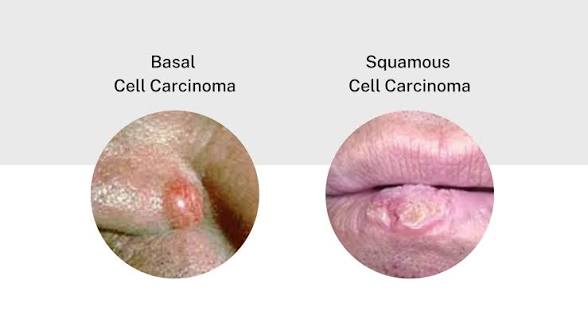
If you’ve been told you might have basal cell carcinoma vs squamous cell carcinoma and aren’t sure what that actually means, you’re not alone, the two get lumped together constantly despite behaving very differently.
They’re not. Both fall under the umbrella of nonmelanoma skin cancer, both are driven mainly by cumulative sun exposure, and both are highly treatable when caught early. But they start in different layers of your skin, grow at very different speeds, and carry meaningfully different risks if you leave them alone. Knowing which one you’re looking at changes how urgently you should act.
Table of Contents
Where Each One Starts
Your skin’s outer layer, the epidermis, is made up of different cell types stacked on top of each other. Basal cell carcinoma begins in the basal cells sitting at the very bottom of that layer. Squamous cell carcinoma begins in the squamous cells that make up most of the upper layers, closer to the surface.
That difference in starting point is part of why they behave so differently. BCC has to travel further to reach blood vessels and lymph channels, which is a big part of why it rarely spreads. SCC starts much closer to that network already, giving it an easier path to invade deeper tissue if it’s left untreated.
What Each One Looks Like
Basal cell carcinoma usually shows up as a small, shiny, pearly or translucent bump, sometimes with tiny visible blood vessels running across it. It can also take on a pink or slightly lavender tint, or appear as a flat, scar-like patch that doesn’t quite look like a scar you remember getting. Because it grows so slowly, many people mistake it for a pimple that never fully clears up or a small cut that won’t heal, and put off getting it checked for months.
Squamous cell carcinoma tends to look rougher: a scaly, crusted patch or a firm nodule that may bleed easily or feel tender to the touch. It sometimes develops as a wart-like growth, and it has a habit of showing up inside old scars, burns, or areas of chronic skin irritation, which is unusual for BCC.
Where Each One Tends to Show Up
Both are linked to sun exposure, so both favor sun-exposed skin: the face, ears, neck, scalp, and back of the hands. BCC leans heavily toward the head and neck specifically. SCC follows a similar pattern but is also more likely to appear on the lips, inside the mouth, and on areas that see repeated friction or previous injury, like old scars or chronic wounds.
How Fast Each One Grows
This is where the practical difference really shows up. BCC is a slow mover, typically growing by about a millimeter every few months. That slow pace is exactly why so many people ignore it: nothing about a lesion that barely changes week to week feels urgent.
SCC moves at a different pace entirely. Once it becomes invasive, it can double in size within a matter of weeks, not months. A spot that looked minor at your last self-exam can look genuinely different a month later, which is part of why dermatologists treat any fast-changing scaly or crusted lesion with more urgency than a slow-growing pearly bump.
Metastasis Risk: The Difference That Actually Matters Most
Basal cell carcinoma rarely spreads beyond the skin. Left untreated, it can still cause real damage by growing into surrounding tissue, but it very rarely reaches lymph nodes or distant organs.
Squamous cell carcinoma carries a real, if still relatively low, metastasis risk, generally cited around 5 to 10% if left untreated. It can invade nerves in some high-risk cases, which can cause numbness or tingling near the lesion, and it can spread to nearby lymph nodes. A hard lump in the neck or armpit in someone with a known SCC is treated as a same-day concern by most dermatologists, not something to monitor and wait on.
Quick Comparison
| Basal Cell Carcinoma | Squamous Cell Carcinoma | |
|---|---|---|
| Starts in | Basal cells, bottom of epidermis | Squamous cells, upper epidermis |
| Typical appearance | Pearly, waxy, or translucent bump; scar-like patch | Scaly, crusted patch or firm nodule |
| Growth speed | Slow, roughly 1mm every few months | Can double in 2 to 4 weeks once invasive |
| Metastasis risk | Very low | Around 5 to 10% if untreated |
| Common locations | Face, ears, neck, scalp | Face, ears, lips, hands, old scars or wounds |
| Share of skin cancer diagnoses | Roughly 80% of nonmelanoma skin cancers | Second most common, well behind BCC |
How They’re Diagnosed and Treated
Both start the same way: a dermatologist examines the lesion, and if it looks suspicious, takes a biopsy to confirm the diagnosis and rule out melanoma. From there, treatment options overlap heavily between the two types, including surgical excision, Mohs surgery, cryotherapy, topical medications like imiquimod or 5-fluorouracil, and radiation therapy for cases where surgery isn’t a good option.
The real difference is timing. Because BCC grows slowly and rarely spreads, there’s usually room to plan treatment without rushing. SCC’s faster growth and metastasis risk mean dermatologists tend to move more quickly once it’s confirmed, especially for lesions on the lips, ears, or in patients who are immunosuppressed.
Don’t Assume Darker Skin Is Off the Hook
Both BCC and SCC are far less common in Black and dark-skinned people than in fair-skinned people, but “less common” isn’t “impossible,” and both still show up, often on skin that’s had years of chronic scarring, burns, or non-healing sores rather than classic sun damage. If you have brown or Black skin, it’s worth reading our guide on skin cancer on black skin as well, since the type of skin cancer that shows up most often in darker skin doesn’t fit the sun-exposure pattern described above at all.
When to See a Dermatologist
Get any of the following checked rather than waiting to see if it resolves on its own:
- A pearly, waxy, or translucent bump that hasn’t healed within a few weeks
- A scaly, crusted patch or firm nodule, especially one that bleeds easily or is growing quickly
- Any new growth inside an old scar, burn, or chronic wound
- A sore on your lip that won’t heal
- Numbness, tingling, or a hard lump near a known skin lesion
If you’re not sure whether what you’re looking at needs a professional opinion, our complete guide covers the full range of types of skin cancer, what each one looks like, and exactly what to expect during a dermatologist visit.
FAQs
Which is worse, basal cell or squamous cell carcinoma? Squamous cell carcinoma is generally considered more serious because it grows faster and carries a real, though still low, risk of spreading to lymph nodes or other organs. Basal cell carcinoma is more common but rarely spreads beyond the skin, even though it can still cause significant local damage if ignored for years.
Can basal cell carcinoma turn into squamous cell carcinoma? No. They’re distinct cancers that start in different cell types and don’t convert from one into the other. It’s possible to develop both at different times or even at the same time, but one doesn’t become the other.
How do doctors tell BCC and SCC apart? Primarily through a clinical exam followed by a skin biopsy. Appearance offers strong clues, pearly and translucent points toward BCC, scaly and crusted points toward SCC, but a biopsy is what confirms the diagnosis and rules out melanoma.
Are basal cell and squamous cell carcinoma curable? Both have excellent outcomes when caught and treated early, with cure rates above 95% for most cases treated promptly. The main risk with both comes from delaying treatment, which gives BCC more time to damage surrounding tissue and gives SCC more time to spread.