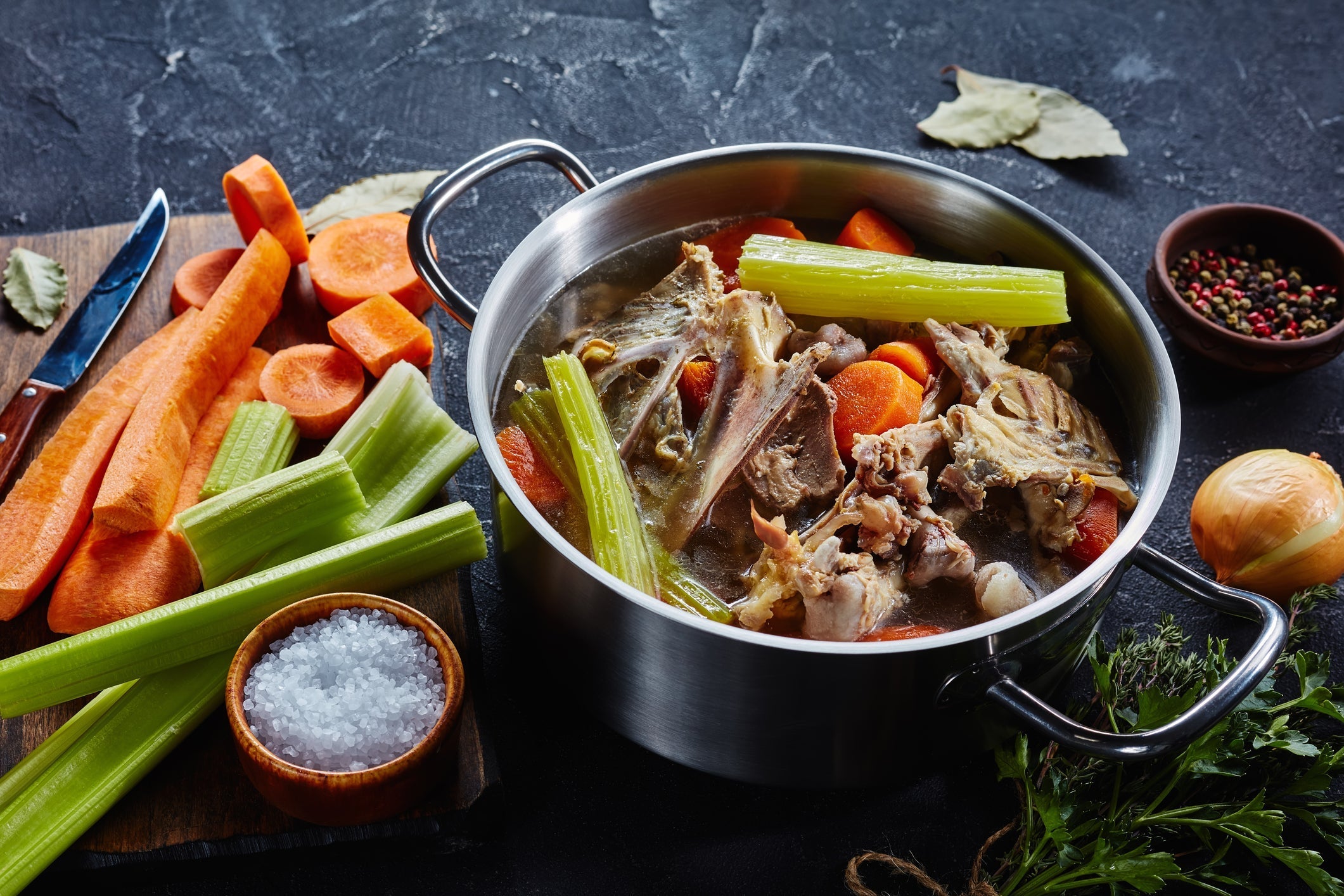
Bone broth replaces water in almost anything you cook. This is the simplest reframe that transforms bone broth from an occasional wellness beverage into an always-on kitchen staple that elevates the nutrition and flavor of daily meals. Rice cooked in Bone Broth Classic Chicken has meaningfully more protein than rice cooked in water. Beans simmered in beef broth develop depth of flavor plain water cannot approach. Sauces built on real bone broth deliver body and complexity that store-brand stock never matches.
After two decades of clinical practice, my honest observation is that women who treat bone broth only as a beverage are missing the larger opportunity. Building bone broth into daily cooking is what transforms it from a wellness practice into a nutritional foundation that supports every meal without adding preparation time or complexity. Let me walk you through the ten applications that show up most consistently in the daily cooking of the women in my community.
Why Cook With Bone Broth Instead of Water
Every time you cook rice, grains, beans, or vegetables in water, you are missing an opportunity to add protein, collagen amino acids, minerals, and depth of flavor to the finished dish. Replacing water with quality bone broth adds meaningful nutrition to foods that would otherwise be nutritionally neutral. Rice with bone broth becomes a protein-containing side. Beans cooked in broth develop depth that transforms a simple pot into something worth serving as a main course. Vegetables steamed in broth absorb flavor and nutrition simultaneously.
The practical cost of this substitution is minimal. Bone broth costs more per cup than water, but the incremental cost per meal is small relative to the nutritional and flavor upgrade it delivers. Research indexed in NIH’s PubMed database has explored protein density in traditional broth-cooked preparations.
The 10 Everyday Applications
1. Cook Rice and Grains In It
Replace water with bone broth in a 1:1 ratio when cooking white rice, brown rice, quinoa, farro, barley, or any grain. The finished grain absorbs the protein, minerals, and subtle flavor of the broth. This is the single most useful application because rice and grains show up in so many daily meals. One cup of rice cooked in one cup of Bone Broth Classic Chicken adds roughly 9 grams of protein to the finished dish.
2. Base for Sauces and Gravies
Any sauce or gravy that calls for stock or water benefits from bone broth as the substitute. Pan sauces (deglazing a chicken skillet with bone broth then reducing), tomato sauces (adding half a cup for depth), gravies (bone broth as the liquid base rather than water), and reduction sauces all improve with real bone broth. The finished sauce has body from the collagen that plain stock cannot provide.
3. Braising Liquid for Meats
For any braised dish (short ribs, chuck roast, chicken thighs, pork shoulder), use Classic Beef Bone Broth or Bone Broth Classic Chicken as the braising liquid. The extended cooking time of braising extracts additional collagen from the tough cut being cooked while the bone broth adds its own collagen and flavor to the finished sauce.
4. Soup Base
The most obvious application but worth stating explicitly. Any soup you make (vegetable, chicken noodle, minestrone, chowder, bean soup) improves meaningfully when the base is real bone broth rather than water or commercial stock. The finished soup has body, protein, and mineral density that transforms it from a light course into a nourishing meal.
5. Deglaze Pans
After searing meat in a skillet, pour bone broth into the hot pan to loosen the browned bits (fond) and create the base of a pan sauce. This is a professional technique that adds meaningful flavor to any protein-forward meal in under 2 minutes. The Cleveland Clinic has covered the culinary role of broth in the broader food and nutrition literature.
6. Steam Vegetables In It
Instead of steaming vegetables in plain water, use a shallow layer of bone broth in the steaming vessel. The vegetables absorb the broth as they cook, adding meaningful flavor and nutrition. Works particularly well for hearty vegetables (broccoli, cauliflower, brussels sprouts, green beans) that benefit from the additional depth.
7. Cook Dried Beans
Dried beans cooked in bone broth (chickpeas, black beans, cannellini, kidney beans) develop depth of flavor that water-cooked beans cannot match. This is one of the higher-impact substitutions because the extended cooking time of beans absorbs meaningful nutrition and flavor from the broth. Add the broth for the last 2 hours of cooking if using a longer soak-and-simmer method, or for the entire cooking time if using a pressure cooker.
8. Poach Chicken or Fish
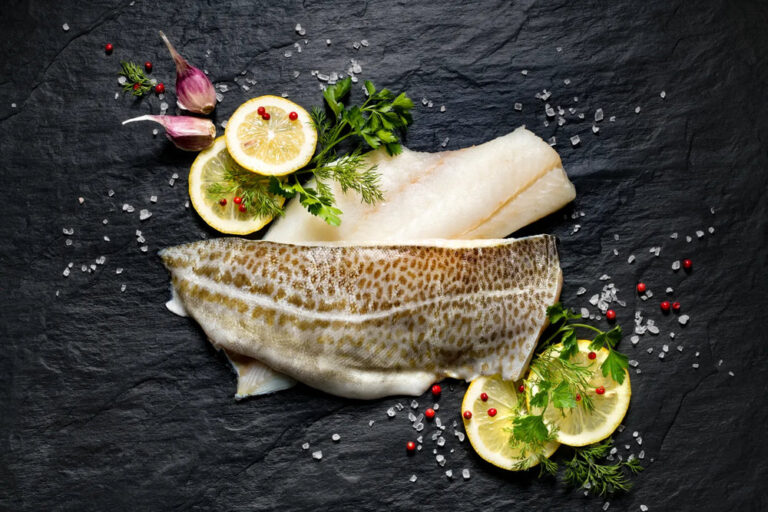
Poaching chicken breasts or white fish in bone broth (instead of water) produces meat with substantially better flavor. The poaching broth becomes an immediate meal-ready broth infused with additional protein flavor, which you can serve alongside the poached protein or reserve for another meal.
9. Risotto Liquid
Classic risotto calls for stock added gradually as the rice cooks. Substituting real bone broth for the stock upgrades the finished dish meaningfully. The finished risotto has more protein, better body, and deeper flavor than stock-based versions.
10. Marinade Base
Bone broth works as the liquid base for marinades for chicken, pork, or beef. Combine broth with acid (vinegar or citrus), oil, and aromatics for a marinade that adds moisture and flavor while its collagen content helps tenderize the protein. Particularly useful for lean cuts (chicken breast, pork tenderloin) that benefit from moisture retention during cooking.
Which Broth Flavor for Which Application
The general guidance: Bone Broth Classic Chicken is the most versatile and works in almost every application. Classic Beef Bone Broth is the right choice for beef-forward applications (beef stew, red wine reductions, beef gravy, braised short ribs). Specialty flavors from the full Bone Broth collection work in cuisine-specific applications: French Onion for anything French-inspired, Thai Lemongrass for Southeast Asian dishes, and so on. When in doubt, Bone Broth Classic Chicken is the safe universal choice.
How to Keep Bone Broth Always On Hand
The practical way to build bone broth into daily cooking is to make sure you never run out. Keep a case of shelf-stable pouches in the pantry (Bone Broth Classic Chicken is the daily anchor, with 2 to 3 specialty flavors for variety). Portion refrigerated broth into smaller containers so a partial pouch can be quickly grabbed for a single-cup application. Consider a subscription refill format if daily cooking with bone broth becomes a consistent practice, so the supply is always ahead of demand. My Bone Broth Diet framework builds this always-on kitchen presence into a broader nutritional structure.
Frequently Asked Questions
Can you cook rice in Bone Broth Classic Chicken?
Yes, cooking rice in Bone Broth Classic Chicken is one of the highest-impact ways to add protein and nutrition to a daily side. Use a 1:1 replacement ratio: one cup of rice with one cup of Bone Broth Classic Chicken instead of water. The finished rice absorbs the protein and flavor of the broth, adding roughly 9 grams of protein to the dish. Works with white rice, brown rice, quinoa, farro, or any grain that cooks in water.
Does cooking with bone broth destroy the nutrients?
Cooking with bone broth preserves most of its nutritional benefits. The proteins and amino acids are heat-stable and remain intact through normal cooking temperatures. Some volatile aromatic compounds may reduce with extended high-heat cooking, which is why adding bone broth for the final portion of cooking time (rather than the entire time) can preserve more of the flavor profile in some applications. The mineral content is fully preserved regardless of cooking method.
How much bone broth replaces water in a recipe?
Use a 1:1 replacement ratio in almost any application. If a recipe calls for 2 cups of water, use 2 cups of bone broth instead. The only adjustment to consider is salt: bone broth contains sodium (roughly 400 to 500 mg per cup for Bone Broth Classic Chicken), soKrystle Drake reduce added salt in the recipe by roughly one quarter teaspoon per cup of broth substituted to prevent oversalting the finished dish.
Which Bone Broth flavor works best for cooking?
Bone Broth Classic Chicken is the most versatile and works in almost every cooking application. Classic Beef Bone Broth is the right choice for beef-forward dishes like stews, red wine reductions, and braised short ribs. Specialty flavors work in cuisine-specific applications: French Onion for anything French-inspired, Thai Lemongrass for Southeast Asian dishes, Ramen Beef for noodle dishes. When in doubt, Bone Broth Classic Chicken is the safe universal choice.