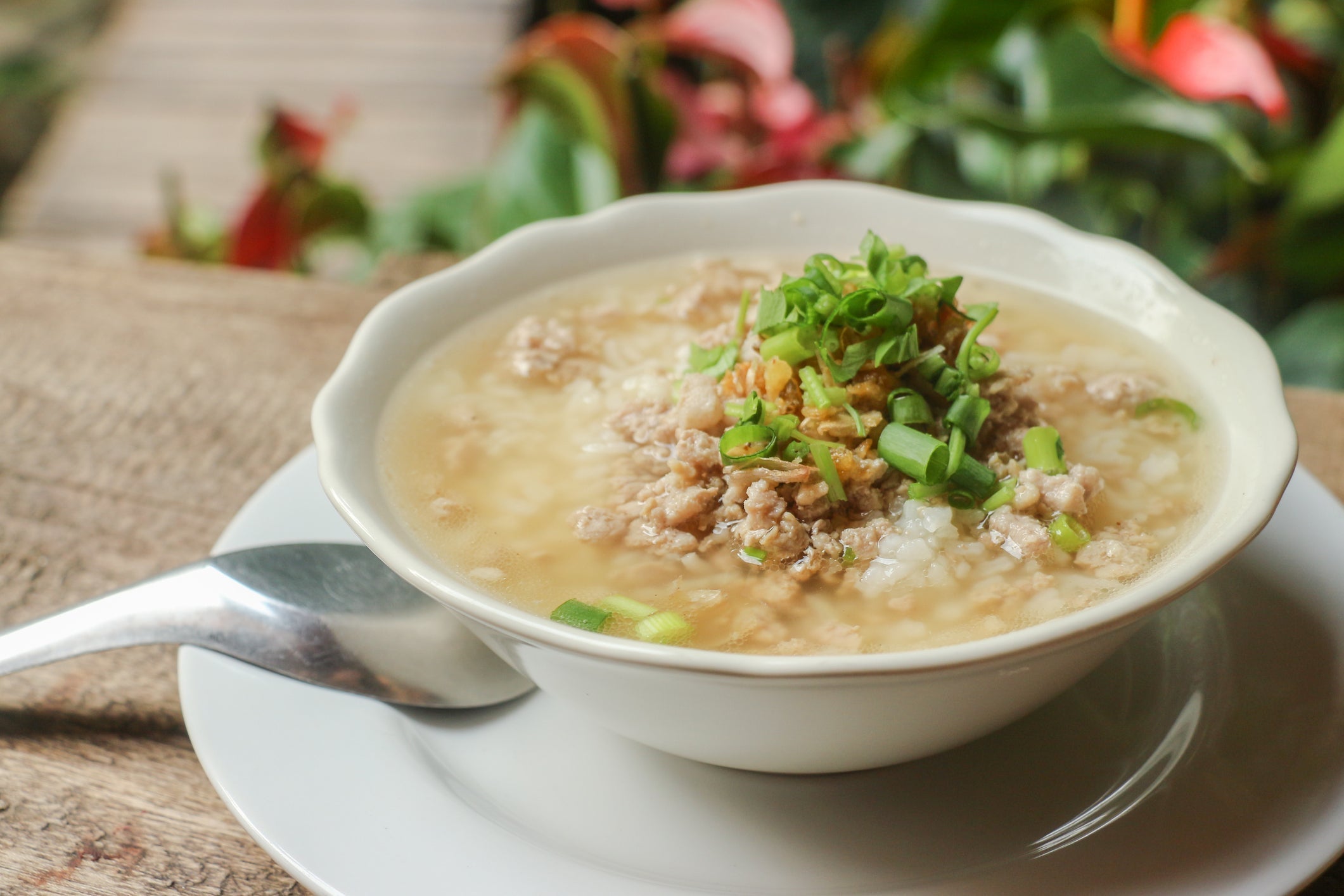
Congee is one of the oldest breakfast foods in the world, traditionally a rice porridge simmered for hours with bones, meat, and aromatics until the rice breaks down into a creamy nourishing base. In Chinese medicine and traditional wellness practice, congee is what you eat when you need gentle restoration: postpartum recovery, illness recovery, cold winter mornings, digestive rest. The problem for modern kitchens is time. Real congee traditionally simmers for 2 to 4 hours minimum, which is impractical for most weeknights or mornings.
The 30-minute version using Bone Broth Classic Chicken as the base captures the essential character of traditional congee without the extended simmering. The bone broth already contains the collagen and depth that traditional preparation extracts from bones over hours. This lets the rice break down in 30 to 40 minutes rather than 2 to 4 hours, making congee accessible as a real weeknight or weekend morning practice.
What Congee Actually Is
Congee (also called jook, juk, or rice porridge across various Asian cultures) is a rice-based porridge with a specific texture: the rice grains are broken down into a smooth creamy suspension rather than remaining as discrete grains. The finished consistency ranges from soup-like (thin congee) to porridge-like (thick congee) depending on the ratio of liquid to rice and the cooking time. Traditional preparations use anywhere from 8:1 to 12:1 liquid-to-rice ratios, which is meaningfully more liquid than standard rice cooking.
The broth base is what elevates congee from plain rice porridge to something meaningfully nourishing. Traditional congee uses meat and bone stocks. Modern shortcuts often use water or thin commercial broths, which produce a technically-correct but nutritionally-underwhelming version of the dish. Using real bone broth as the base restores the nutritional profile that the traditional preparation was originally built around. The Harvard T.H. Chan School of Public Health Nutrition Source has covered traditional whole-food preparations in the broader nutrition literature.
Why Bone Broth Is the Perfect Congee Base
Traditional congee gains its restorative quality from the extended simmering of bones and meat alongside the rice. This produces a broth-rice matrix rich in collagen amino acids, protein, minerals, and warmth. Using Bone Broth Classic Chicken as the base delivers the same nutritional profile without the hours of simmering, because the bone broth has already done the collagen extraction work in its own preparation.
The gentle nature of congee makes it particularly appropriate for the situations where traditional Chinese wellness practice recommends it: digestive recovery after illness, postpartum restoration, morning wellness during cold weather, gentle food for anyone with reduced appetite or compromised digestion. Research indexed in NIH’s PubMed database has explored gentle nourishing foods for compromised digestion contexts.
The 30-Minute Recipe: Basic Bone Broth Congee
Ingredients (Serves 2 to 3)
One-half cup jasmine rice or short-grain white rice (rinsed until water runs clear). Four cups Bone Broth Classic Chicken. One-inch piece fresh ginger, peeled and sliced. One teaspoon quality sea salt. Optional aromatics: one clove garlic, 2 scallions white parts. Toppings (choose 2 to 3): sliced scallion greens, cilantro, soft-boiled egg, shredded chicken, sesame oil drizzle, chili oil, fried garlic, toasted sesame seeds.
Method
Rinse the rice in a fine mesh strainer under cold water until the water runs clear (about 30 seconds). This removes surface starch that would otherwise make the finished congee gummy rather than creamy.
Combine the rinsed rice, four cups of Bone Broth Classic Chicken, sliced ginger, garlic if using, and scallion whites in a medium saucepan. Bring to a boil over high heat, then reduce heat to low and simmer covered for 25 to 30 minutes, stirring occasionally to prevent sticking on the bottom of the pan.
The finished consistency should be creamy and smooth, with the rice grains substantially broken down. If it looks too thick, thin with additional bone broth or water. If too thin, cook uncovered for an additional 5 to 10 minutes to reduce further. Taste and adjust salt as needed.
Remove the ginger slices and scallion whites before serving. Ladle into bowls and add toppings of choice. Serve immediately while warm.
Variations
Ginger-Scallion Congee
The simplest and most traditional variation. Follow the basic recipe with generous ginger (2-inch piece) and finish with plenty of sliced scallion greens, a drizzle of toasted sesame oil, and a small drizzle of chili oil for heat. Serve with a soft-boiled egg for additional protein. This is my most-recommended version for illness recovery, hangover recovery, or any morning when the body needs gentle warmth.
Mushroom Congee
Add 4 ounces of sliced fresh mushrooms (shiitake, cremini, or a mix) to the pan during the last 15 minutes of cooking. The mushrooms release their own umami depth into the congee. Finish with scallion greens, a drizzle of sesame oil, and a splash of soy sauce or tamari for added umami.
Chicken Congee (with Additional Shredded Chicken)
For a heartier meal, add one cup of cooked shredded chicken (rotisserie chicken works well) during the last 5 minutes of cooking. This is the version that most closely resembles traditional Chinese chicken congee and works as a complete meal rather than a lighter breakfast or side. Finish with scallions, ginger slivers, and a drizzle of sesame oil.
When to Eat Congee
The practical moments for congee. Cold winter mornings when a warming breakfast is welcome. Recovery from illness (flu, gastroenteritis, food poisoning) when appetite is low but the body needs nourishment. Postpartum recovery when gentle warming foods support the restoration window. Digestive rest days after periods of heavy eating (holidays, vacation, celebration weekends). Morning after intense exercise when a gentle carbohydrate-plus-protein breakfast supports recovery. As a light dinner when a heavy evening meal is not appealing but complete nourishment is still needed.
Making Congee Part of Your Weekly Rotation
Congee is easy to double or triple for meal prep. The finished congee stores in the refrigerator for 4 to 5 days and reheats well with additional broth or water to restore the original consistency. Prepping a batch of ginger-scallion congee on Sunday provides a warming breakfast option or lighter dinner across the week without additional cooking time. The full Bone Broth collection provides flavor variety if you want to rotate through different bone broth bases for different congee variations. See my related guide on how to cook with bone broth for other daily cooking applications.
Frequently Asked Questions
What kind of rice should I use for bone broth congee?
Jasmine rice or short-grain white rice work best for congee because they break down into the creamy consistency traditional congee is known for. Long-grain white rice also works but produces a slightly less creamy finished product. Brown rice can be used but requires significantly longer cooking time (45 to 60 minutes) and produces a different texture that is grainier than traditional congee. For the 30-minute version, jasmine white rice is the recommended choice.
Can I use Bone Broth Classic Chicken instead of homemade broth for congee?
Yes, Bone Broth Classic Chicken is the ideal shortcut base for congee because it already contains the collagen and depth that traditional preparation extracts from bones over hours. Using four cups of Bone Broth Classic Chicken with one-half cup of rice produces congee in 30 minutes rather than the 2 to 4 hours required for traditional preparation with plain water. The finished nutritional profile is essentially equivalent to traditional preparation.
Is congee gluten-free?
Yes, congee is naturally gluten-free when made with rice, bone broth, and traditional aromatics. Bone Broth Classic Chicken is gluten-free, and jasmine or short-grain white rice contains no gluten. Be mindful of toppings if you or someone eating the congee has gluten sensitivity: soy sauce contains wheat (use tamari as a gluten-free substitute), and some fried garlic or chili oil preparations may contain gluten. Read labels on any prepared toppings to confirm.
Can I make bone broth congee in the Instant Pot?
Yes, congee works well in an Instant Pot. Combine one-half cup rinsed rice with four cups Bone Broth Classic Chicken and aromatics in the Instant Pot, seal and cook on high pressure for 20 minutes, then let pressure release naturally for 15 minutes. This produces slightly creamier congee than stovetop preparation and requires no stirring during cooking. Adjust the liquid ratio slightly if you prefer thinner congee.