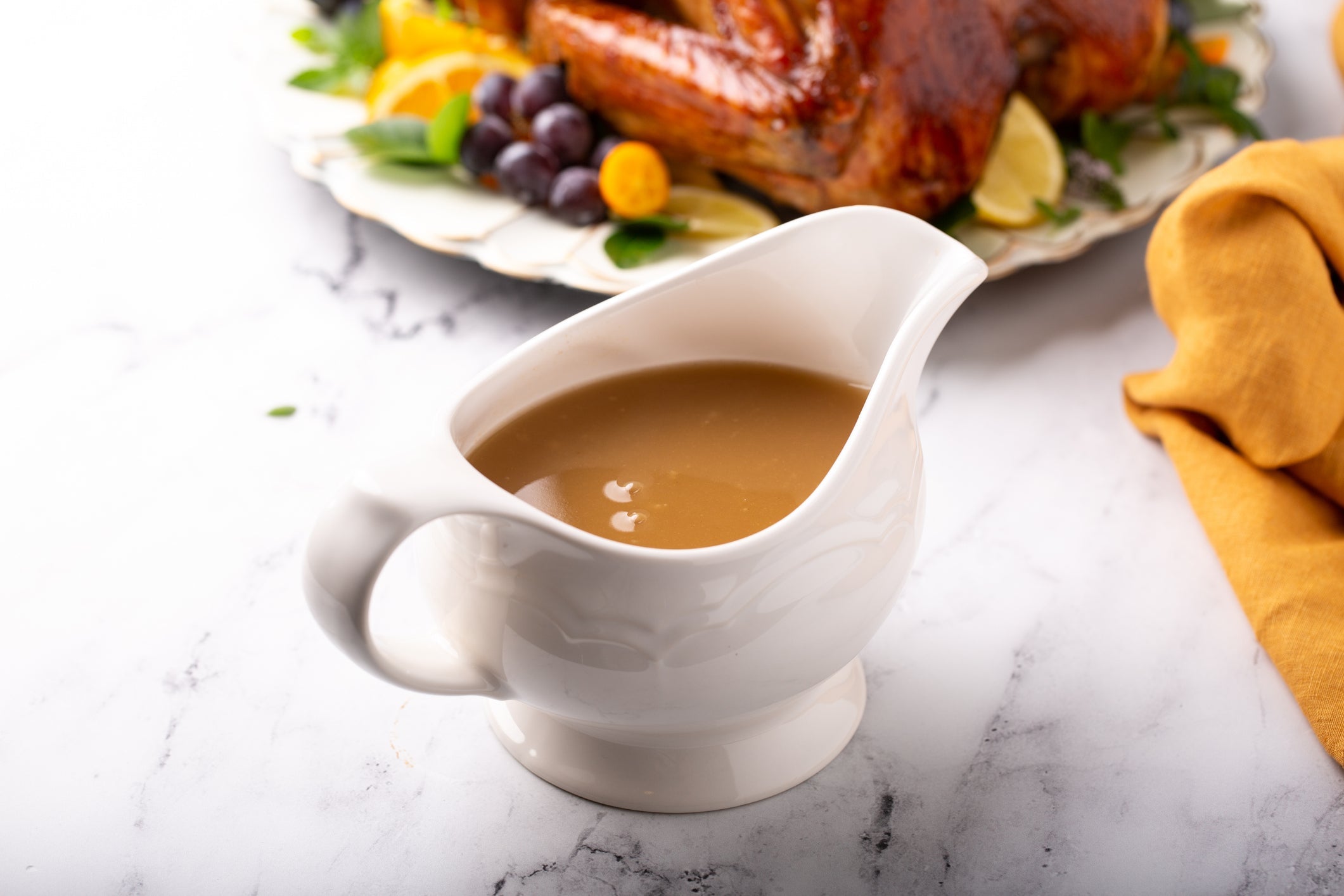
Real gravy takes 15 minutes when you start with a real bone broth. The traditional path to good gravy involves either the pan drippings from a roasted bird (which requires having roasted a whole bird), or laboring with a homemade stock as the base. Using Bone Broth Classic Chicken or Classic Beef Bone Broth as the base delivers the depth and body that make gravy taste like something worth serving alongside your best meal, without requiring either the roasted-bird pan drippings or the extended stock-making time.
After two decades of clinical practice, my honest observation is that the gravy on most home Thanksgiving tables tastes flat because the liquid base is either water or a commercial stock. This is a fixable problem with real bone broth. Let me walk you through the 15-minute recipe that works for Thanksgiving turkey, weeknight roasted chicken, or any occasion where a serious gravy elevates the meal.
Why Bone Broth Makes Better Gravy
Gravy at its essence is a thickened flavored liquid. The three critical elements are the fat (butter or pan drippings), the flour or starch that thickens, and the liquid that carries the flavor. When the liquid is water or commercial stock, the gravy relies entirely on the fat and finishing seasonings to deliver flavor. When the liquid is real bone broth, the collagen, gelatin, protein, and mineral content built into the broth become the foundation, and the finishing steps just refine what is already there.
The practical result is gravy that has body without feeling heavy, depth without being bitter, and richness without needing an aggressive salt-and-pepper finish to compensate for a thin base. Research indexed in NIH’s PubMed database has covered the collagen content of extended-simmered bone preparations which directly affects the mouthfeel of finished sauces.
The Recipe: 15-Minute Bone Broth Gravy
Ingredients (Makes About 2 Cups)
4 tablespoons unsalted grass-fed butter (or 4 tablespoons pan drippings from a roasted bird if available). 1/4 cup all-purpose flour (or 3 tablespoons cornstarch for a gluten-free version). 2 cups Bone Broth Classic Chicken (or Classic Beef Bone Broth for beef-forward preparations). 1 tablespoon fresh thyme leaves (or 1 teaspoon dried). 1 bay leaf. Quality sea salt and freshly ground black pepper to taste. Optional: 1 tablespoon dry sherry, 1 tablespoon Worcestershire sauce, or 1 teaspoon Dijon mustard for additional depth.
Method
Melt the butter in a medium saucepan over medium heat. Once fully melted and slightly foaming, sprinkle in the flour and whisk constantly for 2 to 3 minutes until the mixture (a roux) turns light golden brown and smells slightly nutty. This step is critical: undercooked roux produces gravy that tastes like flour, overcooked roux produces bitter gravy. Aim for the color of light peanut butter.
Slowly pour in the Bone Broth Classic Chicken while whisking constantly. Adding the broth slowly and whisking continuously prevents lumps from forming. Continue whisking as the mixture thickens.
Add the thyme and bay leaf. Reduce heat to medium-low and simmer for 5 to 7 minutes, whisking occasionally, until the gravy reaches your preferred thickness. If it becomes too thick, thin with additional broth. If too thin, continue simmering to reduce further.
Remove the bay leaf. Stir in optional additions (sherry, Worcestershire, or Dijon) for additional depth if desired. Taste and adjust with salt and pepper. Serve immediately while hot. For a silkier finish, strain through a fine-mesh sieve before serving, though this is optional.
For Thanksgiving Turkey Gravy
If you have pan drippings from a roasted turkey, use them in place of the butter for the deepest possible flavor. After removing the turkey from the roasting pan, strain the drippings and skim off some of the fat, keeping about 4 tablespoons of the fat plus all of the browned bits and juices. Use that as the fat base for the roux, then add the Bone Broth Classic Chicken as the liquid. The combination of real bone broth plus real pan drippings produces the best turkey gravy most guests have ever eaten.
For a larger gathering requiring more gravy, double the recipe. A pot of Thanksgiving gravy for 8 to 10 guests typically calls for 4 cups of gravy total, which means starting with 4 cups of Bone Broth Classic Chicken and doubling all other ingredients. The finished gravy holds well in a warmed serving vessel for the duration of the meal.
For Beef Roast Gravy
For gravy accompanying roast beef, prime rib, beef stew, or any beef-forward dish, use Classic Beef Bone Broth as the base instead of chicken. The deeper flavor of beef bone broth matches the beef preparation better than chicken broth would. Add a splash of red wine to the roux before adding the broth for additional depth. Finish with fresh rosemary and thyme instead of the lighter thyme-only combination in the chicken version.
For Weeknight Roasted Chicken
Weeknight roasted chicken deserves better gravy than most home cooks provide. The 15-minute recipe scales down beautifully to 1 cup of gravy for a family dinner (halve all ingredients). Start the gravy while the chicken rests for its 10 minute rest period after roasting. By the time you carve, the gravy is ready. This elevates a simple weeknight dinner into something that reads as a proper meal.
Common Gravy Problems and Fixes
Lumpy gravy: whisk vigorously or strain through a fine-mesh sieve. Prevention: add the broth to the roux slowly and whisk continuously. Too thin: simmer longer to reduce and thicken. If simmering does not thicken enough, make a small slurry of 1 teaspoon cornstarch mixed with 1 tablespoon cold water and whisk it in. Too thick: thin with additional bone broth (do not use water, which dilutes the flavor). Tastes like flour: the roux was undercooked. Simmer longer to cook out the raw flour taste. Bitter: the roux was overcooked, or the gravy simmered too long at too high a heat. Start over with a fresh roux.
Making Bone Broth Gravy a Kitchen Staple
Once you have the 15-minute recipe internalized, gravy stops being a Thanksgiving-only dish and becomes a weeknight elevation tool. Serve gravy over roasted chicken, mashed potatoes, meatloaf, roasted vegetables, or biscuits. The Harvard T.H. Chan School of Public Health Nutrition Source has covered the nutritional density of protein-forward sauces in the broader nutrition literature. My Bone Broth Diet framework integrates sauces and gravies made with real bone broth as ways to add flavor and nutrition to everyday meals without adding complexity to preparation.
Frequently Asked Questions
Can I make gravy with Bone Broth Classic Chicken instead of turkey drippings?
Yes, Bone Broth Classic Chicken produces excellent gravy on its own without turkey drippings. Use 2 cups of Bone Broth Classic Chicken with 4 tablespoons of grass-fed butter and 1/4 cup flour for the roux. The bone broth’s protein and mineral content deliver more depth than water-based gravy, even without pan drippings. If pan drippings are available, use them alongside the bone broth for the deepest possible flavor.
How do I keep bone broth gravy from being lumpy?
Two critical steps prevent lumpy gravy: whisk the flour into the melted butter constantly for 2 to 3 minutes to fully incorporate before adding liquid, and add the Bone Broth Classic Chicken slowly while whisking continuously. If lumps do form, either whisk vigorously to break them up or strain the finished gravy through a fine-mesh sieve before serving. Both methods produce a smooth final result.
Can I make bone broth gravy ahead of time?
Yes, bone broth gravy can be made up to 3 days in advance and stored in the refrigerator. Reheat gently over medium-low heat, whisking constantly and adding a small amount of Bone Broth Classic Chicken or water to restore the original consistency (gravy naturally thickens as it cools). For Thanksgiving specifically, making the gravy base 1 day ahead and finishing with pan drippings on Thanksgiving Day works particularly well.
How much bone broth do I need for Thanksgiving gravy?
For 8 to 10 Thanksgiving guests, plan on approximately 4 cups of finished gravy, which requires 4 cups of Bone Broth Classic Chicken as the base. For larger gatherings, scale proportionally: 6 cups of bone broth for 12 to 16 guests, 8 cups for 20 or more guests. Having extra bone broth on hand is always wise since some guests may want additional gravy on multiple dishes.